
Should Those with Thyroid Issues Avoid Cruciferous Vegetables?
Feb 04, 2026
Author: Xu Ke, Attending Physician of Endocrinology at the First Affiliated Hospital of Wenzhou Medical University. Audit | Check of English - Associate Chief Physician of Endocrinology, Fifth People's Hospital of Shanghai, Affiliated to Fudan University. Zhang Na, Associate Researcher at the School of Public Health, Peking University, Member of the Chinese Nutrition Society.
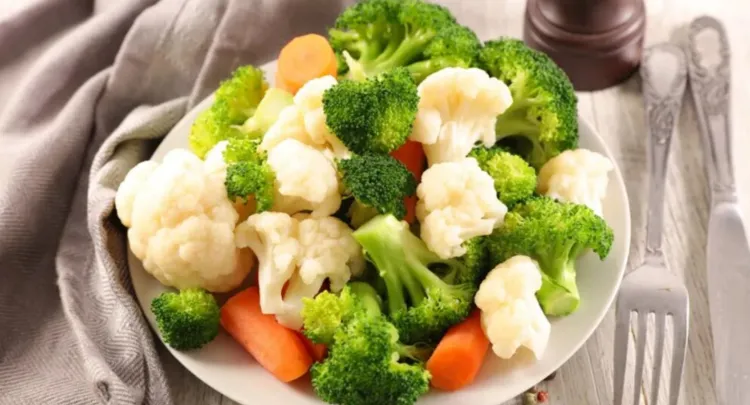
Title: Should Those with Thyroid Issues Avoid Cruciferous Vegetables? Introduction: Cruciferous vegetables are safe in moderation for most with thyroid disease, aiming to reduce dietary anxiety and misconceptions. Keywords: ['Health', 'Nutrition'] Main text: Rumor: "There are problems with the thyroid, and cruciferous vegetables should not be eaten as they can harm thyroid health." There has been a widespread belief regarding the diet for thyroid patients: that they should avoid cruciferous vegetables, such as broccoli, because these vegetables contain goitrogens, substances that can block iodine from entering the thyroid and may lead to an enlarged thyroid gland. Rumor Analysis: This statement is an exaggeration. Cruciferous vegetables are not enemies of thyroid health; the key is to consume them in moderation. Although cruciferous vegetables contain glucosinolates, they may only affect thyroid function in extreme situations, such as consuming them in large amounts over a long period while simultaneously having a severe iodine deficiency. For most people, properly cooking and consuming moderate amounts of cruciferous vegetables like broccoli and cauliflower is not only safe but also provides abundant nutrition, so there is no need for excessive concern. "Once diagnosed with a thyroid disease, should one avoid cruciferous vegetables like broccoli and cauliflower?" This type of statement is quite common online and has even been repeatedly cited by some "dietary lists," giving the impression that there is strong scientific backing for it. But do these health vegetables labeled as "thyroid-disrupting" really affect thyroid function? Should cruciferous vegetables really not be eaten anymore? Patients with thyroid disease should avoid eating. Cruciferous vegetables. First, let's understand what common cruciferous vegetables are. Cruciferous vegetables are named for their petals, which are arranged in a "cross" shape. They are not limited to broccoli and cauliflower but encompass most vegetables found on market shelves. These vegetables are diverse and rich in nutrients, playing an important role in antioxidant activity. They can be mainly classified into the following categories: Chinese cabbage varieties: bok choy, napa cabbage. Cruciferous vegetables: broccoli, cauliflower, cabbage, kale, and other similar greens. Radish varieties: white radish, green radish, and Xinlimei radish, among others. Other common types include arugula, watercress, shepherd's purse, and lone herb, among others. The rumors about thyroid diseases and cruciferous vegetables primarily point to the presence of glucosinolates in cruciferous vegetables, suggesting that this substance may have adverse effects on thyroid function. The theoretical basis of this statement lies in the fact that cruciferous vegetables contain a substance called glucosinolate. Under certain conditions in the body—such as when the vegetable cells are damaged, when they are chewed, or when they are not cooked sufficiently—glucosinolates can be broken down by myrosinase in the plant or by gut bacteria into thiocyanate. At high concentrations, thiocyanate can inhibit the thyroid's absorption of iodine, which may interfere with the synthesis of thyroid hormones. If this situation persists over a long period, it could theoretically lead to goiter. However, it is important to emphasize that this influence only exists as a theoretical connection. For the vast majority of people, under normal dietary conditions, this influence can be considered negligible, and regarding it as a "root of trouble" to avoid is an exaggerated rumor. The international mainstream medical community and multiple studies have clearly established that cruciferous vegetables affect thyroid function only under three extreme conditions, which are nearly impossible to achieve in a regular diet. The dosage is extremely excessive: one would need to consume more than 1 to 1.5 kilograms of cruciferous vegetables daily to reach a concentration that interferes with the thyroid. This far exceeds the recommended total daily vegetable intake of 300 to 500 grams according to the "Chinese Dietary Guidelines," and is also well above the normal consumption amount for a single type of vegetable. A long-term diet primarily consisting of raw food: glucosinolates and myrosinase are both heat-sensitive. Cooking methods such as blanching, steaming, and quick frying can destroy more than 70% of the activity of glucosinolates, significantly reducing the risk. In our country, residents typically prefer to cook these types of vegetables before eating, naturally avoiding the associated risks. Severe iodine deficiency: The effects of substances that lead to goiter only become prominent in cases of "iodine deficiency". Since the implementation of the iodized salt policy in our country, the iodine nutritional status of residents has generally improved. As long as iodized salt is consumed normally, the thyroid will have an adequate supply of iodine "raw material" and will not be disrupted by small amounts of goitrogenic substances. Not all patients with thyroid issues can consume cruciferous vegetables "without concern." Those who belong to the following three special categories should exercise caution (this applies only to raw consumption; cooked vegetables remain safe): Patients with hypothyroidism due to iodine deficiency: For those who have developed iodine deficiency from long-term consumption of non-iodized salt and very little seafood, and whose hypothyroidism is uncontrolled, excessive consumption of raw cruciferous vegetables may exacerbate iodine utilization disorders. It is essential to prioritize iodine supplementation and reduce the intake of raw foods. Individuals undergoing treatment with "Iodine-131": Excessive consumption of cruciferous vegetables may affect the absorption of Iodine-131, thereby impacting the treatment's effectiveness. However, as mentioned earlier, it is sufficient to avoid large quantities of raw consumption. Individuals with iodine absorption disorders, such as those suffering from chronic gastrointestinal diseases or those who have undergone gastrointestinal surgeries that lead to poor iodine absorption, should limit their intake of raw cruciferous vegetables under the guidance of a doctor, while also ensuring adequate iodine supplementation. What to Really Pay Attention to Regarding Thyroid Diseases: For individuals with thyroid diseases, it is important to remember one key dietary principle: strike the right balance in iodine intake. Autoimmune thyroid disease: For patients with Hashimoto's thyroiditis, it is advisable to avoid consuming large amounts of high-iodine foods like kelp and nori over an extended period. Patients with hyperthyroidism: In the early stages of the condition, it is necessary to avoid iodine. During the stable phase, a low-iodine diet is sufficient, and foods high in iodine should be avoided. For patients with thyroid nodules: If thyroid function is normal, maintain a balanced iodine intake without the need for intentional "iodine supplementation" or "iodine restriction"; if there is concurrent hypothyroidism or hyperthyroidism, follow the recommendations corresponding to the specific condition. In addition, patients with thyroid diseases need to pay attention to a balanced diet and a diverse intake: besides cruciferous vegetables, it is essential to ensure a comprehensive intake of proteins (such as eggs and lean meat), vitamins (such as fresh fruits), and dietary fiber, while avoiding a monotonous diet or excessive restrictions. Reflecting on "Rumors": Such rumors typically reduce complex medical issues to a simplistic conclusion that "a certain type of food is absolutely opposed to a certain type of disease." They often overlook two key variables: "dosage" and "individual conditions," neglecting the complexity of human metabolism and the principle of individualized medical advice. Ultimately, they create unnecessary dietary anxiety through one-sided taboos.
#health
#nutrition


© 2025 Health Tribe.