
These Foods Do Not Need Refrigeration Learn Common Mistakes
Feb 20, 2026
Title: These Foods Do Not Need Refrigeration Learn Common Mistakes Author: Ruan Guangfeng, Deputy Director of the Center for Food and Health Information Communication, Member of the Health Communication Branch of the Chinese Preventive Medicine Association. Reviewer: Zhang Yu, Researcher/PhD at the China Center for Disease Control and Prevention, National Health Science Popularization Expert, Member of the Health Communication Working Committee of the Chinese Medical Doctor Association. Planning: Zhen Xi Editor: Zhen Xi Proofreading: Xu Lai, Zhang Linlin Source: Popular Science China WeChat Official Account The cover image and the images within this article are sourced from a copyright-protected stock photo library. Reposting may lead to copyright disputes. Introduction: Not all foods are fridge-safe during the Spring Festival; store dried and pickled foods at room temp to save space. Keywords: ['food safety', 'cooking'] Main text: The Spring Festival is the most significant traditional holiday in China, with each household preparing a sumptuous feast. However, this annual celebration often leads to a dilemma between what is termed a "banquet" and what turns into a "leftover feast." From the extensive leftovers of the New Year's Eve dinner to various cured meats, pastries, nuts, and beyond, families often find their refrigerators and storage areas completely packed. With this delightful "burden," many face a tough choice: throwing away perfectly prepared food feels painful, yet retaining it raises concerns about spoilage and foodborne illnesses, particularly with narratives about "leftover food leading to ICU visits" echoing in their minds.
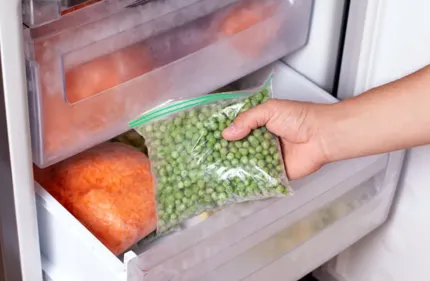
How should food be stored during the Spring Festival? Which foods are best not left over? How should leftover dishes be reheated? This guide will provide clarity on all these aspects. Storing New Year's items according to categories and areas is essential. Some foods do not require refrigeration, which is crucial for optimizing limited refrigerator space during the Spring Festival's abundance. These foods can be safely stored outside the refrigerator: Firstly, dried food products. Items such as biscuits, shredded meat, dried fruits, jerky, milk powder, and coffee do not necessitate refrigeration due to their low moisture content, which inhibits microbial growth. In fact, refrigeration can make them susceptible to dampness and mold. Secondly, pickled and sugary foods. Candies, honey, and pickles are examples of foods with high sugar or salt concentrations, coupled with minimal moisture, which also helps prevent microbial growth. Thirdly, chocolate. Refrigeration can cause chocolate to develop a white bloom, which, while not a safety issue, impacts its appearance and texture. Regarding storage methods, it is prudent not to accumulate too many vegetables, particularly leafy greens. Wrap these in kitchen paper towels, place them in a plastic bag, seal it tightly, and store them in the refrigerator. Avoid placing them too close to the refrigerator walls to prevent frostbite, and aim to consume them within 3 to 5 days for optimal freshness. Vegetables like green beans, eggplants, tomatoes, green peppers, and cauliflower can be stored at low temperatures for 5 to 7 days. They may be individually wrapped in plastic bags or blanched in hot water before freezing to extend their shelf life. Conversely, sturdy vegetables such as potatoes, carrots, onions, white radishes, and napa cabbage can remain in a cool, well-ventilated area. When selecting fruits, opt for those that store well, like apples and citrus fruits, which can be stored separately in plastic bags in the refrigerator. For perishable items like strawberries and grapes, buy only what you can consume and eat them promptly. If excess fruit must be stored, keep leftovers in hard plastic containers in the refrigerator. Meats should generally be refrigerated for no more than 3 to 5 days. For prolonged storage, freezing is advisable. Fresh fish, shrimp, and raw meat should be pre-cut, portioned for single meals, and stored in freezer bags or containers. Simply thaw one portion when needed. Marinated and braised meats should remain refrigerated, and freezing is optimal for longer preservation. Canned meats and products like ham sausages can usually be stored at room temperature but should be quickly consumed once opened. When dealing with leftover food, categorize it based on whether it should go in the refrigerator or the freezer. With much leftover food during the New Year, preservation in the refrigerator is often necessary, but it’s important to categorize food based on its storage life. In general, refrigerating food for 1-2 days is acceptable, while aim for a guideline of a maximum of 2 days. If storage beyond that is necessary, freezing is the better choice. For large quantities of leftovers, consider portioning them out in advance. Using various containers or food boxes—sealed with lids or cling film—makes it easy to heat only what is needed for each meal, thus avoiding repeated reheating and effectively cooling the food, which helps minimize nitrite levels. Some leftovers should ideally be consumed on the same day due to their unfit conditions for storage. Specifically, leftover vegetables and vegetarian dishes, as nutrients—particularly vitamin C in leafy greens—are more easily lost over time. Cold dishes made for New Year’s Eve, such as smashed cucumbers and cold-tossed pig ears, should not be retained as leftovers, as they can harbor bacteria. Ideally, they should be consumed at once, and if leftovers are unavoidable, ensure to heat them thoroughly before reuse. Seafood—including fish and shrimp—should not be stored as leftovers due to their high susceptibility to bacterial growth and the fading freshness that diminishes their appeal over time. Reheating leftover food must occur before consumption. The notion that merely "warming" food makes it safe is a misconception; reheating serves to kill bacteria as well. For thorough safety, ensure leftovers reach adequate core temperatures, such as 75°C for common meats. Standard reheating practices include ensuring soups and stews come to a boil, maintaining temperature for at least a minute. Using microwaves requires proper food coverage and frequent stirring for even heating. Limit reheating multiple times; only heat what’s necessary for one meal and refrigerate the rest for future consumption.
#food safety
#cooking



© 2025 Health Tribe.