
How should pregnant women wear seatbelts for safety?
Feb 22, 2026
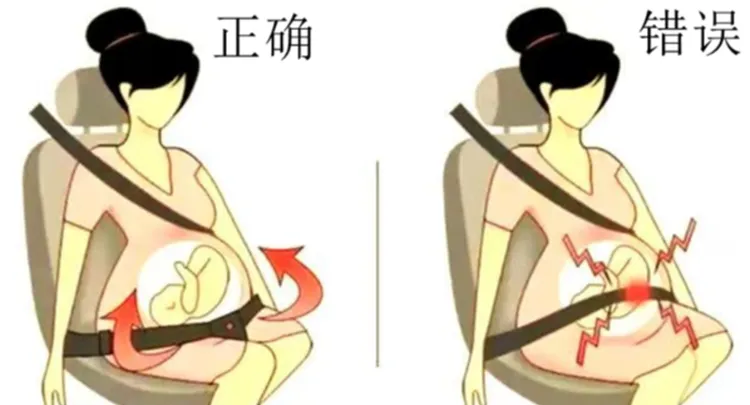
Author: Not specified. Reviewer: Not specified. Curator: Not specified. Production/Organizational Information: Not specified. Title: How should pregnant women wear seatbelts for safety? Introduction: Pregnant women must wear seatbelts while driving to protect themselves and their fetus, especially during the Spring Festival travel peak. Keywords: ["Pregnant women's health", 'Safe travel'] Main text: During the Spring Festival, many expectant mothers who are driving themselves often struggle with a concern: Will the seatbelt press on their belly? In the event of a sudden stop, could it harm the baby? Some even choose not to wear a seatbelt in an effort to "protect" the fetus—this is an extremely dangerous practice.
First, pregnant women must wear seatbelts; this is the first line of defense for protecting the baby. It is essential to establish a core principle: pregnant women must wear a seatbelt throughout the entire pregnancy. Many expectant mothers worry that the seatbelt might press against their abdomen, but in fact, it is the opposite that needs consideration. In the event of a collision or sudden braking, a pregnant woman who is not secured by a seatbelt places her fetus at a much greater risk. Research indicates that if a pregnant woman is involved in a car accident without wearing a seatbelt, the fetal mortality rate is 2.8 times higher than for those who wear one. This increased risk arises because, during a sudden stop or collision, the mother's body is thrust forward due to inertia, potentially causing her to strike the steering wheel or dashboard, or fall forward. Meanwhile, the fetus, which also experiences substantial inertia, may collide with the uterine wall or the mother's skeletal structure, leading to severe consequences such as placental abruption. Therefore, wearing a seatbelt is not about restricting the mother; it is about ensuring secure protection for the baby in a relatively safe "cocoon" during hazardous situations.
#pregnant women's health
#safe travel


© 2025 Health Tribe.