
Chile First in Americas to be Verified by WHO for Leprosy Elimination
Mar 04, 2026
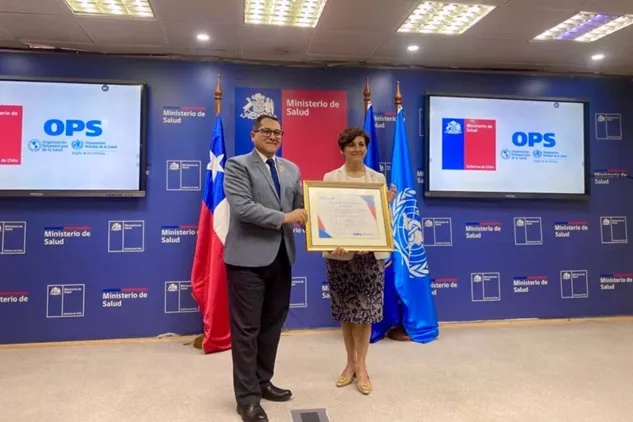
The World Health Organization (WHO), in conjunction with the Pan American Health Organization (PAHO), congratulates Chile for becoming the first country in the Americas – and the second globally – to have officially verified the elimination of leprosy.
Leprosy (Hansen's disease) was first documented in Chile at the end of the 19th century on Rapa Nui (Easter Island). Historically, while it was mainly restricted to mainland Chile, there were sporadic cases introduced. However, effective isolation and treatment measures on Rapa Nui allowed for substantial control, with the last secondary cases being managed by the late 1990s.
Since then, Chile has not reported any locally acquired leprosy cases for over 30 years, with the last identified case occurring in 1993. Nevertheless, the disease has remained a focal point within the country’s public health policy; it is classified as a notifiable disease and is subject to rigorous monitoring through mandatory reporting, integrated surveillance, and ongoing clinical readiness throughout the healthcare system.
"This remarkable public health success showcases the power of leadership, science, and solidarity," stated Dr. Tedros Adhanom Ghebreyesus, WHO Director-General. "Chile’s elimination of leprosy sends a decisive message to the world: with persistent dedication, inclusive health services, comprehensive public health strategies, early diagnosis, and universal access to care, it is possible to eradicate ancient diseases from our history."
The verification signifies over thirty years of sustained public health efforts, robust surveillance, unwavering political commitment, and a responsive health system that has remained vigilant in the absence of local transmission.
"Chile’s success exemplifies that the elimination of leprosy is attainable. It necessitates the establishment of strong systems capable of detecting, responding to, and offering comprehensive care for affected individuals, including those with chronic disabilities," remarked PAHO Director Dr. Jarbas Barbosa. "Being the first country in the Americas to achieve verification of leprosy elimination sends a significant message to the region – that diseases closely associated with marginalized groups can indeed be eradicated, thereby breaking the cycle of disease and poverty."
At the request of Chile’s Ministry of Health, PAHO and WHO assembled an independent expert panel in 2025 to evaluate the achievement of elimination and the sustainability of this status over time. The panel executed an extensive review, analyzing epidemiological data, surveillance systems, case management protocols, and sustainability plans. Their findings confirmed the absence of local transmission and validated Chile’s capability to detect and respond to future cases among the non-native population.
"This is excellent news and a point of great pride for our nation. Chile has received confirmation of the elimination of leprosy, becoming the first country in the Americas and second globally to receive this accolade," expressed Ximena Aguilera, Chile’s Minister of Health. "This milestone embodies decades of relentless public health endeavors, encompassing prevention strategies, early diagnosis, effective treatment, continuous follow-up, and the commitment of health teams nationwide. It also reinforces our obligation to maintain active surveillance and provide respectful, stigma-free care for all."
Between 2012 and 2023, Chile reported a total of 47 cases nationwide, all of which were imported with no locally transmitted cases.
Chile’s integrated model guarantees early detection and comprehensive care: primary care facilities serve as the initial point of contact for suspected cases, enabling prompt referrals to specialized dermatology services for diagnosis, treatment, and follow-up. Clinicians are trained in line with WHO's Towards Zero Leprosy strategy. The health system prioritizes early intervention, disability prevention, and holistic care, including physiotherapy and rehabilitation services. This approach ensures that all individuals affected by leprosy receive ongoing support addressing both immediate and long-term health needs, encouraging full recovery and social inclusion.
Chile’s accomplishment sets a precedent for other countries, illustrating the powerful impact of political will, collaboration across sectors, and adaptive planning in settings with low incidence.
Since 1995, PAHO, in collaboration with WHO, has provided multidrug therapy (MDT) free of charge to countries across the Americas, including Chile. This continuous availability of treatment combined with national supply chains has been crucial for curing patients, preventing disability, and halting transmission.
PAHO has also assisted Chile in aligning its surveillance practices with international standards, improving laboratory capacity, and maintaining clinical expertise even in low-incidence areas, where many healthcare professionals may not encounter any cases throughout their careers.
Chile’s elimination of leprosy aligns with a comprehensive legal and social framework that safeguards human rights, promotes inclusion, and combats discrimination. National laws guarantee equal access to healthcare, social protection, and disability services, enabling individuals affected by leprosy to receive care without facing stigma or exclusion.
Chile’s mixed public-private health system, characterized by strong regulatory oversight, improves equitable access to healthcare, particularly for migrants and other marginalized groups.
In accordance with WHO’s Towards Zero Leprosy strategy and PAHO’s Disease Elimination Initiative, Chile’s experience demonstrates that elimination transcends mere absence of disease; it reflects a vigorous health system equipped to detect, react to, and provide comprehensive care whenever a case arises.
As it transitions into the post-elimination phase, Chile is urged to continue reporting to WHO, uphold sensitive surveillance, and preserve clinical expertise for addressing sporadic cases as well as imported cases. The verification panel also recommended the formal establishment of a referral center and the utilization of WHO Academy’s online training for health workers to reinforce long-term capacity and preparedness.
Leprosy (Hansen's disease) is a chronic infectious disease triggered by the bacterium Mycobacterium leprae. It primarily impacts the skin, peripheral nerves, upper respiratory mucosa, and eyes. Untreated, it can result in irreversible nerve damage, disabilities, and social stigma. Nevertheless, leprosy is entirely treatable with multidrug therapy, and timely detection can avert complications.
As a neglected tropical disease, leprosy continues to affect over 120 countries, with more than 200,000 new cases reported globally each year.
PAHO's Disease Elimination Initiative aims to eradicate leprosy, among other communicable diseases and related conditions, in the Americas by 2030 through reinforced surveillance, accessible treatment, and community involvement.
Neglected tropical diseases are a diverse category of 21 conditions causing severe health, social, and economic ramifications. They impact over one billion individuals worldwide, predominantly affecting impoverished communities within tropical regions.
Public health objectives for controlling, eliminating, and eradicating neglected tropical diseases have been set in a roadmap spanning from 2021 to 2030. In 2025 alone, nine countries received validation, verification, or certification from WHO for meeting these targets. Following the successful verification of leprosy elimination, Chile has become the sixty-first country globally and the sixth in the Americas to eliminate at least one neglected tropical disease, joining Brazil, Colombia, Ecuador, Guatemala, and Mexico. Chile is now the second country worldwide, after the Hashemite Kingdom of Jordan, to achieve leprosy elimination.
#public health
#international recognition



© 2025 Health Tribe.