
Understanding braces for adults: Timeless solutions for smiles
Mar 09, 2026
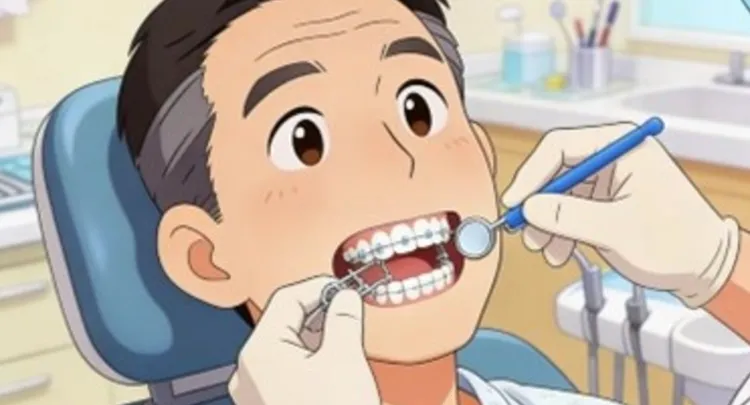
Author: Yang Jiapei, Chief Nurse of the Pediatric Dentistry and Preventive Dentistry Department at Wenzhou Medical University affiliated Dental Hospital.
Introduction: Adults can also benefit from orthodontic treatment. Healthy periodontal tissue is key for achieving aesthetic and functional improvements.
Many people believe that orthodontics is solely the "patent" of teenagers.
"I'm already in my thirties, can I still get braces?"
In fact, there is no absolute age limit for orthodontics in modern dentistry. As long as the periodontal tissues are healthy, adults and even older adults can confidently embark on the orthodontic journey. The duration of the correction process may be slightly longer depending on individual circumstances, but the resulting health and aesthetic benefits are equally desirable.
The key to orthodontics: healthy periodontal tissues.
The core principle of orthodontics is to use gentle and sustained biological forces to guide the alveolar bone in undergoing beneficial remodeling, thereby moving the teeth to their predetermined positions. This process does not conflict directly with age itself. What truly determines the feasibility and effectiveness of orthodontic treatment is the health of the periodontal tissues.
The periodontal tissues include the gums, periodontal ligament, and alveolar bone, which serve as the "soil" and "foundation" for the teeth.
Healthy periodontal conditions mean a solid foundation, good blood circulation, and the ability for normal remodeling. Under such circumstances, teeth can be moved safely and effectively.
Unhealthy gums: If there is severe periodontitis with gum recession and alveolar bone loss, it is akin to trees suffering from soil erosion. In such cases, blind correction may exacerbate tooth mobility and even lead to tooth loss.
Therefore, prior to orthodontic treatment, a systematic periodontal therapy must be conducted first. Only after controlling the inflammation and stabilizing the situation can the process begin. For adults considering orthodontics, a comprehensive dental examination (especially a periodontal examination) is an essential "ticket" for entry.
The correction processes for adults and teenagers have some differences.
The duration may be slightly longer: teenagers have a high metabolic rate, and the remodeling of the alveolar bone occurs rapidly, leading to efficient correction. In adults, the metabolic processes are relatively stable, so the movement of teeth is slower. Overall, the correction period for adults may be, on average, 3 to 6 months longer than that for teenagers, though it varies from person to person.
The oral condition is more complex: Adults may already have fillings, wisdom teeth, periodontal issues, or even missing teeth. When formulating a plan, the doctor needs to consider these factors more comprehensively and handle them with greater precision.
Four Suggestions for Correction for Adults
1. Choose a reputable hospital and professional doctors: Adult orthodontics involves multidisciplinary intersections, so it is essential to find an experienced orthodontist for a comprehensive evaluation.
2. Maintain a high level of compliance: The effectiveness of correction for adults largely depends on your self-discipline. Regardless of the type of orthodontic device, it is important to attend follow-up appointments on time and not to procrastinate.
3. Pay attention to oral hygiene: During orthodontic treatment, there are many appliances in the mouth that can trap food debris more easily. It is essential to use the Bass brushing technique, along with interdental brushes and a water flosser, to maintain optimal oral hygiene. Otherwise, there is a high risk of developing cavities or gingivitis.
4. Consistently wear the retainer: This is the most important point! After the correction is complete, the teeth are still unstable in their new positions and need the retainer to "secure their position."
Having a healthy and well-aligned set of teeth not only enhances your confident smile but also improves chewing function and contributes to long-term oral health. Whether you are in your 30s, 40s, or 50s, as long as your periodontal conditions allow and you have the willingness to make a change, now is the best time to take action.
#oral health
#teeth straightening



© 2025 Health Tribe.