
Child mortality progress stalls as 49 million under five die
Mar 18, 2026
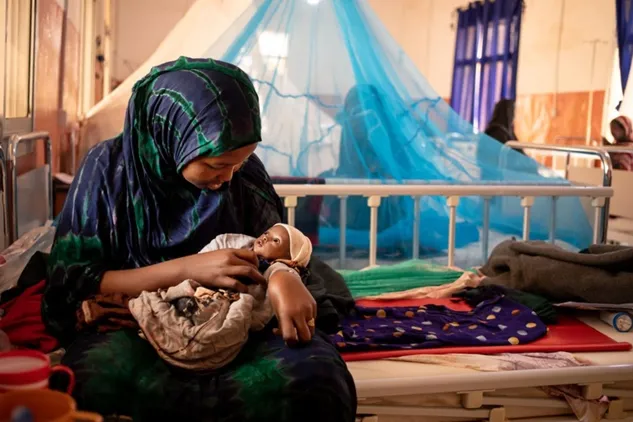
In 2024, an estimated 4.9 million children died before their fifth birthday, including 2.3 million newborns, according to new estimates released today. Most of these deaths are preventable with proven, low-cost interventions and access to quality health care.
According to the report titled "Levels & Trends in Child Mortality," the global under-five death rate has decreased by more than fifty percent since the year 2000. However, since 2015, the rate of decline in child mortality has reduced by more than sixty percent.
This year’s report offers the clearest and most comprehensive overview to date of the number of children, adolescents, and youth who are dying, the locations of these deaths, and for the first time, thoroughly incorporates estimates regarding the causes of death.
For the first time, the report estimates deaths directly caused by severe acute malnutrition (SAM), revealing that over 100,000 children aged 1 to 59 months – or 5 percent – died from it in 2024. The toll rises significantly when indirect effects are factored in, since malnutrition compromises children's immune systems and heightens their vulnerability to common childhood diseases.
Mortality data often do not adequately capture Severe Acute Malnutrition (SAM) as an underlying cause of death, indicating that the true burden is likely significantly underestimated. Countries with the highest numbers of direct deaths include Pakistan, Somalia, and Sudan.
Newborn deaths account for nearly half of all under-five deaths, indicating a slower rate of progress in preventing fatalities occurring around the time of birth. The main causes of death among newborns included complications from preterm birth (36 percent) and complications during labor and delivery (21 percent). Infections such as neonatal sepsis, along with congenital anomalies, also played significant roles in these fatalities.
Beyond the first month, infectious diseases like malaria, diarrhea, and pneumonia were significant causes of death. Malaria continued to be the leading killer in this age group, accounting for 17 percent of deaths, with the majority occurring in endemic regions of sub-Saharan Africa. After significant declines from 2000 to 2015, the progress made in reducing malaria mortality has slowed in recent years. Deaths are still concentrated in a few endemic countries such as Chad, the Democratic Republic of the Congo, Niger, and Nigeria, where factors like conflict, climate shocks, invasive mosquitoes, drug resistance, and other biological threats hinder access to prevention and treatment.
Child deaths remain heavily concentrated in a small number of regions. In 2024, sub-Saharan Africa accounted for 58 percent of all under-five deaths. In this region, leading infectious diseases were responsible for 54 percent of these deaths. In Europe and Northern America, this proportion drops to 9 percent, and in Australia and New Zealand, it drops further to 6 percent. These stark disparities reflect unequal access to proven, life-saving interventions.
In Southern Asia, which accounted for 25 percent of all under-five deaths, mortality was primarily driven by complications that occurred during the first month of life, such as preterm delivery, birth asphyxia or trauma, congenital anomalies, and neonatal infections. These largely preventable conditions highlight the urgent necessity for investing in quality antenatal care, skilled healthcare personnel at birth, care for small and sick newborns, and essential newborn services.
Fragile and conflict-affected countries continue to bear a disproportionate share of the burden. Children born in these settings are nearly three times more likely to die before their fifth birthday than those elsewhere.
The report also finds that an estimated 2.1 million children, adolescents, and youth aged 5–24 died in 2024. Infectious diseases and injuries remain the leading causes among younger children, while risks shift in adolescence: self-harm is the leading cause of death among girls aged 15–19, and road traffic injuries are the leading cause among boys.
Shifts in the global development financing landscape are placing critical maternal, newborn, and child health programs under growing pressure. Surveys, health information systems, and the core functions that underpin effective care all require sustained funding, not only to protect the progress achieved but also to accelerate it.
Evidence shows that investments in child health remain among the most cost-effective development measures. Proven, low-cost interventions, such as vaccines, treatment for severe acute malnutrition, and skilled care at birth, deliver some of the highest returns in global health, improving productivity, strengthening economies, and reducing future public spending. Every dollar invested in child survival can generate up to twenty dollars in social and economic benefits.
To accelerate progress and save lives, governments, donors, and partners must:
"No child should die from diseases that we know how to prevent. But we see worrying signs that progress in child survival is slowing – and at a time when we’re facing further global budget cuts," said UNICEF Executive Director Catherine Russell. "History has demonstrated what can be achieved when the world commits to protecting its children. With sustained investment and political will, we can continue to build on those achievements for future generations."
"The world has made remarkable progress in saving children’s lives, but many still die from preventable causes," said Dr. Tedros Adhanom Ghebreyesus, WHO Director-General. "Children living amid conflict and crisis are nearly three times more likely to die before their fifth birthday. We must protect essential health and nutrition services and reach the most vulnerable families so every child has the chance not only to survive but to thrive."
"These findings are a collective call to speed up the implementation of the proven, scalable solutions that we know are within reach," said Monique Vledder, World Bank Group Director of Health. "The World Bank Group's health target of reaching 1.5 billion people is our concrete commitment to accelerating access to quality primary health services for more children and families."
"The latest estimates from the United Nations Inter-agency Group for Child Mortality Estimation are a stark reminder that progress on child survival is slowing and too many countries are off track to meet the Sustainable Development Goals," said Under-Secretary-General for Economic and Social Affairs Mr. Li Junhua. "We know how to prevent these deaths. What is needed now is renewed political commitment, sustained investment in primary health care, and stronger data systems to ensure no child is left behind."
“These estimates demonstrate that many deaths among children under five – from causes such as preterm birth, lower respiratory infections, and injuries – are avoidable with proven, cost-effective interventions," says Li Liu, PhD, an associate professor at the Johns Hopkins Bloomberg School of Public Health and co-PI of CA-CODE. “The science is clear: targeted investments in primary health care, maternal and newborn health services, routine immunization, nutrition programs, and quality and timely data systems can save millions of lives.”
This is made possible by the UN Inter-agency Group for Child Mortality Estimation (UN IGME), which unifies global child mortality and cause-of-death data in its flagship report. This integration includes estimates from the Child and Adolescent Causes of Death Estimation (CA CODE) group, a research consortium led by the Johns Hopkins Bloomberg School of Public Health.
Child deaths continue to decline globally, though updated data and improved methods mean this round's estimates are slightly higher than reported the previous year. The UN IGME estimates are not directly comparable across rounds, as each update incorporates new survey, census, and civil registration data, revised population and birth figures, and changes in country coverage.
About UN IGME: The United Nations Inter-agency Group for Child Mortality Estimation, or UN IGME, was established in 2004 to share data on child mortality, improve methods for estimating child mortality rates, report on progress toward child survival goals, and enhance the capacity of countries to produce timely and accurately evaluated estimates of child mortality. UN IGME is led by UNICEF and includes the World Health Organization, the World Bank Group, and the Population Division of the United Nations Department of Economic and Social Affairs. For more information: http://www.childmortality.org/
About Johns Hopkins Bloomberg School of Public Health: The Johns Hopkins Bloomberg School of Public Health is dedicated to safeguarding millions from illness and injury through innovative research, practical application of knowledge, and the education of future public health leaders. Established in 1916, the Bloomberg School was the first independent school of public health, created under the auspices of Johns Hopkins University, the first research university in the United States. Currently, researchers at the Bloomberg School operate in diverse environments, ranging from laboratories to communities, focusing on disease prevention, enhancing population health, and influencing health policy both in the U.S. and globally.
#public health
#child health



© 2025 Health Tribe.