
WHO Hub in Berlin Enhances Global Health Threat Readiness with AI
Mar 19, 2026
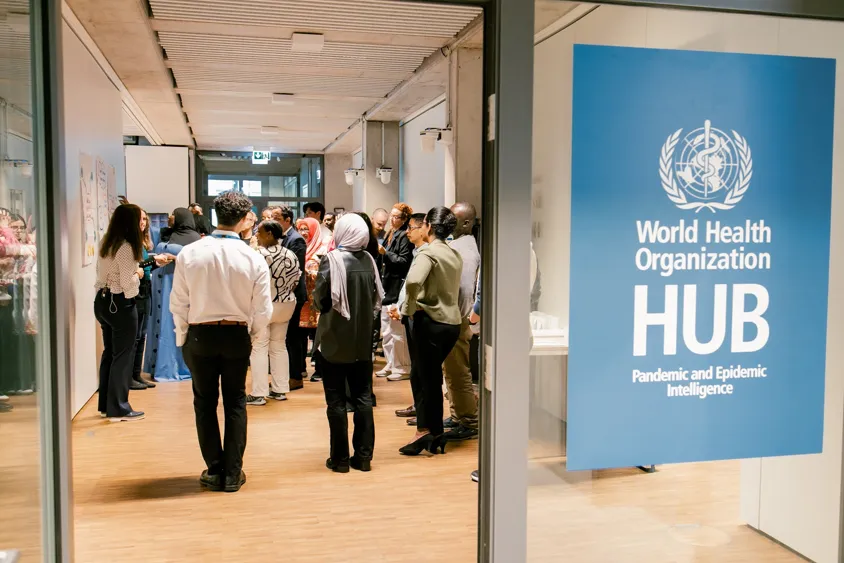
Germany’s Federal Minister of Health, Nina Warken, visited the WHO Hub for Pandemic and Epidemic Intelligence in Berlin today to review its advancements and launch the 2025 Annual Report. This report showcases progress in the application of artificial intelligence, data science, and pathogen genomics aimed at improving global readiness for future pandemics.
In 2025, the WHO Hub in Berlin collaborated with over 160 Member States and more than 190 partners to assist countries and organizations in developing new systems and tools for the rapid detection and understanding of emerging public health threats, irrespective of their origin.
The BMG is yet to confirm whether they wish to provide a statement. ‘Early detection of outbreaks is among the most effective strategies to save lives and prevent epidemics from escalating into global crises,’ remarked Federal Minister of Health Nina Warken. ‘Germany is honored to host and support the WHO Hub for Pandemic and Epidemic Intelligence. Its initiatives not only enhance our safety domestically but also help safeguard individuals worldwide.’
Artificial intelligence is playing an increasingly transformational role in outbreak detection. In 2025, the Hub introduced an updated version of the Epidemic Intelligence from Open Sources (EIOS) system, which utilizes enhanced AI capabilities to scan global online resources in real time, assisting experts in the swift identification of unusual health occurrences. This system is currently operational in 120 countries.
To better anticipate health threats, it is essential for countries to access information beyond conventional health datasets. The Hub facilitates the implementation of Collaborative Surveillance, which integrates data on climate, animals, travel, and population movement to deliver a more comprehensive and real-time understanding of health threats.
The Hub has also broadened global access to pathogen genomics, aiding scientists in identifying new pathogens, including viruses and bacteria, and understanding their transmission and potential risks. Through the International Pathogen Surveillance Network (IPSN), the WHO Hub in Berlin collaborated with 309 partners across 101 countries to enhance access to these technologies.
‘We are entering a new era of global health threats, necessitating novel tools to tackle future challenges,’ said Dr. Chikwe Ihekweazu, Executive Director of the WHO Health Emergencies Programme. ‘The WHO Hub in Berlin empowers countries to utilize data and technology more efficiently, enabling earlier risk identification and expedited responses. No nation can confront these threats in isolation. Robust collaboration is our strongest line of defense.’
‘Berlin provides an optimal environment for our endeavors. We work closely with leading global institutions such as the Robert Koch Institute and the Charité Center for Global Health,’ stated Dr. Oliver Morgan, Head of the WHO Hub for Pandemic and Epidemic Intelligence. ‘Germany has been a crucial supporter of the WHO Hub since its inception, and we are delighted to welcome Federal Minister Nina Warken to the Hub today. This solid partnership aids us in advancing innovation in pandemic and epidemic intelligence, while better equipping countries to prepare for forthcoming health threats.’
The Hub is enhancing the application of advanced analytics and mathematical modeling to forecast the potential progression of outbreaks and evaluate the effectiveness of various response measures. Through its Collaboratory, the Hub links modelers and analysts with governments to ensure their efforts are aligned with real public health requirements. By 2025, this community expanded to 1,300 members from 50 countries and 200 institutions. An AI-enabled pandemic simulator, currently at the prototyping stage, will support decision-makers in evaluating outbreak scenarios and identifying effective disease control strategies.
#public health
#international cooperation

© 2025 Health Tribe.