
WHO Issues New Guidance for Health Emergency Simulation Exercises
Mar 25, 2026
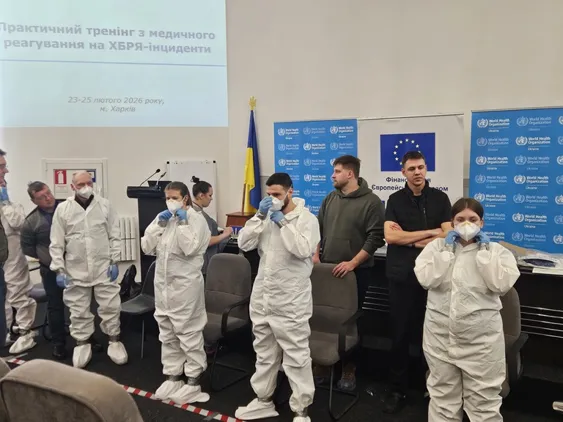
From pandemics to radiological threats, countries are better prepared when they move from ad-hoc drills to structured programs.
In an increasingly unpredictable world, emergencies are no longer rare occurrences; they represent ongoing tests of national resilience. Nations face an expanding array of public health threats, including pandemics, climate-related disasters, and chemical, radiological, and nuclear incidents.
To assist countries in preparing more systematically for emergencies, WHO has recently released new global guidance enabling nations to progress beyond one-time emergency drills and establish National Health Simulation Exercise Programs (NHSEP). These are systematic, government-led initiatives aimed at testing and enhancing preparedness for health emergencies.
The importance of simulation exercises at this time
Recent global crises have revealed significant weaknesses in coordination, communication, logistics, and surge capacity. Simulation exercises provide a safe yet realistic environment to identify these vulnerabilities before lives are endangered.
According to the guidance, a national program ensures that exercises are not isolated events; rather, they become integrated into a comprehensive framework that fosters continuous improvement and preparedness.
In essence, countries are encouraged to shift from a reactive response to a state of ongoing preparedness.
From concept to action: Ukraine’s journey in developing a National Health System Emergency Preparedness.
Ukraine exemplifies how the NHSEP concept can quickly transition from guidance to implementation, even in the most challenging operational contexts.
The NHSEP concept was first operationally tested during a WHO Simulation Exercise Training of Trainers workshop held in Ukraine in August 2024. This training brought together specialists from public health, disaster medicine, emergency services, veterinary medicine, and CBRN preparedness to form a national cadre of facilitators. After the training, the newly trained facilitators were assigned the task of designing and conducting exercises that aligned with national risk priorities and the International Health Regulations.
Building upon this foundation, WHO supported a multi-agency tabletop exercise in September 2024 simulating a radiological emergency at a nuclear power plant.
Dr. Jarno Habicht, WHO Representative in Ukraine, stated, 'We aimed to review the ability to respond to radiological-nuclear incidents, test coordination among different actors, enhance communication, and identify areas that require improvement.'
The exercise uncovered specific operational gaps that might have otherwise gone unnoticed, highlighting the need for more local drills and addressing coordination issues.
These findings provided Ukrainian authorities with an evidence-based roadmap to enhance radionuclear preparedness, as elaborated in a paper published in December 2025 in the Disaster Medicine and Public Health Preparedness journal by Cambridge University.
Most notably, Ukraine has not limited itself to a single exercise. By expanding on the NHSEP approach, the country has since conducted a series of simulation exercises aimed at continuously testing and improving its radionuclear emergency response capabilities.
This embodies the essence of the NHSEP: it is not a one-time drill but an evolving national program of continuous learning.
Looking ahead
Health emergencies will continue to increase in complexity. Whether dealing with pandemics, chemical spills, climate-related disasters, or radiological threats, countries cannot afford to rely on improvised responses.
The new WHO guidance offers a tested framework. Ukraine demonstrates that even amid a crisis, nations can establish a structured national simulation exercise program that improves coordination, clarifies roles, and enhances real-world response.
By institutionalizing simulation exercises through a National Health Simulation Exercise Program, nations can transform preparedness from a sporadic activity into a foundational component of national health security.
HorizonX
WHO is advancing a global initiative through HorizonX, a forward-looking, multi-year simulation exercise program aimed at strengthening preparedness for complex, all-hazards health emergencies using a One Health approach. Through progressively complex exercises conducted in cycles, encompassing tabletop, functional, and full-scale simulations, HorizonX serves as a dynamic platform to stress-test global and national systems under realistic conditions. Guided by its 4Cs + I framework (Context, Capabilities, Country-centered, Continuity, and Impact), the program ensures that exercises are grounded in genuine risk environments, measure functional performance rather than static capacity, align with country priorities, institutionalize continuous learning, and ultimately yield measurable health security improvements at the population level.
Together, NHSEP and HorizonX represent a strategic shift from isolated drills to ongoing, comprehensive stress-testing of preparedness on national, regional, and global levels. By embedding continuous learning and capability assessments within emergency systems, WHO and its partners aim to ensure that when the next crisis arises, the world can respond with well-rehearsed plans, practiced teams, and enhanced collective resilience.
#public health policy
#international collaboration



© 2025 Health Tribe.