
How superfoods can alleviate constipation on World Constipation Day
Mar 28, 2026
Author: Xue Qingxin, Registered Dietitian, Zhang Yu, Researcher/PhD at the Chinese Center for Disease Control and Prevention, National Health Science Popularization Expert. Planning | Yang Yaping. Editor: Yang Yaping, He Yumeng. Proofreading | Xu Lai Zhang Linlin. Source: Science Popularization China WeChat Official Account. The cover image and images within the text are sourced from a licensed stock photo library. Reposting may lead to copyright disputes.
Today is "World Constipation Day," and it also marks the thirteenth "China Constipation Day." The prevalence of constipation continues to increase each year, impacting people's quality of life.
Improving dietary structure is a mild yet effective way to relieve constipation. In our daily lives, many foods can help promote gastrointestinal motility, soften stools, and improve bowel movements, such as fiber-rich oats, sweet potatoes, probiotic-rich yogurt, as well as hydrating fruits like dragon fruit and kiwifruit. Among these "constipation-relieving foods," one small seed stands out — chia seeds.
Chia Seeds: A Nutritional Treasure of Nature
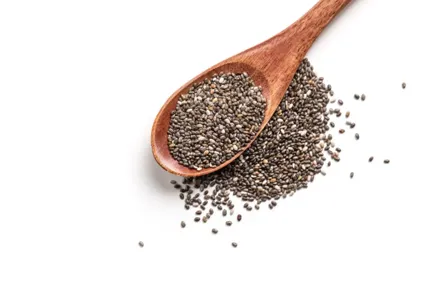
Chia seeds come from the plant Salvia hispanica, appearing oval-shaped and available in both black and white varieties. They resemble sesame seeds and have a smooth surface displaying interlaced patterns.
When discussing chia seeds, people often mistake them for nuts. However, dating back to 3500 BC, chia seeds were classified as a grain. First found in the wild in Mexico and Guatemala, they became a major food crop in those regions. In 2014, chia seeds officially entered the Chinese food market as a new ingredient, gradually gaining acceptance and popularity.
Due to Salvia hispanica's cultivation requirements, it only grows in the highland desert areas of Mexico and North America at approximately 1200 meters above sea level and is nonexistent in Asia. In our country, all consumed chia seeds are imported. Despite their diminutive size (measuring approximately 1.87±0.1mm in length, 1.21±0.08mm in width, and 0.88±0.04mm in thickness, with a thousand-seed weight of 1.2 to 1.4 grams), chia seeds are highly nutritious, rich in dietary fiber, protein, B vitamins, calcium, magnesium, selenium, unsaturated fatty acids, and various antioxidants.
Dietary fiber is the most prominent feature of chia seeds, boasting a concentration of 34.4 grams per 100 grams. This amount is nearly 2.5 times that of black sesame seeds and 1.3 times that of flaxseeds.
The Chinese Nutrition Society recommends that adults should consume 25 to 30 grams of dietary fiber daily. However, the average daily intake among residents is only 10.4 grams, less than half the recommended amount. Chia seeds are an excellent source of dietary fiber; consuming just one bottle cap's worth of chia seeds can fulfill nearly 10% of the minimum recommended daily intake.
When it comes to protein supplementation, most people think of meat, eggs, dairy, and beans. Chia seeds, however, also provide an excellent source of protein. The protein content in chia seeds, at 16.5 grams per 100 grams, surpasses that of grains such as rice, wheat, and corn. Some studies indicate protein levels between 20.70% and 25.32%, with a balanced amino acid profile.
Chia seeds also offer a natural source of B vitamins; vitamin B1 and vitamin B2 are present at 0.62 mg/100 g and 0.17 mg/100 g, respectively, while niacin is found at 8.83 mg/100 g.
For adults in our country, the recommended daily intake of vitamin B1 is 1.4 mg for men and 1.2 mg for women. A vitamin B1 deficiency can adversely affect appetite, while a lack of vitamin B2 can lead to angular cheilitis, cheilitis, glossitis, photophobia, tearing, blurred vision, and sensitivity to cold. As of 2015, the average intake of vitamins B1 and B2 among residents did not meet recommended levels, at only 0.8 mg and 0.7 mg, respectively. Chia seeds can be a beneficial option for supplementing B vitamins.
Chia seeds are rich in minerals, particularly calcium, potassium, magnesium, iron, phosphorus, and selenium. Notably, their calcium, magnesium, and selenium contents are high, at 631 mg/100 g, 335 mg/100 g, and 55.2 mcg/100 g, respectively. If one consumes 10 grams of chia seeds daily, they receive approximately 63 mg of calcium, 33.5 mg of magnesium, and 5.5 mcg of selenium.
Supplementing with calcium and magnesium supports bone health, while selenium contributes to antioxidant activities, cancer prevention, and immune function.
Chia seeds naturally contain high levels of fat, at 30.7 grams per 100 grams, composed primarily of unsaturated fatty acids. The Omega-3 fatty acid content measures 17.8 grams per 100 grams, ranking just below flaxseeds among common nuts (which have 22.8 grams per 100 grams). Omega-3 is essential for human health, aiding in the prevention of chronic diseases and heart conditions.
Chia seeds are also rich in antioxidants, comprising a variety of flavonoids and polyphenols like caffeic acid, rosmarinic acid, quercetin, chlorogenic acid, myricetin, salvianolic acid, catechin, hesperidin, and rutin, which assist the body in combating chronic inflammation.
Consuming one spoonful of chia seeds daily can provide numerous health benefits.
In 2018, the U.S. journal "Impact Factor" published a study by the Asia-Pacific Center for Theoretical Physics, which analyzed the nutritional content of 1,000 foods and ranked chia seeds fifth among the "Top 100 Most Nutritious Foods in the World."
Such a nutritious food should not be overlooked; integrating chia seeds into our daily diet can bring substantial health benefits.
Chia seeds have a high dietary fiber content, with about 25% to 30% of it being soluble fiber, while the remainder consists of insoluble fiber. The soluble fiber can absorb water and expand, allowing chia seeds to increase in volume up to 15 times their original size when soaked. This feeling of fullness can promote intestinal motility, helping to prevent constipation and reduce the risk of gastrointestinal diseases. It's essential to drink enough water during this process!
A study published in the American journal "Nutrition Reviews" indicates that daily consumption of over 7 grams of chia seeds results in a significant reduction in postprandial blood sugar levels after two months.
This effect is attributed to the high levels of dietary fiber and unsaturated fatty acids.
Chia seeds are high in potassium and low in sodium, making them suitable for individuals managing their blood pressure. Research indicates that consuming more than 15 grams of chia seeds daily for 60 to 168 days can lead to an average reduction of 7.14 mmHg in diastolic blood pressure.
Chia seeds, which contain soluble dietary fiber, can effectively inhibit the body’s absorption of cholesterol, thus facilitating lipid reduction. Moreover, the Omega-3 fatty acids in chia seeds can convert into small amounts of EPA and DHA in the body, helping protect lipid health.
Chia seeds are tiny and have a bland flavor, making them less appealing on their own, hence they are often mixed with other foods.
One simple method to use chia seeds is by adding them to milk or yogurt. Just sprinkle them into your drink, stir well, and let them sit for a while.
According to a general woman's serving size, take about 30 grams of oats and spread them at the bottom of a container, evenly pour 75 grams of yogurt on top, then add another layer of 20 grams of oatmeal followed by another layer of 75 grams of yogurt. Finally, sprinkle a tablespoon of chia seeds on top, add chopped fruits like pineapple, dragon fruit, and kiwi, seal the container, and refrigerate overnight for a convenient ready-to-eat meal in the morning.
Chia seeds can also enhance bread, steamed buns, mixed grain rice, salads, porridge, and soups.
Don't let their small size deceive you; chia seeds are incredibly nutrient-dense. One tablespoon offers rich sources of Omega-3 fatty acids, dietary fiber, protein, various vitamins, and minerals, as well as antioxidants. They also enhance the visual appeal of dishes, stimulating appetite. Remember to stay hydrated!
References
Zhang Youxin, Gao Yang, Min Xueyang, Yan Xuebing, Wei Zhenwu, Fan Yi, Zhang Haixi, Zhang Chuanjie. A New Type of Oilseed Crop - Chia Seeds [J]. China Oils and Fats, 2022, 47(10): 83-88117.
Yang Yuexin. Food Composition Table of China, 6th Edition, Volume 1. Beijing University Medical Press, 2018.
Xu Ningning, Wu Tian, Huang Qing. Research Progress on Active Components, Physiological Effects, and Development and Utilization of Chia Seeds. Food Industry Technology, 2023, 44(7): 448-454.
Teoh S L, Lai N M, Vanichkulpitak P, et al. Clinical evidence on dietary supplementation with chia seed (Salvia hispanica L.): a systematic review and meta-analysis. Nutrition Reviews, 2018, 76(4):219.
#nutritional diet
#gut health



© 2025 Health Tribe.