
Doctors reveal two hidden causes of sudden cardiac death
Apr 02, 2026
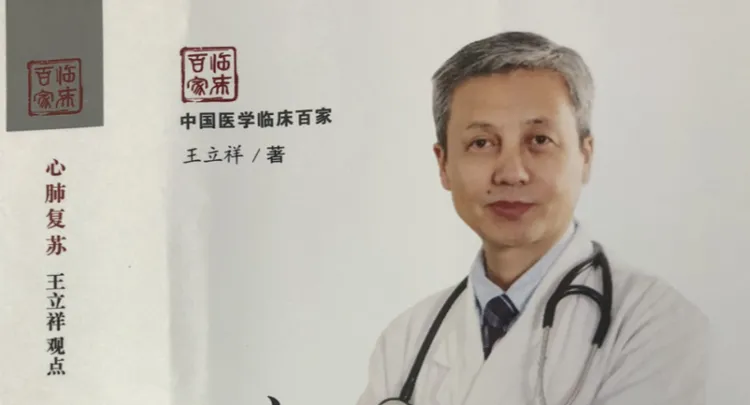
Author: Wang Lixiang (former Director of the Emergency Department at the Third Medical Center of the PLA General Hospital, Professor, Doctoral Supervisor, Chairman of the Cardiac and Pulmonary Resuscitation Professional Committee of the Chinese Research Hospital Association, National Health Popular Science Expert), Meng Qingyi (Chief Physician of the Emergency Department at the First Medical Center of the PLA General Hospital, Professor, Doctoral Supervisor, Vice Chairman of the Professional Committee of Cardiopulmonary Resuscitation of the China Research Hospital Association, National Health Science Popularization Expert), Mi Yuhong (Chief Physician, Professor, and Doctoral Supervisor at the Emergency and Critical Care Center of Beijing Anzhen Hospital affiliated with Capital Medical University; Vice Chairman of the Cardiopulmonary Resuscitation Professional Committee of the Chinese Research Hospital Association; National Health Science Popularization Expert). Reviewer: Not specified. Curator: Not specified. Production/Organizational Information: The series 'A Hundred Schools of Clinical Medicine in China' published by Science and Technology Literature Publishing House features 'The Views of Professor Wang Lixiang on CPR.'
Doctors reveal two hidden causes of sudden cardiac death: The article explains differences between 'cardiac arrest' and 'sudden death,' improving awareness of cardiovascular health. The Editor's Note highlights the rising incidents of sudden cardiac arrest during sports, which have startled many and raised awareness. Terms like 'sudden death,' 'cardiac sudden death,' and 'cardiogenic sudden death' are frequently used interchangeably, leading to confusion. However, medical experts in China have proposed a new classification from long-term clinical experiences. Within this framework, 'cardiac sudden death' is a broader classification featuring three main types: 'intracardiac,' 'extracardiac,' and 'cardiogenic,' while 'cardiogenic sudden death' is merely a subset of 'intracardiac.' This classification stands out in international discourse. Today, we aim to elucidate these terms clearly.
Sudden death is described as an unforeseen, natural demise. In essence, sudden death represents the unexpected end of life for a previously healthy individual, occurring within a very brief span due to natural causes. The timing can be loosely defined variably as within 1 hour, 6 hours, or even 24 hours. Its core characteristics are encapsulated in three adjectives: rapid, unexpected, and non-violent, meaning it spares any external causes such as injuries or poison.
Traditionally, both 'cardiac sudden death' and 'cardiogenic sudden death' have been treated as equivalent by numerous guidelines, both implying sudden death due to heart-related issues like coronary artery disease or fatal arrhythmias. The conventional understanding holds that the cause of death originates from within the heart. However, clinical observations suggest that many individuals who experience cardiac arrest may not have underlying cardiac issues; rather, other conditions can precede and lead to cardiac failure. Instances such as cerebral hemorrhage, pulmonary embolism, or extreme emotional responses like fright or joy can result in such outcomes. This raises the question: do these cases still fall under the umbrella of 'cardiac sudden death'? The traditional definitions do appear somewhat misleading in this context.
Chinese scholars have innovatively categorized 'sudden cardiac death' into three main types. According to the '2016 Chinese Expert Consensus on Cardiopulmonary Resuscitation' guidelines, 'sudden cardiac death' is a broad term that refers to intrinsic cardiac, extrinsic cardiac, and psychogenic causes.
1. Cardiac factors, referred to as 'cardiac sudden death,' pertain to issues within the heart's structure or electrical functions. The most prevalent conditions include coronary heart disease – which alone constitutes over half of all cases – as well as cardiomyopathy, myocarditis, and certain hereditary electrical disorders (for instance, long QT syndrome, where structural integrity is intact but electrical disturbances occur). These types of cardiac sudden death are typically triggered by high-intensity exercise or emotional stress, conceived as internal damage akin to injuries to a house's walls or electric shorts.
2. External factors indicate that problems in other parts of the body affect the heart. A healthy heart can be mechanically impacted by diseases elsewhere under specific conditions. For example, cerebral hemorrhage, known as brain-heart syndrome, occurs when physical exertion elevates blood pressure, potentially bursting vessels in the brain, releasing a surge of stress hormones that can 'poison' the heart muscle and induce cardiac arrest.
Pulmonary embolism can occur when previously inactive individuals suddenly exercise, causing leg clots to dislodge and obstruct pulmonary arteries, leading to acute overload and potential collapse of the heart's right side.
Other examples include blunt chest impact, such as being struck by a baseball during a vulnerable electrical phase, which can provoke ventricular fibrillation, or major vascular ruptures that impede heart function by compressing it within the pericardium.
The critical point to grasp is that, in these scenarios, the heart often emerges as the 'victim' rather than the 'culprit.' Nonetheless, each situation ultimately results in cardiac arrest, categorically falling under 'cardiac sudden death.'
3. Psychological factors can also affect cardiac health. Extreme emotional responses—whether joy or despair, especially combined with physical strain—can spike catecholamines, releases of stimulating hormones leading to stress-induced cardiomyopathy, more commonly acknowledged as 'broken heart syndrome.' This condition can culminate in cardiac arrest, demonstrably not only elicited by sorrow but also by radiant joy, such as winning a jackpot or a pivotal sports victory, which some refer to as 'happy syndrome.' To visualize this, psychological influences serve as a 'remote control' for emotions, abruptly maxing out setting and sending the heart into dysfunction.
So, what precisely constitutes 'cardiac sudden death'? According to previous classifications, it relates to intrinsic cardiac factors, where the causative elements of death stem directly from heart-specific diseases. This definition embodies the narrowest and most traditional viewpoint. The 'Chinese Expert Consensus on Autopsy and Molecular Diagnosis of Cardiac Sudden Death' affirms the link between 'cardiac sudden death' and cardiovascular disease.
This can be summarized plainly: Sudden cardiac death = cardiac internal + cardiac external + cardiac causes. Sudden cardiac death offers a conceptual bin within the heart, akin to a distinct compartment in a basket.
What constitutes the practical relevance of this delineation? Firstly, in prevention, it is crucial to extend beyond mere heart monitoring. In prior discussions of 'sudden cardiac death,' focus pointedly gravitated towards heart health and defibrillation measures. Yet, external risk factors, such as those preventing strokes and pulmonary embolisms, alongside psychological tackling could be equally significant—particularly in exercise-related sudden death incidents. A holistic preventive framework addressing internal, external, and psychological elements is essential.
Secondly, first aid protocols will vary accordingly. For cardiac emergencies, immediate defibrillation and antiarrhythmic drugs are paramount. For extrinsic factors, addressing the primary ailment is critical, including thrombolysis or thrombectomy in cases of pulmonary embolism, or ameliorating intracranial pressure with cerebral hemorrhage.
In terms of psychological effects, it is imperative to not only focus on resuscitation efforts but also on emotional stabilization and autonomic nervous system regulation during interventions.
Moreover, accurate forensic identification lends itself to improved clarity. In cases of sudden death, discovering normal structural cardiac formation while observing notable cerebral bleeding might typically mislabel such an event as 'cardiac sudden death.' Contextually, it should be rightly categorized as 'extracardiac cardiac sudden death.' Clear classification plays a pivotal role in uncovering and supporting post-mortem investigations, guiding families in potential genetic screening measures.
'Sudden cardiac death' contrasts with 'cardiac origin sudden death' through a minor, yet significant distinction in phrasing. The former presents a broad concept encapsulating three classifications: heart-specific issues, complications stemming from other organs, and emotional-induced events; while the latter narrows focus solely to issues stemming from the heart itself. This classification, proposed by Chinese scholars, advances beyond semantics—it strives for precision in preventing and responding to emergencies and forensic identifications related to sudden death. In the wake of tragedies on the playing field, it is vital to recognize that heart protection extends beyond mere cardiac health, factoring cerebral and pulmonary vessels while also accounting for emotional variations. Life is an interconnected system, thus, a comprehensive approach is crucial in mitigating incidents of sudden death.
#cardiovascular health
#awareness of first aid

© 2025 Health Tribe.