
Aggressive virus causes severe symptoms in 4 year old girl
Apr 08, 2026
Contributed by: Quanzhou Maternal and Child Health Hospital (Quanzhou Children's Hospital). Guidance: Chief Physician Wu Junfeng. This article is for informational purposes only and should not be considered as medical advice.
Recently, a 4-year-old girl named Qiqi (pseudonym) from Quanzhou experienced sudden fever and vomiting, peaking at 38.9°C. She vomited over ten times in one day and frequently complained of stomach pain, developing watery diarrhea, which caused her significant discomfort. Her family initially suspected an upset stomach or gastroenteritis and took her to the outpatient department of Quanzhou Maternal and Child Health Hospital (Quanzhou Children's Hospital). A stool PCR test conducted by the attending physician revealed norovirus as the cause.
Dr. Wu Junfeng, the chief physician at Quanzhou Maternal and Child Health Hospital (Quanzhou Children's Hospital), reported a notable rise in the number of children diagnosed with diarrhea admitted to the hospital's infectious disease department in the past half month. Some of these children tested positive for norovirus. Currently, norovirus infections are sporadic, and the hospital has not detected any clusters of cases.
Norovirus Brief Profile
Norovirus is classified under the Caliciviridae family and is a type of enteric virus. The spread of norovirus infections is rapid, mainly through the gastrointestinal tract, and there is no vaccine currently available, making preventive strategies crucial. Despite its contagious nature, norovirus is typically self-limiting, with most children able to recover independently due to their immune responses.
The incubation period for norovirus is short, causing acute gastroenteritis, with an average incubation period of 12 to 48 hours.
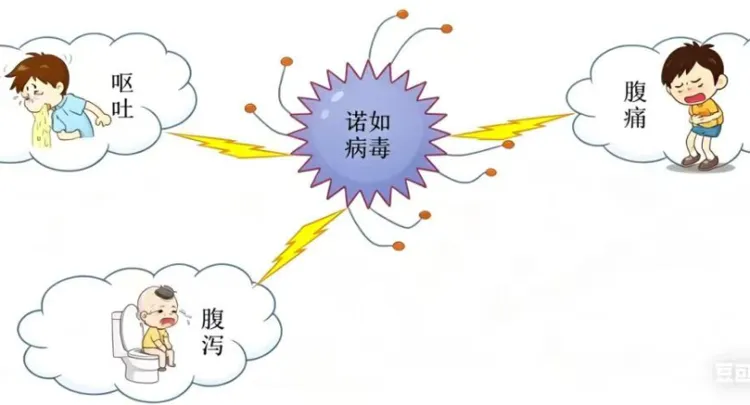
Common symptoms include vomiting, diarrhea, discomfort, nausea, and abdominal pain. Other symptoms may consist of fever, headache, and body aches. Infected children often experience pronounced vomiting and diarrhea, leading to dehydration, which is characterized by reduced urine output, dry mouth, dry throat, and dizziness or lightheadedness when standing. In children, dehydration may appear as crying without tears or with very few tears and abnormal states of drowsiness or irritability.
Main symptoms of norovirus include nausea, vomiting, diarrhea, stomach cramps, and sometimes low-grade fever. These symptoms generally arise within 12 to 48 hours following exposure and can result in dehydration, especially among vulnerable populations.
Dehydration Signs
Norovirus is a short-term illness typically characterized by diarrhea and is usually self-limiting. Most individuals will recover within about a week, with significant improvement often seen within approximately three days.
The peak season for norovirus infectious gastroenteritis runs from October to March, with children, the elderly, and immunocompromised individuals classified as "high-risk susceptible groups," particularly children under five years old. Crowded places like schools and childcare facilities are hotspots for potential outbreaks or clusters of norovirus gastroenteritis.
Norovirus primarily spreads via the fecal-oral route, but it can also be transmitted through contaminated water, food, surfaces, and air. Direct contact with the hands, mouth, or feces of an infected individual, or indirect contact with objects contaminated by respiratory droplets from said individual, can result in infection.
Scientific nursing; preventing dehydration is crucial.
At present, there is no specific antiviral treatment for norovirus. Care is predominantly supportive and focused on preventing dehydration. In cases of fever, treatment is necessary, and fluid replacement is critical during diarrhea.
Scientific rehydration: preventing dehydration is preferable to relying on medication. The World Health Organization recommends Oral Rehydration Salt III as the "gold standard" for replenishing fluids and electrolytes. It should be administered in small, frequent doses; plain water or high-sugar drinks alone should be avoided, as plain water does not replace electrolytes and high sugar content may exacerbate diarrhea. Immediate medical attention is needed if dehydration signs manifest, such as crying without tears, significantly reduced urine output (not urinating for over 6 hours), or sunken eyes.
Follow the doctor’s guidance regarding medication: antibiotics are ineffective against norovirus since it is a virus, and antibiotics do not target viruses; they may disturb the intestinal microbiome. Diarrhea from norovirus serves as a protective mechanism to expel toxins, and prematurely forcing a stop to diarrhea can be counterproductive. Montmorillonite powder can safeguard the intestinal mucosa and alleviate watery stools; however, it should be used under a doctor's or pharmacist's supervision, and self-administration over an extended period is not advisable.
Home Isolation: Due to norovirus’s highly contagious nature, if your child shows symptoms like nausea, vomiting, or diarrhea, seeking medical attention promptly is recommended. Ensure they stay home and avoid school during illness, while making sure to disinfect any vomit, classrooms, toys that have been in contact, surfaces, etc. It is important to recognize that even within three days after symptoms resolve, the virus may still be contagious, so it is best to avoid crowded environments during recovery and maintain home isolation until 72 hours after all symptoms have completely disappeared.
Dietary Adjustments: During acute norovirus gastroenteritis, it's vital to ensure that the child gets ample rest and follows a light diet. In the acute phase of norovirus infection, Dr. Wu recommends a light and nutritious diet comprised of easily digestible liquids and semi-liquids, while advising against high-oil, high-fat, and spicy foods to minimize stress on the gastrointestinal tract. For severe vomiting and diarrhea, fasting for 6 to 8 hours may be needed. Prompt fluid therapy can correct water and electrolyte imbalances. Oral rehydration salts may be provided to the child as per physician direction, and if vomiting and diarrhea symptoms are severe, seek medical attention immediately.
As the child's condition improves, gradually reintegrate the diet. Once symptoms have diminished, slowly introduce clear liquids such as rice soup and lotus root powder, eventually transitioning to semi-liquid, soft foods, and then a regular diet.
To prevent norovirus, you can implement the following measures: 1. Practice good hand hygiene: Thoroughly wash hands with soap and running water, especially after using the restroom and before handling or consuming food. 2. Clean and disinfect surfaces: Regularly sanitize frequently touched surfaces, particularly kitchens and bathrooms. 3. Cook food thoroughly: Ensure food is cooked to appropriate temperatures, especially seafood, which may carry the virus. 4. Wash fruits and vegetables: Rinse fresh produce under running water before consumption to remove potential contaminants. 5. Avoid close contact: Stay away from ill individuals and do not share utensils, towels, or food. 6. Stay hydrated and rest: If you become unwell, ensure ample fluid intake and rest to facilitate recovery. By adhering to these practices, the risk of contracting or spreading norovirus can be significantly reduced.
Norovirus infection is mainly an intestinal disease with no vaccine currently available to prevent infection. The authoritative recommendation from the China Center for Disease Control and Prevention stresses the importance of personal hygiene, food safety, drinking water hygiene, and environmental sanitation for prevention. Therefore, essential points to remember include: 1. Prioritize hand hygiene. Family members should adopt good personal hygiene habits and make frequent handwashing a priority, especially before food handling, eating, or after using the toilet. Hands should be washed with soap or hand wash and running water, rubbing together for a minimum of 20 seconds. 2. Avoid consuming raw or cold foods, as any uncooked or unprocessed food may be contaminated with norovirus. Maintain food hygiene standards; thoroughly wash fruits and vegetables, and ensure food is cooked properly, particularly shellfish like oysters, which must be fully cooked before consumption as they can harbor norovirus from contaminated water. 3. Ensure drinking water hygiene; always drink boiled water and avoid untreated sources. 4. Maintain cleanliness in your living environment. Regularly ventilate indoor spaces by opening windows to promote air circulation.
While alcohol is ineffective against norovirus, disinfectants based on chlorine, high boiling temperatures, sunlight, and ultraviolet light can effectively eliminate norovirus. Disinfect furniture surfaces, doorknobs, toilets, and other frequently contacted areas with chlorine-based cleaners. When cleaning items contaminated with vomit, wear plastic gloves and masks to avoid direct contact.
Family members should adopt self-protection and health monitoring measures. If children experience gastrointestinal symptoms like diarrhea, vomiting, or abdominal pain, they should seek immediate medical care.
Encourage children to engage in physical exercise while ensuring a balanced diet to strengthen their immune systems.
#disease prevention
#child health



© 2025 Health Tribe.