
Is spring causing your knees to creak? What does it mean?
Apr 08, 2026
Author: Not specified Reviewer: Not specified Curator: Not specified Production/Organizational Information: Not specified Title: Is spring causing your knees to creak? What does it mean? Introduction: Many returning runners hear knee noises due to increased exercise load; it often indicates adaptation, not injury. Proper warm-ups and gradual increases can help. Keywords: ['Sports skills', 'Knee joint'] Main text: Spring has arrived, and the weather is warming up. Many people are putting their exercise plans, which were set aside all winter, back on their agendas. Some are starting to walk briskly, others are resuming jogging, and some are pulling out their running shoes in one go, ready to get serious about running.
However, the reality is often that as soon as a person starts to move, their knees begin to make noise. They creak when going down stairs, sound off when squatting, and make noise even after running a few steps. Some people experience just a single "click," while others hear "rustling" or "creaking," sometimes accompanied by mild soreness or discomfort. Many individuals suddenly become anxious: Is my knee wearing down? Is there a problem with my meniscus? Will I not be able to run in the future? In fact, most of the time, sounds coming from the knee do not necessarily indicate knee "damage." This occurrence is particularly common in spring when people are resuming exercise and starting to run again. Many issues are not simply due to a problem with the knee itself but rather related to factors such as a rapid increase in running load, insufficient lower limb strength, poor movement control, and unstable gait. In other words, the creaking sound from the knee is often not just an isolated issue but a slight deviation in forces and control during the entire running process.
1. What does it mean when the knee makes a "creaking" sound? In medical terminology, sounds resulting from joint movement are referred to as joint crepitus. This can be roughly categorized into two types. 1. Physiological click. Such popping sounds are quite common and usually not a cause for concern. For instance, when you move your joints, you might occasionally hear a "click" sound, but if there is no significant pain, swelling, or impact on your mobility, it often results from changes in pressure within the joint, the formation and bursting of gas bubbles, or noises made when tendons or soft tissues lightly glide over bony structures. These types of sounds resemble "noisy movement" and do not necessarily indicate an injury.
2. Abnormal sounds that require vigilance. If the sound occurs frequently and has a raspy "creaking" or "friction" quality, accompanied by pain, swelling, stiffness, noticeable discomfort when going up or down stairs, and worsening symptoms after running, it indicates that it may not be as simple as just a "one-time sound." Instead, it suggests possible issues with uneven stress, improper movement patterns, or excessive local irritation in the knee joint during activity. A common situation for those returning to exercise in spring is an increase in pressure on the patellofemoral joint after running. This can lead to improper tracking of the patella, resulting in sensations of friction, discomfort, or even clicking sounds in the front of the knee. In simpler terms, the knee is moving, but it isn't doing so along the "most comfortable route."
Why do knee problems tend to arise more easily when resuming running in spring? This is not directly related to "spring" itself; the key point is that many people suddenly switch from low-frequency activities to high-frequency activities. During winter, prolonged sitting and limited movement can lead to several changes in the body: decreased strength in the lower limbs and glutes, worsened core and pelvic control, reduced ankle joint flexibility, unfamiliarity with running movements, and a decline in the body's ability to adapt to impact loads. In spring, many people begin to exercise in this way: after a long period of inactivity, they jump right into running 5 kilometers, or suddenly engage in intense training on weekends without prior preparation. They might chase after pace and distance from the start, neglect proper warm-ups, and focus solely on whether their knees hurt, rather than considering their overall movement. This is when problems are most likely to occur, especially with the knees. Running is essentially a continuous, coordinated action involving the whole body. With each landing, force is transmitted along the chain from the foot to the ankle, knee, hip, pelvis, and torso. If any part of this chain is not well controlled, the knees can end up bearing more pressure than necessary.
Three simple signals to help you determine if you should seek medical attention. If the following situations arise, don't push through anymore: obvious swelling in the knee, pain at night or progressively worsening pain, a feeling of locking, weakness in the leg, difficulty in smooth extension and flexion, increasing pain after running, and impact on daily walking as well as going up and down stairs, along with a clear history of sprain or injury. At this point, consider whether there are actual injuries to the meniscus, ligaments, cartilage, or patellofemoral joint, and you should visit the orthopedic department of a hospital.
Four: How to Start Spring Steadily. Don't start running right away; first, awaken your body. In the first two to three weeks of resuming running, focus not on how fast to run but rather on allowing the body to readapt to the rhythm of repetitive impacts. You can start by combining walking and running, beginning with short distances and gradually increasing running volume each week while including rest days. It's crucial not to run every day. For those who haven't been active for a long time, maintaining a consistent running routine is far more important than achieving performance results in the first week.
2. Warm up before running; don't just stretch your legs. Instead of static stretching for half a day before running, it’s better to engage in dynamic warm-ups that relate to running, such as jumping jacks, high knees, quick small steps, hip joint exercises, and ankle mobility activities. This can raise body temperature, improve joint mobility, and enhance neuromuscular control more effectively, making the first kilometer feel less "stiff." Training glutes, legs, and control is more beneficial than merely protecting the knees.
If your first reaction to knee discomfort is to buy knee braces or apply ointments, that often addresses symptoms but not underlying issues. For runners, it’s more crucial to strengthen foundational abilities: Gluteus medius training: side-lying clam shells, resistance band lateral walks; Gluteus maximus training: glute bridges, step-ups; Quadriceps training: wall sits, sit-to-stand exercises; Core stability training: dead bugs, bird dogs, planks; Single-leg control training: single-leg stands, single-leg half squats, and so on.
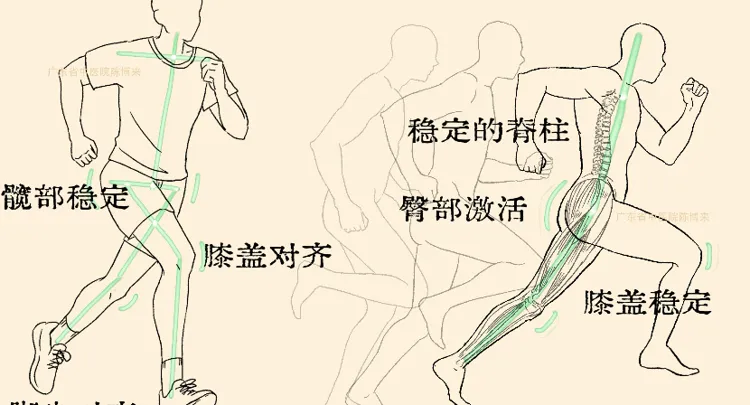
When running, prioritize being "light" and "steady" before rushing to achieve "big" and "fast." A knee-friendly running technique typically has the following characteristics: a moderate stride length, light landing, minimal vertical movement of the body, knees generally aligned with the direction of the toes, a naturally stable torso, and a consistent rhythm without sudden pace changes. You don’t necessarily need to run with a "professional" style, but at the very least, avoid pounding the ground with every step, twisting your hips, and wobbling your knees. The most knee-friendly way to run isn’t about "gritting your teeth and pushing through," but rather "being lighter, more stable, and slower." Remember, if you experience any discomfort, be sure to seek medical attention promptly!
#sports skills
#knee joint



© 2025 Health Tribe.