
Six popular fruits ranked for health benefits find spring champion
Apr 10, 2026
Author: Gu Chuanling, Deputy Secretary-General of the Capital Health Nutrition and Cuisine Association, Registered Dietitian. Reviewer: Zhang Na, Associate Researcher at the School of Public Health, Peking University, Member of the Chinese Nutrition Society. Curator: Yang Yaping. Production: Nutritionist Gu Chuanling (id: guchuanlingyys). Proofreading: Xu Lai, Zhang Linlin. The cover image and images within the text are sourced from a copyright stock photo library. Reproducing content may lead to copyright disputes.
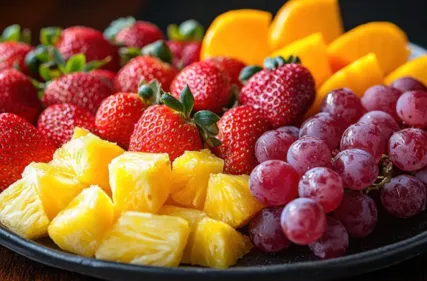
Title: Six popular fruits ranked for health benefits find spring champion Introduction: Spring brings abundant fruit; this article compares nutritional values of strawberries, cherries, and loquats to boost health awareness. Keywords: ['Nutritional diet', 'Healthy living'] Main text: As soon as spring arrives, the fruit stalls become lively. Strawberries are bright red, and pineapples are fragrant. Cherries, loquats, mulberries, and mangoes have also started appearing in the market. When it comes to buying fruits, many people still rely on the same three criteria: price, appearance, and sweetness. However, if we examine it seriously from a nutritional perspective, the answer often differs from our intuition. We have gathered the six most prominent fruits of spring—strawberries, pineapples, cherries, loquats, mulberries, and mangoes—and compared them across several dimensions: energy, sugar, dietary fiber, vitamin C, glycemic index (GI), and potassium. The data mainly references the 'China Food Composition Table,' the USDA Food Composition Database, and the International GI Table. To begin with the conclusion: If we only consider conventional nutrition, strawberries stand out the most. Among the six items compared, it secured first place in four categories: lowest energy, lowest sugar content, highest dietary fiber, and highest vitamin C. The performance in the remaining two categories was also commendable: although its glycemic index (GI) is slightly higher than that of cherries, it still qualifies as a low GI fruit; and while its potassium content is not as high as that of cherries and mangoes, it remains at a moderate level. In other words, if you're looking for a fruit that is low in calories, has less sugar, is high in vitamin C, and has a decent amount of dietary fiber, then spring is really a great time to consider strawberries. Of course, this is not to say that other fruits are not worth eating. When it comes to fruits, there has never been just 'one champion.' Strawberries excel in overall performance, cherries win with their high potassium and low GI, mangoes and loquats shine due to their beta-carotene content, mulberries have their own unique anthocyanins, while pineapples are the flavor contenders. Let's talk about them one by one. Strawberries: The fruit that is most worth prioritizing in spring. If I had to recommend one fruit for spring, I would first recommend strawberries. The reason is simple: it is not that one specific indicator stands out, but rather that it performs well overall. With low calories, low sugar, high fiber, and high vitamin C, such fruits are generally friendly for most people. In the fruits of spring, strawberries have an easily overlooked advantage: they are high in folate content. Their folate level is 31.8 micrograms per 100 grams. Many people associate folate only with preconception, pregnancy, and breastfeeding. In fact, it is also needed by the general population. When there is a deficiency of folate, homocysteine levels can rise more easily, which is an independent risk factor for cardiovascular disease. Additionally, strawberries are rich in antioxidant components such as anthocyanins, flavonoids, and polyphenols. So strawberries are not only good-looking and delicious, but they also have some impressive qualities when it comes to antioxidants. Some people notice that the water turns red when washing strawberries and suspect that they might be dyed. There’s no need to be alarmed. The anthocyanins in strawberries are naturally water-soluble, so if the flesh is slightly damaged while washing, it's normal for the anthocyanins to leach into the water, causing it to turn red.
#nutritional diet
#healthy living


© 2025 Health Tribe.