
How to treat avascular necrosis of the femoral head effectively
Apr 13, 2026
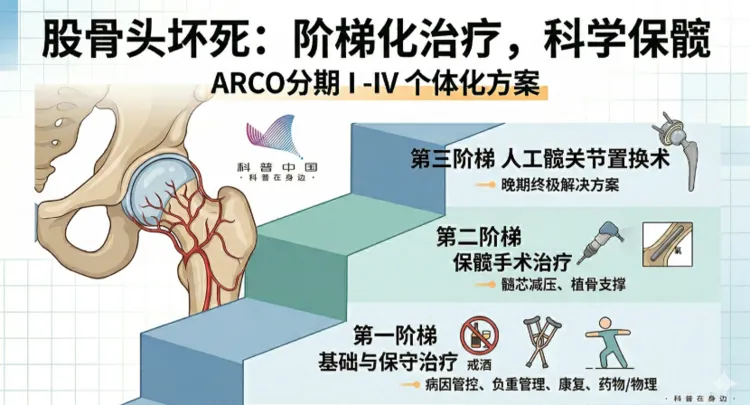
Title: How to treat avascular necrosis of the femoral head effectively Introduction: Effective treatments for avascular necrosis of the femoral head stress early detection to prevent joint replacement and restore health. Keywords: ['Disease treatment', 'Health education'] Author: [Not specified] Reviewer: [Not specified] Curator: [Not specified] Production/Organizational Information: [Not specified] Main text: Avascular necrosis of the femoral head is not an incurable condition! A stepwise treatment approach can help you scientifically preserve your hip joint.
Upon receiving a diagnosis report of "avascular necrosis of the femoral head," many people's first reaction is, "That's it, am I going to be paralyzed? Do I need a joint replacement?" Some even refer to it as "a cancer that doesn't die," falling into extreme anxiety and panic. However, with the rapid advancement of orthopedic medicine, avascular necrosis of the femoral head is no longer incurable, and treatment options extend beyond mere "joint replacement." A well-established, evidence-based, stepwise treatment plan can help the majority of patients delay disease progression and preserve their hip joints. Even in the later stages, advanced joint replacement techniques can alleviate pain and allow a return to normal life. Today, we will discuss treatment options for avascular necrosis of the femoral head, helping everyone avoid misconceptions and select appropriate treatment methods.
First, let's understand: what exactly is avascular necrosis of the femoral head? We can think of the hip joint as the "bearing" of the lower limbs, with the femoral head acting as the round "ball" within this bearing. Its surface is covered with smooth cartilage, connecting the thigh bone to the pelvis, bearing the full weight and functional movements involved in walking, running, jumping, and squatting.
Avascular necrosis of the femoral head, medically referred to as osteonecrosis of the femoral head, occurs when the blood vessels supplying this "ball" become obstructed or damaged. Consequently, bone tissue loses its nutrient supply, leading to gradual cell death, internal structural damage, collapse, deformation, hip joint pain, limited mobility, and even disability.
In clinical practice, three core causes of femoral head necrosis are evident: first, traumatic factors such as neck of femur fractures and hip dislocations directly damage blood vessels; second, non-traumatic factors, with long-term high-dose glucocorticoid use and excessive alcohol consumption as the most common triggers; third, cases with unknown causes, known as idiopathic femoral head necrosis.
According to the internationally recognized ARCO staging standard, avascular necrosis of the femoral head is categorized into stages I-IV, corresponding to our understanding of ultra-early, early, middle, and late stages. Treatment plans should develop individualized strategies based on the disease stage, patient’s age, area of necrosis, and overall health, rather than adopting a one-size-fits-all approach like joint replacement.
Core Plan: Hierarchical Treatment for Avascular Necrosis of the Femoral Head First Level: Basic and Conservative Treatment — The First Line of Defense for Early Patients in Hip Preservation.
Applicable population: Patients with ARCO I stage, small necrotic areas, mild hip joint pain, and no risk of femoral head collapse, also serving as an auxiliary treatment during the perioperative period. Many believe "treating a disease relies on medication and surgery," but for early-stage avascular necrosis of the femoral head, addressing underlying causes and making lifestyle changes are fundamental.
1. Strict management of disease causes. If the underlying cause is unaddressed, treatment is unlikely to be effective. For hormone-related patients, dosages should be adjusted under specialist guidance to minimize or discontinue hormone use. Alcoholic necrosis patients must completely abstain from alcohol, as even small amounts can worsen bone damage. Managing underlying conditions such as lupus, decompression sickness, and hyperlipidemia is essential to eliminating factors that contribute to femoral head ischemia.
2. Scientific Load and Rehabilitation Management. A common misconception is that those diagnosed with avascular necrosis of the femoral head must remain bedridden for long periods. Prolonged bed rest can lead to muscle atrophy, osteoporosis, and worsen hip joint adhesion.
Instead, the correct approach is to avoid weight-bearing and engage in scientific rehabilitation: using crutches in daily activities reduces vertical weight on the affected hip joint, decreasing pressure on the femoral head. Under rehabilitation guidance, non-weight-bearing exercises strengthen hip joint muscles, enhancing muscle strength, stabilizing the hip joint, reducing stress on the femoral head while maintaining normal joint mobility.
Standard Pharmacotherapy and Physical Therapy. There is currently no "miraculous cure" for avascular necrosis of the femoral head. The core purpose of drug therapies is to alleviate symptoms and delay disease progression, requiring orthopedic guidance to avoid misleading "family recipes" or "cures." Recognized effective drugs include those that improve microcirculation, bisphosphonates, and non-steroidal anti-inflammatory drugs (NSAIDs).
In addition, physical therapy methods like extracorporeal shockwave therapy and hyperbaric oxygen therapy are supported by evidence. Extracorporeal shockwave therapy stimulates vascular regeneration in necrotic areas, while hyperbaric oxygen therapy enhances local oxygen supply to the femoral head, improving conditions for bone cell survival.
Second Step: Hip Preservation Surgery Treatment - Core Program for Mid-term Hip Preservation Patients. Applicable population: Patients in early stages of ARCO II and III with moderate to large necrotic areas and significant hip pain symptoms, but without obvious femoral head collapse.
We correct the misconception: “Once avascular necrosis of the femoral head reaches mid-stage, only a joint replacement remains.” Contrary to this, mid-stage is a prime opportunity for hip preservation surgery. At this stage, the femoral head structure remains intact. Through surgery to remove necrotic lesions and restore blood supply, joint replacement can often be effectively avoided. Clinically, the success rate of appropriate patients undergoing hip preservation surgery can reach 70%-80%.
Current hip preservation surgeries can be categorized as follows: 1. Core decompression surgery: a classic minimally invasive procedure that involves drilling small holes in the thigh bone, relieving pressure in the necrotic area to improve blood vessel growth, as well as allowing for necrotic bone tissue removal via the created channels.
2. Bone Grafting Support Surgery: This involves complete necrotic tissue removal and filling with autologous or allogenic bone, or a tantalum metal rod, providing mechanical support and preventing collapse.
Biological-assisted therapy: Techniques like stem cell transplantation and platelet-rich plasma (PRP) therapy are potential options, leveraging their ability to promote bone repair and vascular regeneration.
Third Ladder: Total Hip Replacement Surgery - The Ultimate Solution for Advanced Patients. Applicable population: Patients with ARCO stage III and IV, significant femoral head collapse and deformation, severe hip joint osteoarthritis, and unresponsive to conservative or hip preservation treatments.
Many patients fear joint replacement; some believe it should always be delayed unless absolutely necessary, while others worry they will be impaired post-surgery. Total hip arthroplasty is, however, a very successful procedure known for its efficiency.
It involves replacing the damaged femoral head and acetabulum with biocompatible implants, resulting in rapid pain relief and the majority being able to resume normal activities within three months.
With advancements in prosthetic materials, the lifespan of artificial joints has improved significantly. Currently, ceramic-on-ceramic prosthetics can last over 20 years. However, it is important to strictly follow indications for joint replacement.
Key reminder: The core of treatment is individualization and early detection and intervention. Many patients seek the best treatment plan, which is individualized based on age, disease stage, damage extent, and lifestyle needs.
Early diagnosis is crucial, with over 90% of early-stage patients preserving their hip joints through conservative treatment. However, over 60% are in advanced stages by the time of their first visit, missing critical early detection.
Remember: If you experience groin pain that worsens with activity but relieves with rest, or referred pain in the thigh or inner knee—especially with a history of hormone use, alcohol abuse, or hip injuries—seek immediate medical attention. MRI should be used for examination as it effectively reveals early signs of avascular necrosis.
Avascular necrosis of the femoral head is treatable; misunderstandings and misguided treatments are more dangerous. Early detection and scientifically based treatment principles can enable most patients to preserve their hip joints and return to normal life. Avoid folk remedies; standardized treatment and follow-up are the best approaches.
#health education
#disease treatment



© 2025 Health Tribe.