
Slow Exercise Burns Fat Twice as Fast as Regular Workouts
Nov 02, 2025
Author: Mo Dapeng, Chief Physician of the Neurointervention Center at Beijing Tiantan Hospital, Capital Medical University, Professor, and Doctoral Supervisor.
Recently, a form of exercise called "super slow jogging" has quietly gained popularity on social media platforms. Some people say it's "slow enough to feel like walking, yet can easily burn fat," while others describe it as "knee-friendly, suitable even for the elderly and those with higher body weight."
Can this seemingly simple form of exercise really reduce visceral fat? Are its effects truly that good? How should one scientifically engage in this exercise?
Ultra-slow jogging is a relatively slow running method aimed at enhancing endurance and promoting physical health. This style of running emphasizes comfort and relaxation, usually performed at a very slow pace, allowing runners to maintain movement for extended periods without feeling excessively fatigued. Ultra-slow jogging is suitable for runners of all levels, especially beginners or those returning from injury. This method allows runners to gradually improve their cardiovascular fitness while reducing the risk of exercise-related injuries.
Ultra-slow jogging originated in Japan, with its core principle being the extension of running duration by reducing speed.
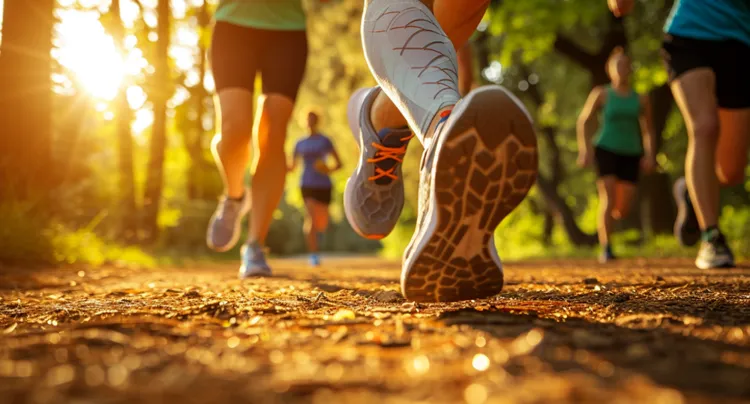
From the perspective of sports mechanics, ultra-slow jogging has a clear definition: the speed is maintained between 4 to 6 kilometers per hour, and the heart rate is controlled within 50% to 60% of the maximum heart rate. At this intensity, the person can easily converse with others or even sing. Although the speed is slow, ultra-slow jogging retains the fundamental characteristics of running, as there is always one foot off the ground, resulting in a brief "air time," which fundamentally differentiates it from brisk walking.
Research indicates that at the same speed, ultra-slow jogging consumes twice the energy of regular walking. This difference is due to the distinct patterns of muscle engagement: ultra-slow jogging requires raising the thighs and engages large muscle groups such as the gluteus maximus, quadriceps, and iliopsoas, leading to significantly higher energy expenditures.
Another major advantage of ultra-slow jogging is its protective effect on the joints. By employing the technique of "high step frequency and small step length," the impact force from the movement is effectively distributed to the muscles of the lower limbs, thereby reducing the direct load on the cartilage and ligaments of the knee and hip joints. This biomechanical adjustment makes ultra-slow jogging a joint-friendly exercise, particularly suitable for those with joint issues or higher body weight.
The benefits of ultra-slow jogging extend beyond just fat loss.
Visceral fat is an "invisible killer" that triggers diabetes and hypertension, and the low-intensity characteristics of ultra-slow jogging can effectively stimulate fat metabolism. Research shows that when exercise intensity is maintained at 50% to 60% of maximum heart rate, the body preferentially uses fatty acids for energy, with the breakdown efficiency of deep visceral fat being 30% higher than in regular slow jogging.
In regular running, the impact force on the knees can reach 3 to 4 times the body weight. However, ultra-slow jogging, characterized by "high step frequency and small stride length," distributes the impact force across the muscles and tendons, resulting in significantly reduced joint pressure compared to regular slow jogging.
Ultra-slow jogging provides gentle and sustained stimulation to the cardiovascular system, improving endothelial function and lowering blood pressure. Furthermore, it enhances pulmonary ventilation efficiency, which can aid in the daily rehabilitation of patients with chronic bronchitis and asthma.
Low-intensity aerobic exercise can stimulate the brain to release endorphins and serotonin, alleviating anxiety, improving mood, and promoting the health of brain areas linked to learning and memory. The relaxed, almost meditative state during ultra-slow jogging can help release stress and achieve the health benefit of 'mind-body synchronization'.
Additionally, ultra-slow jogging, due to its pain-free and enjoyable nature, significantly lowers the psychological barriers to exercise. It helps disrupt the cycle of sedentary behavior and increases overall activity levels throughout the day.
Master the method for scientific ultra-slow jogging.
Before engaging in ultra-slow jogging, it is essential to perform dynamic stretches for five minutes to "warm up" the muscles. After a proper warm-up, you can begin exercising to avoid injuries. During the workout, you should engage your core, allow your arms to swing freely back and forth, and land using a "forefoot first, then heel" method, utilizing momentum to run easily. It is crucial to avoid running on your toes and making overly large strides to minimize the risk of injury.
Beginners can adopt a stepped progression plan, starting with ultra-slow jogging for 3 to 5 minutes, combined with 5 minutes of brisk walking, gradually increasing the duration of the ultra-slow jog. Additionally, it is important to choose well-cushioned running shoes and breathable workout clothing. During winter workouts, pay attention to warming up to mitigate physiological responses such as increased heart rate and difficulty breathing in low-temperature environments.
The essence of ultra-slow jogging is 'slow'; do not blindly pursue speed. Avoid exercising on an empty stomach or immediately after a heavy meal, and stop immediately if you feel unwell.
Ultra-slow jogging has almost no age restrictions and is particularly suited to sedentary individuals, those with higher body weight, older adults, and patients with chronic illnesses. For patients in the recovery phase from sports injuries, it can serve as a transition back to regular running.
Importantly, patients with acute diseases, unstable cardiovascular and cerebrovascular conditions, severe joint deformities, and significant balance dysfunction should engage in this exercise under the guidance of a physician.
#exercise
#nutritional diet



© 2025 Health Tribe.