
How does a doctor transition from pulmonology to rehabilitation?
Feb 06, 2026
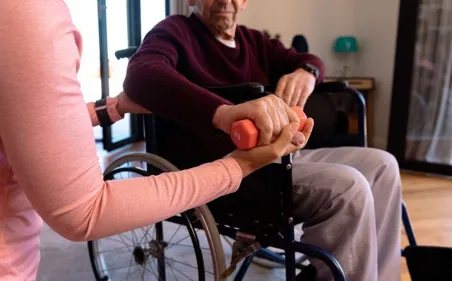
Author: Song Jianqi, Deputy Chief Physician of the Department of Integrated Traditional Chinese and Western Medicine Rehabilitation, Beijing Daxing District Integrated Traditional Chinese and Western Medicine Hospital. Review: Hu Xueyan, Director Physician, Department of Neurological Rehabilitation, China Rehabilitation Research Center.
How does a doctor transition from pulmonology to rehabilitation? Introduction: A doctor highlights the vital role of rehabilitation medicine in recovery, enhancing patients' functions, hope, and dignity. Keywords: [Rehabilitation Medicine, Health]
As a former doctor working in the Department of Respiratory and Critical Care Medicine, my transition into the field of rehabilitation medicine has led to a profound cognitive shift. I have come to realize how limited and superficial my previous understanding of rehabilitation medicine was. This interdisciplinary transformation has not only broadened my medical perspective but has also allowed me to truly appreciate the unique value of rehabilitation medicine—it brings not just treatment, but also hope.
In the past, I mistakenly thought that rehabilitation was an "accessory" to clinical treatment, and even during my busy clinical work, I occasionally felt that rehabilitation therapy was "optional" or "inefficient." However, after committing myself to rehabilitation work for a year, I realized that the unique charm of rehabilitation medicine lies in the hope it gives patients and families to continue moving forward in the face of adversity. This is especially true during the critical recovery phase after severe illness, when life is preserved but the body is significantly impaired; when consciousness is clear yet one cannot control their limbs; and when families are filled with expectation while facing a long road to recovery—rehabilitation medicine is precisely the light that ignites hope for this challenging journey.
Transitioning from the field of respiratory medicine to rehabilitation, I have deeply realized that many issues that seemed fundamentally unsolvable in critical respiratory conditions can be significantly improved, or even completely resolved, through the mindset and methods of rehabilitation. Here are a few examples that I have found particularly impactful in my practice:.
1. Aspiration and swallowing disorders: From "dependent on tubes" to "restoration of function"
In the respiratory department, when faced with patients at risk of aspiration who frequently suffer from aspiration pneumonia, the usual treatment is to place a nasogastric tube and rely on enteral nutrition support. However, long-term tube placement may increase the risk of gastroesophageal reflux and continue to stimulate oral secretions. If patients have weak swallowing reflexes and poor oral self-cleaning abilities, this may exacerbate the risk of secretions being aspirated. The mucous membrane of the throat remaining in a moist environment for extended periods can lead to edema and even erosion, further impairing swallowing coordination. Rehabilitation medicine, on the other hand, adopts a "functional reconstruction" approach: 1. Gradually restore swallowing coordination through awakening treatments, training of swallowing muscle groups, and neuromodulation techniques (such as transcranial magnetic stimulation); 2. Adjust eating postures and food textures, and implement compensatory strategies to reduce the risk of aspiration; 3. Safely attempt oral feeding progressively to reduce long-term reliance on tube feeding. This shift from "passive compensation" to "active recovery" is a concept I had not systematically encountered during my previous experiences in the respiratory department.
II. Atelectasis: Breaking the "Infection-Collapse" Vicious Cycle
Patients who are bedbound for extended periods are prone to atelectasis. The collapse of alveoli and closure of small airways not only disrupt the ventilation/perfusion ratio and lead to hypoxia but also increase the risk of secretions retention and infection, thereby aggravating atelectasis and forming a vicious cycle. The conventional management in respiratory medicine focuses on anti-infection, expectoration, postural drainage, and vibration techniques to aid in mucus clearance. Rehabilitation medicine can further intervene from the perspectives of neurological regulation and musculoskeletal function: 1. Neurological aspect: Techniques such as transcranial direct current stimulation (tDCS) or transcranial magnetic stimulation (TMS) can be employed to modulate the excitability of the respiratory center and enhance the respiratory drive. These techniques require thorough screening of indications by clinical rehabilitation physicians and should be assessed in relation to the patient’s specific neurological status, with operation conducted by qualified professionals. 2. Muscular aspect: Physical therapists can relax the tense respiratory muscles and activate the respiratory muscle groups. Additionally, diaphragmatic electrical stimulation can be utilized to promote coordinated contractions of these muscle groups. 3. Gravity re-adaptation: Using tilt tables or training in a sitting position in a wheelchair can help the diaphragm and lung tissue readjust to the effects of gravity, sending signals to the brain that indicate the need for active breathing. These methods not only enhance local ventilation but also address the issue from an integrated neuro-muscular-lung circulatory perspective, helping patients break free from the cycle of "collapse-infection."
ICU Acquired Weakness (ICUAW): It's not just about "surviving," but also about "walking back." Many patients in the ICU, although they have survived critical conditions, remain bedridden for long periods due to acquired muscle weakness, which prevents them from walking, causes shortness of breath, difficulties in swallowing, and muscle atrophy, leading to a severe decline in their quality of life. Research shows that skeletal muscle mass can decrease by approximately 15% during the first week in the ICU. Weakness in respiratory muscles further limits mobility and affects overall metabolism and function. Rehabilitation medicine emphasizes "early, active, and function-oriented" interventions. Early rehabilitation requires that the patient's condition is relatively stable, specifically when issues such as shock, heart failure, severe pneumonia, pulmonary embolism, gastrointestinal bleeding, bowel obstruction, intracranial infection, intracranial hypertension, and brain herniation are under control. Once the condition stabilizes, training should begin promptly with bedside sitting, standing, and stepping exercises, combined with respiratory muscle training, electrical stimulation, and nutritional support as part of a multi-dimensional strategy. A systematic assessment of the patient's functional status will be conducted to develop a personalized rehabilitation plan.
It is worth emphasizing that research has confirmed that early rehabilitation does not increase ICU mortality rates, with the incidence of serious adverse events being below 3%. Furthermore, its benefits in reducing muscle weakness and improving long-term functionality are clear. This means that rehabilitation is not only safe but also a critical support in helping critically ill patients truly return to life.
Rehabilitation is not the "final act" of treatment; rather, it is the starting point for functional restoration. From breathing to recovery, I have come to deeply understand that the ultimate goal of medicine is not just to save lives, but to help every individual reclaim their dignity, functionality, and hope. The journey may be long, but it is precisely because rehabilitation exists that every instance of standing, every bite of independent eating, and every step of walking become possible. If you or a family member are in a period of recovery from illness, consider actively exploring the possibilities of rehabilitation—it might just be the window to a brighter spring ahead.
Note: The cover image is from a stock photo library, and reproducing it may lead to copyright disputes.
#health
#rehabilitation medicine
© 2025 Health Tribe.