
What are gradient pressure socks and how do they help your health
Feb 10, 2026
Author: Zhi Yanru, First Affiliated Hospital of Naval Medical University, nurse in charge. Review: Li Haiyan, Deputy Chief Nurse at the First Affiliated Hospital of Naval Medical University.
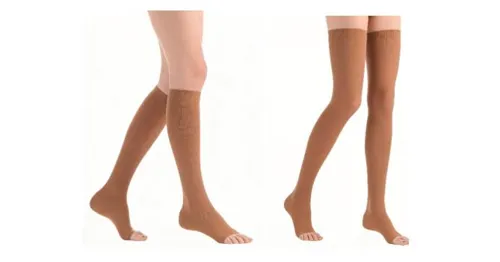
Title: What are gradient pressure socks and how do they help your health Introduction: Gradient compression stockings promote circulation and prevent venous diseases but are not for everyone. Proper use is key. Keywords: ['Disease Prevention', 'Health'] Main text: What are gradient pressure socks? Gradient compression stockings, also known as compression socks, come in three different lengths: below-the-knee (short), thigh-high (long), and pantyhose. They are not the cotton long socks typically worn in everyday life, nor are they standard leggings; rather, they are a type of long sock that exerts gradient pressure, with the maximum pressure at the ankle that gradually decreases along the leg towards the heart. They are considered "functional" socks designed to provide compression to the legs. Short and long gradient compression socks. Gradient compression stockings have various benefits. They are designed to apply graduated pressure to the legs, which helps improve blood circulation. This can reduce swelling, alleviate discomfort, and prevent conditions such as varicose veins. Additionally, they can provide support during prolonged periods of standing or sitting, making them useful for travelers or individuals with certain medical conditions. Overall, gradient compression stockings promote better venous return and enhance leg health. (1) Relying on its own gradient pressure, it accelerates venous blood flow and increases blood volume. (2) It can help the venous valves in the legs to close more easily, allowing blood to flow back to the heart more smoothly and preventing blood from pooling in the legs. (Note: The venous valves act like a "one-way door," allowing blood to flow only from the feet toward the heart.) The "pumping effect" of increasing leg muscle can alleviate discomfort such as swelling and heaviness in the legs. Which groups of people are suitable for and prohibited from using gradient compression stockings? Gradient pressure socks are categorized into four levels: Class I, II, III, and IV. Class I is preventive, while Classes II and above are therapeutic. The suitable population varies depending on the pressure level, and higher pressure is not always better. To ensure effective usage, it is essential to select the appropriate pressure level under the guidance of professional medical personnel to prevent complications such as pressure injuries and lower limb blood circulation disorders. Level I pressure: It can prevent the formation of deep vein thrombosis in the lower limbs and superficial venous varicosities. It is suitable for individuals such as those who are bedridden for extended periods, those who stand or sit for long durations, heavy manual laborers, pregnant women, and those with immobilized lower limbs after surgery. Level II pressure: Suitable for patients with established deep vein thrombosis of the lower limbs, conservative and postoperative treatment of superficial vein varices in the lower limbs, chronic venous insufficiency of the lower limbs, post-thrombotic syndrome, and vascular malformations of the lower limbs. Level III Pressure: Suitable for patients with lymphatic edema or venous ulcers. (4) Pressure Level IV: Suitable for patients with irreversible lymph edema. Although gradient compression stockings are widely used, they should be avoided in individuals with certain conditions to prevent exacerbating their illnesses. These conditions mainly include severe lower extremity arterial disease, severe peripheral neuropathy or other sensory disorders, congestive heart failure, recent skin grafts or existing dermatitis, deformities in the lower limbs that prevent wearing them, large open or draining wounds in the lower limbs, severe lower limb cellulitis, lower limb thrombotic venous inflammation, and known allergies to the material of gradient compression stockings. How to choose the right size of graduated compression socks for yourself? Under the guidance of professional healthcare personnel, use a soft measuring tape to measure the leg circumference before selecting the appropriate size of compression stockings. The measurement sites include: if choosing knee-high stockings, measure the smallest circumference of the ankle and the largest circumference of the calf; if choosing thigh-high stockings, also measure the leg circumference 5 centimeters down from the central groin area. It is recommended to take the measurements while standing; if the physical condition does not allow this, measurements can be taken while sitting or lying down. Use a soft measuring tape to measure the thigh circumference. Leg measurement locations. When wearing gradient compression stockings, there are several important considerations to keep in mind: 1. Proper Fit: Ensure that the stockings fit correctly. They should be snug but not too tight, as improper fit can lead to discomfort or reduce effectiveness. 2. Gradual Increase: Start with shorter wear times and gradually increase the duration as your body gets accustomed to the compression. 3. Wearing Technique: Put them on in the morning when your legs are least swollen. Make sure to smooth out any wrinkles to avoid pressure points. 4. Hygiene: Keep the stockings clean by washing them regularly according to the manufacturer's instructions. This helps maintain their elasticity and effectiveness. 5. Skin Care: Check your skin regularly for any signs of irritation or injury, especially if you have sensitive skin. 6. Medical Advice: Consult with a healthcare professional before using compression stockings, especially if you have any underlying health conditions or concerns. 7. Avoid Roll-Downs: Ensure the stockings remain in place and do not roll down to minimize potential circulation issues. By following these guidelines, you can maximize the benefits of gradient compression stockings while ensuring comfort and safety. Before putting on the socks, trim your toenails and fingernails to avoid scratching the fabric. Trim your fingernails. (2) Due to the elastic nature of gradient pressure socks, wearing them allows you to maintain a relatively comfortable position, helping to prevent falls. Additionally, when putting them on, do so gently without pulling the socks forcefully. (3) After wearing, the surface of the socks should remain smooth to minimize the formation of wrinkles that can damage the skin. The sock should not have any wrinkles. During the wearing period, it is necessary to remove the garment at least once a day to check the condition of the skin on the legs and to clean the skin. (5) Regularly check the stockings for any signs of wear or damage to ensure the effectiveness of the pressure. If you are allergic to the silicone band of the long gradient compression stockings, you can wear them by folding the silicone band. The long tube gradient pressure stockings can be folded back at the silicone strap. If during the wearing period there are changes in skin temperature of the legs, skin itching, or skin damage, one should promptly consult medical personnel. How should gradient compression stockings be maintained? Gradient compression socks are different from regular socks, and the right cleaning method can effectively extend their lifespan. It is recommended to wash the surface when there are noticeable stains or when an unusual odor occurs; daily washing is not necessary. Do not use soap when washing; you can use a neutral laundry detergent and hand wash in warm or cold water. Do not rub vigorously while cleaning. (4) Do not twist the sock body hard after washing. Dry in a shaded area, avoiding exposure to direct sunlight or using devices like hair dryers for localized heating, and do not iron. Don't rub it hard. References: Chinese Branch of the International Vascular Alliance Nursing Professional Committee, Professional Committee of Intravenous Vascular Medicine of the Chinese Medical Association. Expert Consensus on the Use of Gradient Compression Stockings for the Prevention and Treatment of Venous Thromboembolism. Journal of Interventional Radiology, 2019, 28(9): 811-818. Note: The image was created by Doubao AI.
#health
#disease prevention


© 2025 Health Tribe.