
How can sedentary individuals prevent blood clots during travel?
Feb 12, 2026
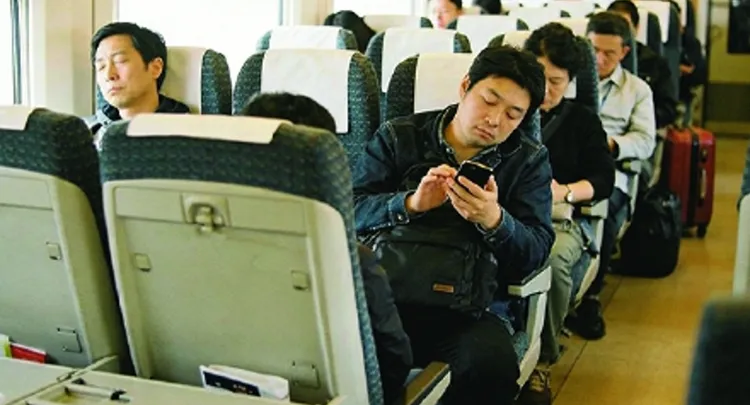
Author: Yang Yu, Jin Yuchen. As the Spring Festival approaches, the desire to return home is stronger than ever. Whether it's a flight spanning thousands of miles or a train journey lasting several hours, many people are about to embark on a long journey of extended sitting. The thought of being inactive for such a long time makes many feel anxious: we all know that prolonged sitting poses health risks, but is the claim circulating online that shaking your legs can prevent thrombosis true? Can this little movement we do along the way truly serve as our protective charm?
The effect is very limited! said Wang Yongzhen, Chief Physician of the Department of Oncology and Vascular Disease Interventional Center at Nanjing Second Hospital. He explained that the main reason for thrombosis caused by prolonged sitting is venous blood flow stagnation. When a person remains still for an extended period, the calf muscle pump does not function, leading to a significant decrease in blood flow velocity. If other risk factors, such as dehydration, coagulation dysfunction, or endothelial injury, are also present, the risk of thrombosis increases further.
The key to preventing deep vein thrombosis is through regular and vigorous muscle contractions, especially the calf muscle pump, which generates enough pressure to pump blood back to the heart, thus avoiding blood stagnation in the veins. Although leg shaking involves slight contractions of the leg muscles, this unconscious, minor, and low-intensity activity has limited effectiveness and cannot effectively promote blood return from the deep veins of the lower limbs.
Is there a golden exercise to prevent thrombosis from prolonged sitting that can be done while seated? Experts say yes! It's called the ankle pump exercise. The specific steps are quite simple:
Pointing the toes: Slowly flex the toes in the direction of the body, holding at the maximum angle for 5-10 seconds.
Stand on your tiptoes: press down hard as if stepping on the gas pedal until reaching the maximum angle, and hold for 5-10 seconds.
Circle the toes: Centering on the ankle joint, rotate the toes in a 360-degree motion, alternating between clockwise and counterclockwise.
The above three exercises should be repeated 10-15 times for one set, with 1-2 sets to be performed every hour. Wang Yongzhen emphasizes that ankle pump exercises do not require standing up and are suitable for various situations such as at the office, during long trips, or while lying in bed.
In addition, during the long journey back, it is important to regularly supplement with warm water to avoid thickening of the blood due to insufficient hydration. Also, avoid crossing your legs to reduce pressure on the blood vessels in your legs.
For high-risk groups, it is advisable to try soaking the feet in warm water before bed, or in water boiled with mugwort and then cooled, for 15-20 minutes. This can help promote local blood circulation in the feet and lower extremities.
#health knowledge
#exercise and health


© 2025 Health Tribe.