
Three Key Taboos to Avoid at Spring Festival Banquets
Feb 21, 2026

Title: Three Key Taboos to Avoid at Spring Festival Banquets
Introduction: During the Spring Festival, families enjoy food but must heed dietary taboos: avoid bones, binge eating, and bad habits for safety.
Author: Li Tian, Chief Physician at the Fifth Affiliated Hospital of Guangzhou Medical University. Yan Jie, Director of the Hepatology Department at Di Tan Hospital. Jia Dacheng, Chief Physician at Beijing Emergency Medical Center.
Review: Tang Qin, Director of the Science Popularization Department of the Chinese Medical Association, Researcher.
Editor: Zhen Xi. Proofreading: Xu Lai, Zhang Linlin. Produced by: Department of Science Popularization, China Association for Science and Technology.
This article is a work from the China Science Popularization - Starry Sky Project.
During the Spring Festival, relatives and friends gather together for joyful reunions, indulging in delicious food, toasting with drinks, and engaging in lively conversations.
While enjoying the festive atmosphere and warmth of family bonds, it is crucial to stay vigilant about dietary practices, as careless habits could result in various health issues.
One major concern is the consumption of foods containing bones or sharp edges.
During the Spring Festival festivities, food safety must remain a priority. The engaging and celebratory environment can lead to distractions, increasing the risk of accidentally swallowing fish bones or foreign objects, which can obstruct the throat or esophagus, or even cause internal bleeding.
Many families add coins or nuts in dumplings as symbols of good luck during the New Year. However, this may pose risks for certain individuals, such as children, the elderly, and those with a history of gastrointestinal bleeding. These practices can result in choking, infections, and other complications.
In case of an accidental ingestion, one should immediately cease eating, avoid swallowing, remain calm, and resist the urge to forcefully expel the food to prevent perforating the esophagus, trachea, or large blood vessels. Remedies such as drinking vinegar are typically not effective.
Additionally, be vigilant about any foreign objects lodged in the tonsils or the base of the tongue. If present, gently grasp it with tweezers or chopsticks while being cautious not to apply excessive force or act blindly. If breathing difficulties, coughing, or chest pain arise, seek emergency medical assistance promptly.
Fish bones, shrimp shells, and Shandong pancakes are commonly encountered in clinical settings as foods that can dangerously lead to bleeding in patients with liver cirrhosis. This occurs due to portal hypertension, a condition affecting veins in the esophagus and stomach wall, making such individuals more susceptible to tearing varices caused by hard foods, leading to severe gastrointestinal bleeding. Therefore, these populations should avoid such items whenever possible.
Another dietary hazard includes chatting and laughing while eating.
During the festive meals, engaging in banter at the dining table is common, but this can lead to food entering the airway. Occasionally, amusement may prompt individuals to toss peanuts and catch them in their mouths, which could inadvertently result in inhalation and airway obstruction. This clinical situation is identified as "airway foreign body" and can have dire consequences.
In case of an adult experiencing airway obstruction, the Heimlich maneuver can be employed. The rescuer should stand behind the individual, create a fist with the left hand, place the thumb side against the abdomen, about two finger widths above the navel, and grip it with the right hand while positioning one leg between the victim's legs and bending the front leg. Forceful upward thrusts should be applied until the obstruction is dislodged.
If the obstructed individual is choking severely (with a foreign object lodged in the throat), initiate five back blows followed by five abdominal thrusts, alternating until the object is expelled.
In infants, avoid abdominal thrusts due to their delicate anatomy and instead follow the procedure of providing five back blows followed by five chest thrusts.
For an infant in distress from airway obstruction, hold the child in a position with their head downward and hips elevated while delivering firm strikes to the area between the shoulder blades five times using the palm base.
If the foreign object remains, flip the child over while applying pressure to the chest with the heel of your hand five times, and repeat the prior steps.
Heavy drinking is another risk factor.
As the Spring Festival nears, there are more opportunities for toasting and drinking than usual. However, excessive alcohol consumption can induce acute poisoning of the central nervous system, leading to altered consciousness, erratic behavior, or even coma.
Acute alcohol intoxication manifests in three stages: the excitement stage, the ataxia stage, and the stupor stage.
During the excitement phase, individuals may exhibit heightened emotions, amplified speech, and irritability. With increased consumption, the ataxia phase follows, presenting uncoordinated movements and slurred speech. Continuation of drinking can lead to the stupor phase, marked by severe symptoms like coma and respiratory distress, potentially resulting in fatal outcomes.
Moreover, excessive alcohol intake may instigate alcoholic liver disease, characterized by nausea, vomiting, fatigue, loss of appetite, upper right abdominal pain, fever, or jaundice.
Individuals with pre-existing conditions like liver cirrhosis need to exercise extreme caution, as alcohol is a well-known contributor to liver damage and recognized carcinogen for liver cancer. For patients already suffering from cirrhosis, further alcohol consumption can exacerbate their condition.
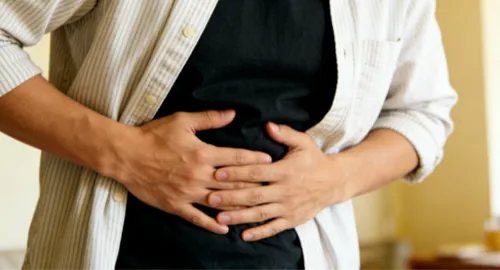
Improper dietary choices can also impede gastrointestinal health.
Consequently, various gastrointestinal diseases may arise.
1. Acute gastroenteritis is often a result of poor dietary choices, overeating, and exposure to unclean or irritant foods, leading to mucosal injury and inflammatory responses.
2. Acute cholecystitis results from gallbladder duct obstruction and bacterial infection, commonly triggered by binge eating, excessive drinking, and the intake of fatty, calorie-laden foods.
3. Acute pancreatitis can arise from excessive consumption of food and drinks, causing pancreatic secretion stimulation, leading to inflammation.
4. Binge eating or consuming heavily flavored foods increases the risk of gastrointestinal bleeding, as alcohol and spicy foods irritate the gastric lining, causing inflammation that can lead to bleeding.
5. The development of peptic ulcers is significantly influenced by overeating and alcohol consumption.
6. Helicobacter pylori infections can be exacerbated by poor dining behaviors during frequent gatherings, potentially leading to chronic gastritis, peptic ulcers, or even stomach cancer.
During the Spring Festival, it is vital to maintain a regular eating schedule, avoid overeating and excessive drinking, and control food intake pace. Limit greasy or high-fat meals to ease the stomach's burden. Opt for boiled water over unboiled, and ensure proper washing of fruits and vegetables.
Good dining habits should be upheld, with personal and food hygiene as priorities. Hand washing before meals and after using the restroom is essential. In communal dining, utilize disposable utensils to avoid cross-contamination and implement a meal-sharing system with public chopsticks and spoons. Additionally, ensure food safety by chewing slowly and refraining from talking while eating, especially for vulnerable individuals such as the elderly and children. Avoid laughing, running, or playing during mealtime.
Planning and production.
Copyright images from the library may lead to copyright disputes if reused.
The cover image and the images within the text are sourced from a licensed stock photo library.
Reposting may lead to copyright disputes.
#safety and health
#festive cuisine
© 2025 Health Tribe.