
Is your child coughing at night? Beware of whooping cough
Feb 25, 2026

Author: Cao Han, Hunan Women and Children's Hospital. Reviewer: Hunan Medical Chat. Curator: Hunan Women and Children's Hospital. Production/Organizational Information: Hunan Medical Chat.
Is your child coughing at night? Beware of whooping cough. In spring, children may get whooping cough, resembling a cold. Parents should monitor symptoms, seek timely medical care, and vaccinate.
"Doctor, my child coughs during the day and at night. The most tormenting thing is around two or three in the morning when he often suddenly has a violent coughing fit, his face turns red, and he gasps for air in the end, making a sound like 'chickens crowing.' My husband and I take turns holding him and trying to sleep while sitting. The child is suffering, and we are on the verge of breaking down!" asked a worried mother of a four-year-old at Hunan Women and Children's Hospital.
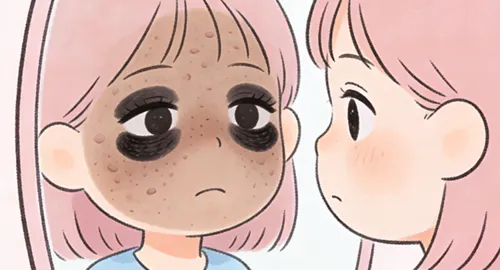
The pediatrician stated that after entering spring, the hospital sees children with this condition every day, leaving parents looking like they have 'panda eyes' from fatigue. Many families initially thought it was just a common 'spring cold,' with symptoms like a runny nose and a few coughs, and didn't pay much attention. However, who would have thought that this cough would be as stubborn as a 'dogskin plaster,' refusing to go away, and eventually, many were diagnosed with 'whooping cough'!
Spring has arrived, and this 'child-targeting' cough is back again.
Many parents might think that 'whooping cough' is an outdated term, distant from our lives. However, the reality is quite the opposite; it has made a comeback in the past two years, particularly active during the winter and spring seasons.
According to data released by the National Center for Disease Control, the number of reported cases of whooping cough across the country has increased more than tenfold compared to the same period last year. This is particularly concerning for infants under one year old, as they are especially susceptible to developing severe symptoms once infected.
Why should we be especially vigilant in spring? Because as we enter the spring season, the temperatures fluctuate greatly, and children's respiratory defenses are inherently weak. Additionally, during the New Year period, crowds gather, and the Bordetella pertussis bacteria lurking in the air can quietly spread among children through these droplets.
Don't be fooled by its 'disguise'! The difference between a common cold and whooping cough lies here.
Many parents make a mistake: they treat whooping cough as a common cold, which results in delaying the best treatment time. In fact, there is a fundamental difference between the two.
Phase One: The 'Fake Cold' That Can Camouflage (Catarrhal Stage)
In the first week or two, 'whooping cough' can easily be mistaken for a common cold: sneezing, runny nose, low fever, and occasional cough. At this stage, it is also difficult for doctors to make an immediate judgment. However, there is a subtle difference: the cough associated with a common cold gradually improves, while the cough from whooping cough gets worse day by day, particularly at night.
Phase Two: The True Face of 'Magic Cough' (Paroxysmal Stage)
This is the most tormenting part! A common cold: cough for a few days and you’re better. But whooping cough, on the other hand, consists of a long, continuous chain of coughs, making it impossible for the child to take a breath. They cough until their face turns red, and tears stream down their face. In the end, after taking a deep breath, they emit a sound reminiscent of a “chicken cawing” or “rooster crowing.”
At this time, the child often vomits the food they have eaten, their small face turning purple, and their eyelids swollen. In severe cases, the capillaries in their eyes may even rupture. Adults or older children who have been vaccinated may not show typical symptoms, often just experiencing a dry cough, becoming the 'invisible bomb' in the family that infects the little baby!
Be cautious! Sometimes family members can become 'accomplices' of the virus!
1. Don't believe in 'coughing for a hundred days will heal itself'! This idea is too dangerous.
Older generations might say, 'Whooping cough just means you need to cough for a hundred days, and then you'll be fine.' Here, it's important to emphasize to all parents: do not believe this! Whooping cough is called that because the illness lasts a long time, but it is not 'self-limiting' where it will just get better on its own after a certain period.
It can be fatal for infants! Severe coughing can lead to respiratory pauses, choking, and may also trigger serious complications such as pneumonia and pertussis encephalopathy. The younger the child, especially those who have not yet reached the vaccination age, the higher the risks!
The 'super spreaders' at home are often the parents who love their children.
You might not know that transmission within the family is currently the main route for infants to contract whooping cough, accounting for as much as 80%! If an adult or older sibling in the household gets infected with whooping cough (which often has mild symptoms in adults and can be mistaken for a sore throat), and then comes home to cuddle or kiss the baby, the germs can spread quickly.
Whooping cough is highly contagious, with a basic reproduction number ranging from 12 to 17. This means that an infected person can, on average, transmit the disease to 12 to 17 individuals in a population that has no immunity.
Have you put this 'golden armor' on the child?
The most effective and economical 'weapon' for preventing whooping cough is vaccination! Here, I want to particularly remind all parents of an important change: the country has made the latest adjustments to the vaccination schedule for the diphtheria, tetanus, and whooping cough (DTaP) vaccine, which will be officially implemented starting January 1, 2025.
The old vaccination schedule was: 1 dose of the vaccine at 3 months, 4 months, 5 months, and 18 months of age, with a booster of the diphtheria, tetanus, and pertussis (DTP) vaccine at 6 years. The latest vaccination schedule is: 1 dose of the DTP vaccine at 2 months, 4 months, 6 months, 18 months, and 6 years of age.
The reason for this adjustment is that research has shown an increased risk of illness in infants at a young age. By administering the first vaccine dose at two months, we aim to ensure that babies receive protection as early as possible, putting on their protective 'armor' in advance. For the health of the child, it is recommended that parents arrange for their children to be vaccinated early to safeguard their well-being.
Hunan Medical Chat Special Contributor: Hunan Women and Children's Hospital, Cao Han
Follow @HunanMedChat for more health science information!
(Editing 92)
#children's health
#vaccine prevention


© 2025 Health Tribe.