
Is glaucoma affecting your vision? Recognize the signs and act
Feb 27, 2026
Author: Liu Zhengrong, Department of Otorhinolaryngology, Hunan Province Integrated Traditional Chinese and Western Medicine Hospital (Affiliated Hospital of Hunan Province Traditional Chinese Medicine Research Institute). Reviewer: Dr. Wei Guannan, Associate Chief Physician, Ophthalmology Department. Curator: Hunan Medical Chat. Title: Is glaucoma affecting your vision? Recognize the signs and act. Introduction: Glaucoma often shows no early symptoms. This article highlights its causes, symptoms, and the need for regular check-ups.
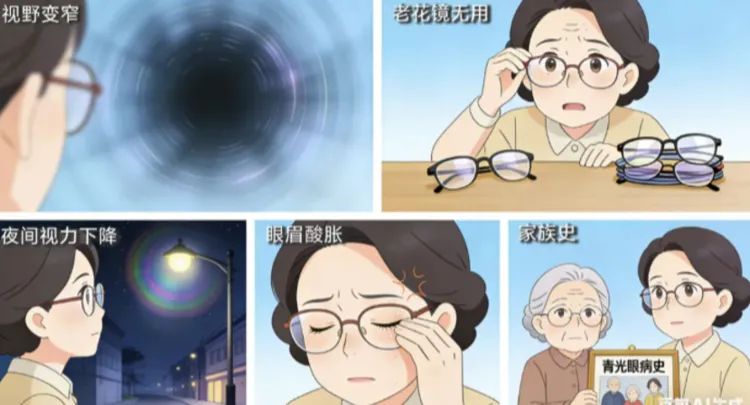
Aunt Li (pseudonym), 60 years old this year, recently discovered that she often trips while walking and struggles to accurately grasp objects. At first, she thought it was just due to aging and slower reactions, until a recent health check revealed that her field of vision had become as narrow as 'looking through a tube at the world.' Deputy Chief Physician Wei Guannan from the Ophthalmology Department of Hunan Province Integrated Traditional Chinese and Western Medicine Hospital explains that this is a typical manifestation of glaucoma. Cases like Aunt Li's are not uncommon. Glaucoma is the second leading cause of blindness worldwide, yet it is often overlooked due to its subtle early symptoms. An Interpretation of Glaucoma from the Perspectives of Traditional Chinese Medicine and Western Medicine. From a Western medical perspective, glaucoma is a group of diseases characterized by distinctive optic nerve atrophy and visual field loss, primarily associated with pathological elevations of intraocular pressure. The eye contains a fluid known as aqueous humor, which normally maintains a dynamic balance. When the aqueous humor circulation system malfunctions, intraocular pressure increases, leading to prolonged compression of the optic nerve, causing gradual death of nerve fibers and resulting in irreversible visual field loss. According to traditional Chinese medicine, glaucoma is referred to as 'green wind internal obstruction' or 'azure wind internal obstruction.' Its occurrence is believed to be related to factors such as deficiency of kidney and liver Yin, rising liver fire, and phlegm-damp obstruction. The 'Examination of the Yao Canons' states: 'In green wind internal obstruction, the pupils appear dim, as if a green mountain is shrouded in light mist.' Traditional Chinese medicine emphasizes the impact of overall balance of Qi and blood on eye health, asserting that 'the liver opens to the eyes.' Stagnation of liver Qi or surging liver fire can lead to dysfunction of the ocular orifices. The vast majority of glaucoma cases, especially open-angle glaucoma, show no symptoms in the early stages. By the time patients notice their peripheral vision loss, they are often already in the middle to late stages of the disease. This is precisely what makes glaucoma so dangerous—it quietly steals vision like a 'silent thief.' Signals to be aware of include: Vision gradually narrows, as if seeing things 'through a tunnel.' Frequent changes in reading glasses, but little improvement. Decreased night vision, with rainbow rings appearing around lights. The eyes often feel swollen and painful, and there is a sensation of discomfort in the brow arch. There is a family history of glaucoma. A New Approach to the Prevention and Treatment of Glaucoma through Integrated Chinese and Western Medicine. Western Medicine Diagnosis and Treatment: Early screening: It is recommended that individuals over 40 years old undergo eye pressure measurement, fundus examination, and visual field testing annually. Medication treatment: The primary use is of eye drops to lower intraocular pressure, such as prostaglandin derivatives and beta-blockers. Laser treatment: Selective laser trabeculoplasty can improve aqueous outflow. Surgical treatment: When medication and laser therapy cannot control the condition, consider surgical options such as trabeculectomy. Traditional Chinese Medicine Treatment: Traditional Chinese Medicine Adjustment: By diagnosing and treating based on syndrome differentiation, herbal therapy under the guidance of a qualified Chinese medicine practitioner can effectively control intraocular pressure. Acupuncture Therapy: Use acupoints such as Jingming, Cuanzhu, Taiyang, and Fengchi to promote circulation of Qi and blood in the eye area. Traditional Chinese Medicine for Health Preservation: Regulate emotions to avoid liver Qi stagnation; maintain a light diet and minimize consumption of spicy and stimulating foods. The advantages of combining Western and Traditional Chinese Medicine: Western medicine quickly controls intraocular pressure to prevent further damage to the optic nerve; Traditional Chinese Medicine regulates the overall condition of the body to achieve a balance of yin and yang. The combination of both can enhance the efficacy of treatment. Daily maintenance: Prevention is better than cure. Regular check-ups: People over 40 years old and those who use electronic screens for long periods should have a comprehensive eye exam at least once a year. Emotion management: Avoid emotional upheaval, maintain a cheerful disposition, and ensure the smooth flow of liver energy. Dietary adjustment: Moderately supplement your diet with foods rich in vitamins C and E, such as citrus fruits and nuts. Traditional Chinese medicine recommends teas like chrysanthemum and goji berry tea, as well as cassia seed tea. Lifestyle habits: Avoid long periods of looking down and drinking large amounts of water at once (it is advised to drink small amounts in multiple intervals); ensure sufficient sleep; correct poor eye usage habits. Exercise recommendations: Moderate aerobic activities such as walking and Tai Chi can promote blood circulation, but avoid exercises that may increase eye pressure, such as inversions and weightlifting. Experts remind us that the key to glaucoma prevention and treatment is to avoid misconceptions and to achieve early detection and intervention. Myth 1: 'Normal eye pressure means you won't get glaucoma.' Wrong! About one-third of glaucoma patients have intraocular pressure within the normal range. Misconception 2: 'Glaucoma is just high eye pressure.' Incomprehensive; glaucoma is fundamentally a disease of the optic nerve. Misconception Three: 'Glaucoma can be cured.' Currently, damaged optic nerves cannot be reversed, but their progression can be controlled. Misconception Four: 'Just using eye drops is enough.' Regular check-ups are needed to adjust the treatment plan. Follow @HunanMedicalChat for more health science information!
#health
#ophthalmology

© 2025 Health Tribe.