
Home rehabilitation tips for gait disorders in Parkinson's disease
Feb 27, 2026
Author: Wang Yuxuan, Gao Caiping, Wu Yunfeng. Unit: Shanghai Yangzhi Rehabilitation Hospital (Shanghai Sunshine Rehabilitation Center) Neurological Rehabilitation Center. Zhai Hua, Secretary of the Party Committee of Shanghai Yangzhi Rehabilitation Hospital (Shanghai Sunshine Rehabilitation Center), and Vice Chairman of the Science Popularization Work Committee of the Chinese Rehabilitation Medicine Association. Editor: Jia Jing (Xinhua Hospital, Affiliated to Shanghai Jiao Tong University School of Medicine).
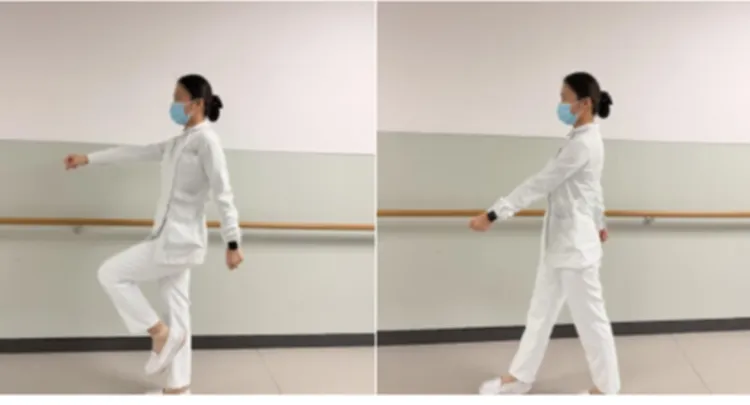
Title: Home rehabilitation tips for gait disorders in Parkinson's disease. Introduction: Home rehab training can improve self-care and safety for Parkinson's patients facing gait disturbances. Keywords: ['Rehabilitation Science Popularization'] Main text: Parkinson's disease is a common neurodegenerative disorder that affects middle-aged and elderly individuals. Its major motor symptoms include bradykinesia, resting tremor, muscular rigidity, and postural gait disturbances. Among these, gait disturbances are a frequent manifestation of motor function deficits in Parkinson's disease, especially as the disease progresses into the middle and later stages. Patients experience increasing difficulties with starting, walking, and turning, leading to hurried gait, freezing of gait, and postural balance issues, which have become significant contributors to falls and disabilities in individuals with Parkinson's disease. 1. Why do Parkinson's disease patients experience gait problems? The core of Parkinson's disease lies in the degeneration of dopamine neurons in the brain, leading to a deficiency in the secretion of dopamine, an important neurotransmitter. Dopamine acts as the 'commander-in-chief' that directs body movements, and its shortage can result in disruptions in the transmission of movement commands, leading to a series of problems: 1. Reduced mobility: smaller steps and slower walking speed. 2. Gait freezing: It feels as if both feet are glued to the ground, making it impossible to take a step, especially when starting to walk, turning, or passing through narrow doorways. 3. Forward lurching gait: The body leans forward involuntarily, and in order to maintain balance, one is compelled to accelerate with small, rapid steps. 4. Postural reflexes diminish: Balance ability declines, making it easier to fall. 5. Reduced arm swing: Coordination deteriorates while walking, lacking natural synchronous movement. 2. Home Rehabilitation and Care Guidance for Parkinson's Disease 1. Step Training: Patients may experience shuffling steps, a tendency to lunge forward, and difficulty turning. Therefore, during step training, it is essential for patients to keep their eyes focused straight ahead, stand up straight, and coordinate the movements of their upper limbs with their lower limbs. The first step should be a large stride; if the first step is small, it can easily lead to a hurried walking pattern. If a hurried walking pattern occurs, training should be halted immediately, and the patient should take a short break before starting again. If forward stepping training goes well, patients can then be encouraged to try stepping backward to train their center of gravity. 2. Strength training enhances lower limb stability. (1) Wall sits: Keep your back against the wall, squat down until your knees are at a 90-degree angle, hold for 30 seconds, and repeat three sets daily. (2) Tiptoe training: Hold onto the back of a chair with both hands, slowly rise onto your tiptoes for 10 repetitions, completing 3 sets to prevent foot drop. 3. Turning Training: When a patient needs to perform a turning motion, they should avoid suddenly stopping and turning in place. Instead, a larger turning radius can help better ensure the continuity of walking. When the patient has to turn in a confined space, they can pivot in place, guided by commands (such as 'one, two, one') to complete the turning motion in a rhythmic stepping manner. 4. Balance training (1) Tai Chi Cloud Hands: Stand with your feet shoulder-width apart (25-30 cm), slowly rotate your waist to the left and right, shifting your weight side to side to improve balance and relieve muscle tension. (2) Single-leg support: Stand on one leg against a wall, starting from 5 seconds and gradually increasing to 20 seconds. Three, this can be done in daily life. We need to strengthen our confidence, implement psychological interventions, and alleviate freezing anxiety. 2. Reduce gait anxiety through mindfulness meditation. In the morning, perform 10 minutes of ankle pump exercises: lie on your back and point your toes 10 times to activate the calf muscles. 3. On a daily basis, one can wear anti-fall shoes and use a vibrating belt to assist with safe walking. Remove obstacles such as door thresholds and electrical wires from indoors and install motion-sensor night lights. Additional measures to reduce the risk of falls include adding handrails in the bathroom and placing non-slip mats on the floor. 4. Focus on walking; do not talk or look at your phone while walking. Concentrate on taking big steps and swinging your arms. 5. How to cope with freezing: Once you feel like your feet are stuck, do not forcefully move. First, stop, stand straight, take a deep breath, and then try gently swaying your body rhythmically from side to side, or imagine there is a line in front of you that you need to step over before attempting to take the first step. 6. Turning Technique: Avoid directly twisting your upper body; try to make turns using a 'U' shaped path, turning like a ship. Freezing of gait is a very dangerous symptom that can be triggered by uncontrollable factors such as patient anxiety, crowded pathways, and sudden changes in terrain, which is quite troubling. Clinical emphasis is placed on the necessity of receiving treatment and consistently taking anti-Parkinson’s medication. Additionally, under safe conditions, maintaining exercise and training for trunk balance can also help reduce gait stability issues. References [1] Neurology Branch of the Chinese Medical Association, Parkinson's Disease and Movement Disorders Group, Neurology Physician Branch of the Chinese Physician Association, Parkinson's Disease and Movement Disorders Group. Chinese Parkinson's Disease Treatment Guidelines (Fourth Edition). Chinese Journal of Neurology, 2020, 53(12): 973. Zhang Qingshuo, Song Dandan, Zhou Shiyue, et al. Diagnosis and Treatment of Functional Gait Disorders. Journal of Modern Neurosciences in China, 2023, 23(07): 604-609. Wang Jintao, Li Guozhen, Wang Gang. Importance of Diagnosis and Treatment of Functional Neurological Disorders. Journal of Modern Neurological Diseases in China, 2023, 23: 53-57. Zhonghua Medical Association Neurology Branch Parkinson's Disease and Movement Disorders Group, Chinese Physician Association Neurology Physician Branch Parkinson's Disease and Movement Disorders Group, Chen Shengdi, et al. Expert Consensus on the Management of Gait Disorders in Parkinson's Disease in China. Chinese Journal of Neurology, 2025, 58(3): 228-243. END.
#rehabilitation science popularization


© 2025 Health Tribe.