
What is Group 1 carcinogen hiding in your stomach?
Feb 28, 2026
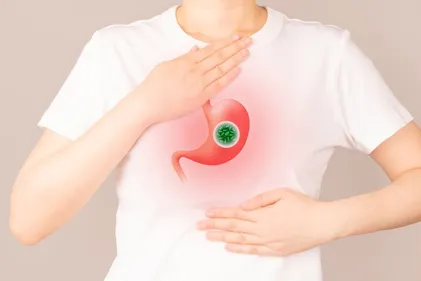
Author: Zhang Ying, Nurse in the Department of Thoracic Surgery at the Cancer Hospital of the Chinese Academy of Medical Sciences. Reviewer: Zheng Wei, Deputy Chief Nurse of the Thoracic Surgery Department at the Cancer Hospital of the Chinese Academy of Medical Sciences. Note: The cover image is from a copyright stock photo library, and reusing it could potentially lead to copyright disputes.
What is Group 1 carcinogen hiding in your stomach? Introduction: Helicobacter pylori, a Group I carcinogen, poses infection risks; good diet and hygiene are vital for digestive health. Keywords: Digestive health, Preventive medicine. In our bodies, there exists a special bacterium—Helicobacter pylori—that differs from other microorganisms residing within humans by maintaining a relatively harmonious relationship with us. While many microorganisms engage in mutualistic and peaceful coexistence, it has chosen to inhabit a place that other microbes tend to avoid—namely, the acid-filled environment of the stomach. As a Group 1 carcinogen recognized by the World Health Organization, it is not only a major culprit in causing gastrointestinal diseases, such as gastritis and gastric ulcers, but also a key player in promoting the transformation of gastric mucosa from inflammation to cancer. Let’s now uncover its mysterious veil together. 1. The 'Survival Secrets' and 'Transmission Pathways' of Helicobacter pylori. Helicobacter pylori is a Gram-negative bacillus that appears in helical or curved shapes. The reason it can survive in the stomach is that its cell wall can withstand the erosion of gastric acid while also secreting urease, an enzyme that can break down the urea dispersed in gastric juice into ammonia and carbon dioxide, thereby neutralizing gastric acid. At the same time, it uses the powerful motility provided by its flagella to attach to the surface of the gastric mucosa, preventing it from being washed away by food. It can even 'lurk' and survive under the long-term surveillance of the immune system by changing its surface antigens, mimicking host cell components, and modulating the body's immune response. Helicobacter pylori can be transmitted through various routes, with common modes of transmission including oral-oral, fecal-oral, food contamination, mother-to-infant transmission, and contamination of medical instruments. For instance, sharing utensils, consuming inadequately washed fruits and vegetables, and insufficient disinfection of medical instruments used in endoscopic examinations can all easily lead to transmission. Once one person in a household is infected, the likelihood of infection among other family members significantly increases due to close contact. Therefore, infections caused by Helicobacter pylori often exhibit a characteristic of 'familial clustering.' This makes prevention within the household especially important. After infection, what 'signals' will the body exhibit? Infection with Helicobacter pylori typically does not present specific symptoms. Most individuals infected with H. pylori may go for several years, or even over a decade, without any noticeable symptoms. Many people discover the infection coincidentally during a health check or when seeking treatment for other gastric discomfort. As the bacteria persistently damage the gastric mucosa, the body may gradually exhibit symptoms such as dyspepsia, changes in the pattern of stomach pain, and even anemia or black stools. A Comprehensive Guide to the Detection, Treatment, and Prevention of Recurrence of Helicobacter Pylori! Suspected infection with Helicobacter pylori can be best confirmed through medical testing. Currently, there are mainly two types of commonly used clinical testing methods: 1. Non-invasive testing (suitable for screening the general population): 1. Carbon-13/Carbon-14 urea breath test (the most commonly used method). Serological testing: detecting antibodies against Helicobacter pylori through blood sampling (commonly used for preliminary screening). 2. Unique diagnostic testing (suitable for patients who need to clarify their condition): Gastroscopy examination + pathological biopsy. Many people panic after being diagnosed with an infection, wondering, 'Will I definitely get stomach cancer? Do I have to start medication right away?' In reality, not all infected individuals require treatment. Doctors will make a comprehensive assessment based on factors such as age, symptoms, and medical history, so there is no need to be overly anxious. Currently, the treatment for Helicobacter pylori has developed into a mature protocol known as quadruple therapy, which consists of 'two antibiotics + one proton pump inhibitor + one bismuth compound.' The treatment course typically lasts for 10 to 14 days, and the cure rate can reach 80%-90%. It is important to note that during the treatment period, one must follow medical advice: take the medication on time and in the prescribed dosage, and do not stop the medication without consulting a doctor. Many people worry, 'Will I get infected again after being cured?' Indeed, there is a possibility of relapse after the eradication of Helicobacter pylori, mainly due to re-exposure to the source of infection. To completely distance oneself from it, the key lies in 'prevention': 1. In family meals, use communal chopsticks and spoons. 2. Maintain good personal hygiene by thoroughly washing your hands before meals and after using the restroom. 3. Pay attention to food hygiene, avoid drinking raw water, and do not eat raw food. 4. Regular screening. Helicobacter pylori is classified as a Group I carcinogen by the World Health Organization, but it is not an 'incurable disease,' nor does it mean that infection will inevitably lead to cancer. Its terrifying aspect lies in the fact that most people fail to recognize its harm—allowing bacteria to 'rampage' in the stomach, continually reproducing and causing damage, ultimately leading to irreversible pathological changes. Rather than living in pointless panic every day, it is better to take practical and effective preventive measures: implement a scientific meal separation system for the whole family and pay attention to dietary hygiene. Once an infection is confirmed, take timely and scientific treatment to prevent this 'stomach killer' from hiding anywhere. After all, maintaining the health and integrity of the gastric mucosa is the first important line of defense against gastric cancer.
#preventive medicine
#digestive health

![What is Benzo[a]pyrene and its health risks to consider?](https://dullahan-resource.kilosites.com/small_22833421e38b433bd0415b67d767a2e5-69a2e12b.webp)

© 2025 Health Tribe.