
Why do sugar oranges cause heat in the body? Explore the reasons
Mar 08, 2026
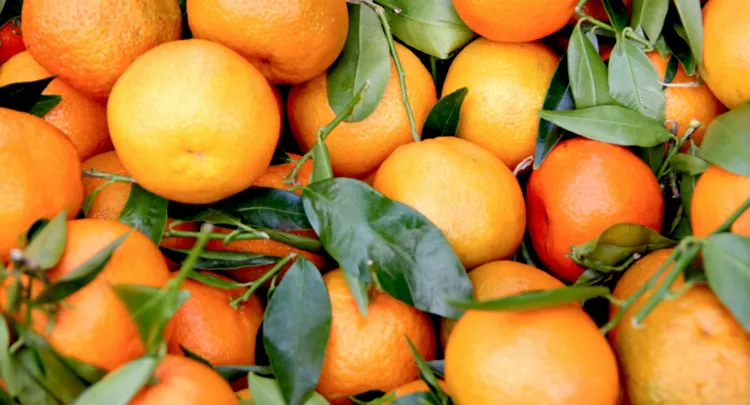
Author: Cui Yajuan. Final Review: Yu Shiliang. Editor: Kuang Wenxin (Intern). Editors: Yang Jianhua, Ye Jiayu. Production/Organizational Information: Submission Unit: Chongqing Luhai Media Co., Ltd. Computer Newspaper Publishing Branch. The article examines sugar oranges' composition, consumption habits, and health, emphasizing moderation for optimal wellbeing.
When a basket of golden, ripe tangerines is placed before you, few can resist the temptation of 'one after another, sweet to the heart.' This can lead many into a cycle of 'the more you eat, the more hooked you become, and once finished, it brings on heatiness.' Soon after, symptoms like oral ulcers, throat swelling, and gum inflammation follow in succession.
Interestingly, when we indulge in other larger varieties of navel oranges, which also belong to the citrus family, we seldom encounter such issues. This inevitably prompts the question: why is it that only sugar oranges are labeled as 'easily causing internal heat'? Is this due to their components being more 'heaty', or is there another underlying reason?
Today, the editor will take you on a journey to explore these mysteries.
The essence of the 'internal heat' caused by sugar oranges is a physiological reaction triggered by excessive intake, primarily due to the combined stimulation of high sugar content and fruit acids.
In Traditional Chinese Medicine, 'internal heat' represents an imbalance between yin and yang within the body, arising from the accumulation of excess heat. The sugar orange is warm in nature and sweet in taste; excessive consumption can indeed generate heat and dampness. From a modern medical standpoint, 'internal heat' fundamentally refers to the physical and chemical irritation of mucous membranes instigated by high sugar content and fruit acids, along with the body's alarm signal indicating metabolic overload.
High concentrations of sugar can absorb moisture from the mucous membrane cells in the oral cavity akin to a sponge, leading to local dehydration and a hypertonic environment, which in turn causes dry mouth and a sore throat. Fruit acids can directly irritate or even slightly damage the delicate oral mucosa. Moreover, metabolizing substantial amounts of sugar necessitates more B vitamins and produces additional heat. These interacting factors culminate in a series of discomforts commonly associated with 'internal heat.'
According to the 'Standard Version of the Chinese Food Composition Table,' the sugar content in sugar oranges ranges from approximately 10% to 13%, with certain varieties exceeding 13%. In contrast, navel oranges contain about 9.7% sugar. While the absolute discrepancy in sugar content is not pronounced, sugar oranges possess a higher proportion of fructose and glucose, rendering them sweeter with a more refined juice texture and eliciting a more concentrated stimulation in the mouth. When a large amount of sugar is introduced into the mouth, it swiftly escalates local osmotic pressure, resulting in dehydration of the oral mucosa and throat cells, causing dryness and discomfort akin to symptoms of heat. Additionally, sugar oranges have a total acid content of roughly 0.4%. Even though they taste sweet, the direct stimulation of organic acids on the mucosa should not be underestimated; excessive consumption may inflict minor damage, misleading one to perceive it as an inflammatory reaction.
More critically, a high-sugar environment acts as a 'nutritional feast' for oral bacteria. If residual sugar is not promptly cleaned away, it encourages bacterial proliferation, resulting in the production of acidic substances. This chain reaction can erode teeth and irritate the gums, ultimately leading to oral ulcers and swollen gums— this complaint aligns with what is often referred to as 'heat' symptoms.
The difference in sugar and acidity levels between sugar oranges and navel oranges.
Differentiation in taste and structure
Fruits from the citrus family's, like navel oranges, are frequently characterized as 'mild and non-irritating' primarily owing to their inherent nutritional advantages. Navel oranges have low sugar content and a high water content, exceeding 85 milliliters of water per 100 grams. This effectively dilutes the sugar concentration in the mouth, thwarting cellular dehydration. Although their total acid content varies between 0.7% to 1.0%, the fruit acids mostly combine with pectin. From a consumer's standpoint, a more immediate distinction is that the flesh of navel oranges contains coarser fibers and a more robust granular juice texture, which physically inflicts less irritation on the oral mucosa.
From the Traditional Chinese Medicine viewpoint, this difference becomes more pronounced. Sugar oranges are warm in nature and sweet in taste; the 'Compendium of Materia Medica' notes that excessive consumption can precipitate the production of phlegm and heat, causing dampness and fullness. Overindulgence can readily become a source of internal heat, particularly discomfort for those with a heat-prone constitution. By contrast, navel oranges are cool in nature and have properties that generate fluids, quench thirst, nourish yin, and clear heat. Even when consumed in larger quantities, they can assist in neutralizing internal heat and are less likely to yield symptoms of 'excess heat.' Furthermore, navel oranges are rich in dietary fiber and vitamin C. The former promotes intestinal motility and prevents constipation, while the latter has antioxidant qualities that can bolster mucosal resistance, thereby further reducing the discomfort risk.
In addition to differences in composition and taste, the slight influence of consumption context should not be disregarded. Sugar oranges, with their diminutive size and easy-to-peel skin, make it easy for individuals to consume them without conscious awareness, leading to excessive intake. During social gatherings, one might effortlessly consume one to two pounds in half an hour, triggering a rapid surge in sugar and fruit acid intake. On the contrary, navel oranges, being larger and more cumbersome to peel, inherently limit the amount consumed at one time, making it challenging to reach an 'excess' level. This variation in consumption quantities intensifies the contrast in perceived 'heatiness' between the two fruits.
It is noteworthy that the 'heat' associated with sugar oranges does not correspond with the 'heat evil' concept in Traditional Chinese Medicine. Instead, it arises from high sugar and acidity levels, which induce local mucosal irritation and a mild inflammatory response—this significantly differs from the heat mechanism observed with warm fruits like lychees and longans. Sugar oranges exemplify this phenomenon due to their characteristic of being 'easy to overconsume, with more direct sugar and acidity stimulation.' Experts from the Chinese Center for Disease Control and Prevention assert that consuming any high-sugar fruit in excess can lead to similar symptoms, and this is not exclusive to sugar oranges.
According to the 'Chinese Dietary Guidelines (2022)', the daily fruit intake for adults should be capped at 200-350 grams, with a variety of 2-3 types of fruit. Therefore, consuming 3-5 satsumas each day, or about 1 medium-sized navel orange, while balancing with other fruits suffices.
To control the intake of fruits.
To safely enjoy sugar oranges, some straightforward and practical recommendations exist. After consuming sugar oranges, rinse your mouth with clean water to eliminate any residual sugar. Accompanying them with cool foods such as pears, cucumbers, and lotus seeds, or drinking cool beverages like chrysanthemum tea or honeysuckle tea can effectively thwart inflammation and harmonize the body’s heat. Those predisposed to a heated constitution should prioritize selecting cooler varieties like navel oranges and grapefruits.
Remember, sugar oranges are inherently nutritious and high-quality fruits. The so-called 'heatiness' is not their original sin but rather a physiological reaction incited by excessive consumption and inappropriate methods. This winter, provided they are consumed scientifically and reasonably, you can relish their deliciousness while avoiding discomfort and steering clear of the troubles of 'heatiness.'
References:
Cui Yajuan. How to Eat the Newly Popular Sugar Mandarin Healthily. [N] Science Popularization Times. March 2, 2024.
Wu Jinlong. Establishment of Evaluation Methods for Citrus Allergens and Research on the Mechanisms of Adverse Reactions in Humans [D]. Huazhong Agricultural University, 2018.
The standard version of the 'Chinese Food Composition Table,' 6th Edition, Volumes 1 and 2, was published. Journal of Nutrition, 2019, 41(05): 426.
Submission Unit: Chongqing Luhai Media Co., Ltd. Computer Newspaper Publishing Branch.
Editor: Kuang Wenxin (Intern).
Editors: Yang Jianhua, Ye Jiayu.
Final Review: Yu Shiliang.
Statement: Except for original content and special instructions, the text and images in the submitted articles are sourced from the internet and major mainstream media. The copyright belongs to the original authors. If you believe this content infringes your rights, please contact us for deletion.
#nutritional diet
#fruit is healthy.



© 2025 Health Tribe.