
How to Care for Your Feet with Lower Limb Arterial Disease
Mar 24, 2026
Title: How to Care for Your Feet with Lower Limb Arterial Disease Introduction: Daily foot care is vital for patients with peripheral artery disease to prevent hard-to-heal ulcers and reduce amputation risk. Keywords: ['health', 'patient care'] Foot ulcers caused by lower limb peripheral artery occlusive disease occur when the blood vessels in the legs become severely narrowed or blocked, resulting in a state of chronic ischemia and hypoxia in the feet. To visualize this, it’s akin to the "blood supply pipes" in the legs becoming rusty and clogged, preventing distal tissues from receiving sufficient nourishment from blood. As a result, the foot becomes naturally weak. At this point, even a seemingly insignificant small wound may gradually develop into a hard-to-heal ulcer due to the lack of necessary nutrients and oxygen for repair, with severe cases potentially facing the risk of amputation.
Therefore, for patients and their families, foot care is not simply about "washing feet" regularly; it is a crucial part of delaying the progression of the disease and preserving limbs. Next, we will start from the question of "why are ulcers so easy to develop," helping everyone understand the reasons behind it, and then gradually master scientific and practical daily care methods to truly protect our feet. Patients with lower limb arteriosclerosis are prone to developing foot ulcers because the narrowing of the arteries restricts blood flow to the extremities. This reduced circulation hampers the delivery of oxygen and nutrients essential for skin health and wound healing. As a result, even minor injuries or pressure points can lead to sores that do not heal properly. Additionally, patients may have reduced sensation in their feet due to nerve damage related to poor circulation, making them less aware of injuries, further increasing the risk of ulcer formation.
1. Root cause: Severe ischemia in the foot, with arteriosclerosis narrowing or blocking blood flow in the legs. As the foot is the furthest point, it suffers from a significant lack of blood supply. The tissues become weak due to prolonged hypoxia, and once damaged, they find it extremely difficult to heal due to a lack of nutrients, ultimately resulting in ulcers. Snow on top of ice: Systemic underlying diseases include diabetes, which damages nerves and blood vessels, leading to reduced sensation in the feet, with wounds that are difficult to notice and heal; hypertension, which accelerates the thickening and hardening of blood vessel walls, worsening lower limb ischemia; hyperlipidemia, which promotes the formation of atherosclerotic plaques, narrowing the lumen; chronic renal insufficiency, which disrupts calcium and phosphorus metabolism, resulting in vascular calcification and exacerbating distal ischemia; heart failure or arrhythmias, which decrease cardiac output, reduce limb perfusion pressure, and worsen ischemia.
3. Direct triggers: Local physical and mechanical factors. Most ulcers are not spontaneous but are triggered by daily details. Foot deformities (such as hammertoe and claw toe) lead to abnormal friction points with footwear and socks. Calluses compress deeper soft tissues, causing internal necrosis. Ill-fitting shoes or socks that are too tight or contain foreign objects can rub the skin. Injuries from improper nail trimming, burns (from hot water bottles or heating pads), frostbite, and cuts from walking barefoot are also factors. Fungal infections (such as athlete's foot) can lead to dry, cracked, and eroded skin, creating an entry point for bacterial invasion.
4. Infectious Factors: Catalysts for wound deterioration. Once the skin barrier is compromised, due to poor localized blood supply, white blood cells and antibiotics struggle to reach the area, and even a mild case of cellulitis can quickly progress to osteomyelitis or gangrene.
Unhealthy habits and procrastination can have negative consequences. Smoking is particularly harmful to blood vessels; it causes them to constrict, worsening ischemia. Some people believe that experiencing cold feet or leg pain after walking a short distance is a normal sign of aging and avoid seeing a doctor, which leads to more serious problems. Others may have poor eyesight and cannot see if there are small wounds on their feet or fail to take medication as prescribed by their doctors, all of which can exacerbate their condition.
Key Points for Daily Foot Care: How to Scientifically "Nourish" Your Feet? 1. Choose round-toed, loose, and breathable shoes, avoiding pointed and hard-soled shoes. Wear pure cotton socks that are not too tight at the openings. Check the inside of your shoes for any foreign objects before wearing them. Never walk barefoot at any time to prevent cuts or scrapes.
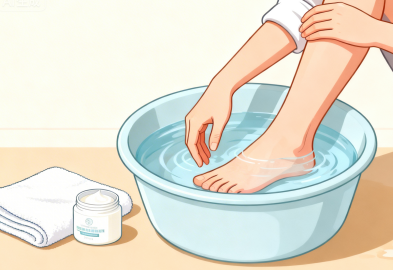
Second, control the temperature of the warm water for foot soaking between 37℃ and 39℃ (test the temperature with your elbow), and soak for 10 to 15 minutes. Gently wipe with a soft towel, ensuring to dry between the toes thoroughly. If the skin is dry, moisturizing cream can be applied, but avoid the areas with any cuts.
Third, trim your toenails. After soaking your feet, cut your nails when they are soft to prevent them from splitting. Cut your toenails straight across, level with the tips of your toes, and avoid cutting them too short or rounding the corners. After cutting, smooth out any rough edges. For calluses or corns, consult a doctor for treatment.
Fourth, pay attention to keeping warm; wear thick socks in cold weather for insulation. It is strictly prohibited to use hot water bottles, heating pads, or electric blankets directly on your feet, as reduced blood flow can dull sensation and make it very easy to get burned.
5. Prevent collisions by walking slowly. Avoid crossing your legs while sitting to prevent pressure on the blood vessels. You can also elevate your feet slightly to promote blood circulation. Control your weight to reduce the burden on your feet.
Sixth, manage chronic diseases well. If you have hypertension, diabetes, high blood lipids, or similar conditions, be sure to take your medication on time and monitor your levels regularly to keep them within the normal range.
7. Daily self-examinations for any issues should be conducted promptly, and each evening, check the feet: look for any redness, ulcers, or blisters; feel the temperature of the skin and check if the pulsation of the dorsalis pedis artery is normal.
Healthy feet are essential for walking normally and living well. Paying attention to the details in our daily lives can help us avoid the risk of complications and protect our feet!
Author: Yang Xiaoling, Vascular Surgery Nurse, Xuanwu Hospital, Capital Medical University
Review: Wu Rui, Deputy Chief Nurse of the Vascular Surgery Department at Xuanwu Hospital, Capital Medical University.
Produced by: Popular Science China
#health
#patient care



© 2025 Health Tribe.