
Enhancing Digital Health Skills with Blended Learning Approaches
Mar 24, 2026
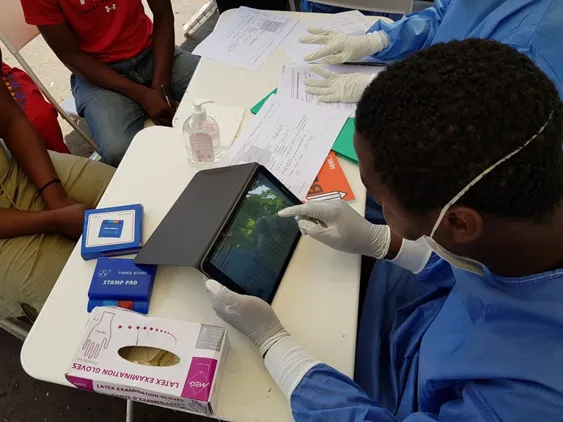
In many low- and middle-income countries, national digital health teams are faced with a common issue: fragmented systems, redundant applications, and increasing pressure to provide health workers with reliable, actionable data.
To tackle these systemic challenges, simply adopting technology is insufficient; it requires strategic leadership, coordinated governance, and a long-term national vision. To expedite progress, the WHO Academy, in collaboration with the International Organisation of la Francophonie (OIF), organized a 12-week course titled Digital Health: Planning for National Systems, which gathered participants from various French-speaking countries in Africa and the Eastern Mediterranean regions.
To facilitate the transition from fragmented tools to integrated national systems, the program provided not just technical knowledge but also a structured approach for countries to reassess their digital health frameworks. With a satisfaction rate of 91%, the training has enabled countries to begin transforming their digital health ecosystems through enhanced understanding, collaborative learning, and practical application.
The diversity of participating countries enriched the exchange of knowledge, ensuring that lessons were tested against varied institutional, technical, and political contexts. Sixty digital health leaders from 16 French-speaking countries, namely Algeria, Benin, Cameroon, Comoros, Côte d'Ivoire, Djibouti, Gabon, Lebanon, Mali, Mauritania, Mauritius, Morocco, Republic of the Congo, Rwanda, Togo, and Tunisia, took part, each representing the unique contexts of their national health systems. Across these countries, digital health solutions have proliferated, often developed for specific diseases or programs.
As Kossi Anani, a data scientist and participant from Togo, explained, "We utilize one tracker for tuberculosis, another for HIV, one for vaccinations, and yet another for seasonal malaria chemoprevention. Without a more integrated approach, we risk accumulating isolated and non-interoperable tools."
Some participants highlighted that the issue was not just fragmentation but also a misalignment with health priorities. Boualem Bendjedia, an ICT Assistant at WHO Algeria, stated, "The course addresses the digital health challenges in my country in a relevant and practical manner by offering a strategic vision, useful tools, and a structured approach."
These insights reflect a shared understanding that robust digital health systems require coordinated planning, clear governance, and solutions that are grounded in national realities.
To translate shared reflections into actionable capacity building, the course integrated structured learning with applied national projects. Over 12 weeks, participants engaged in 12 hours of self-paced learning, participated in 12 live sessions emphasizing discussion, peer exchange, and collaborative group work, and concluded with a country-specific project that tailored course concepts to address real priorities.
The curriculum encompassed the foundations of digital transformation, including aspects of health systems, national strategy development, enterprise architecture, governance, costing, procurement, digital financial services, and future trends.
Learners emphasized that the course made complex concepts accessible and immediately applicable. Kossi pointed out that the training illustrated how to transition from multiple standalone applications to integrated, sustainable, and interoperable national platforms.
Boualem highlighted how this approach addressed governance shortcomings: "It heightened awareness of the need to work in a structured and systematic manner and to involve stakeholders from the outset to ensure ownership and sustainability."
Throughout the program, participants began applying new skills to national initiatives, which included telemedicine, unique patient identifiers, and real-time data platforms.
In Togo, for instance, Kossi explained how the training helped identify a gap in a new data visualization project: "The initiative shows potential, but the operational system for reporting data had not been established. Thanks to the course, I was able to highlight this gap and assist in refocusing efforts before proceeding."
Boualem described the importance of viewing digital health from a broader strategic perspective: "The final project helped me comprehend the link between national health strategy, digital transformation, and system resilience. It significantly altered my approach to digital health initiatives."
Collectively, these experiences reveal a critical insight: digital transformation flourishes when national actors shift from fragmented implementation to a intentional, system-wide strategy.
In situations where digital expansion frequently surpasses system integration, enhancing strategic capacity is not merely optional; it is fundamental to building resilient health systems.
A core focus of the program was to assist countries in assessing their digital health-enabling environments, including elements like human resources, infrastructure, regulation, governance, and cybersecurity. Through these evaluations, countries can more effectively steer investments towards interoperable and sustainable solutions, rather than depending on isolated tools.
By strengthening leadership and strategic planning, the program promotes long-term national stewardship and digital sovereignty, key components for achieving resilient health systems.
This training is part of a broader initiative by the WHO Academy to ensure that learning is accessible, context-specific, and aligned with local needs. The WHO’s Data, Digital Health, Analytics, and AI Department, in collaboration with the Academy, will continue to enhance access to this program and reinforce peer networks, ensuring that more countries are equipped with the tools and confidence necessary to drive their digital transformation journeys.
#digital health
#health policy



© 2025 Health Tribe.