
WHO urges new diagnostic tools to combat TB worldwide
Mar 24, 2026
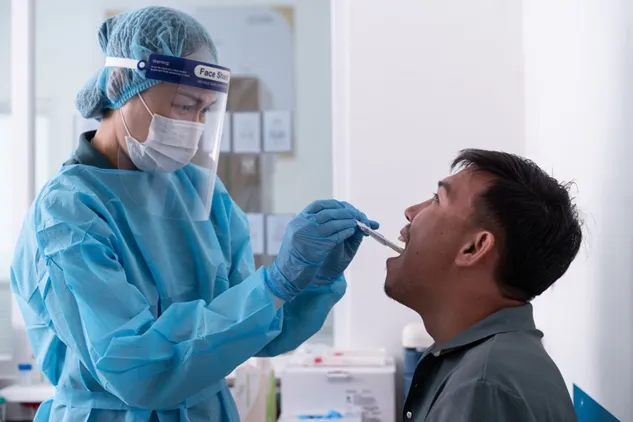
On World TB Day, the World Health Organization (WHO) is calling on countries to expedite efforts to eliminate tuberculosis (TB) and broaden access to essential services. This can be achieved through the implementation of new innovations, including diagnostic tests suitable for use near the point of care and tongue swabs that facilitate quicker detection of the disease, thereby reaching a larger population.
The new guidelines on tests for tuberculosis that can be used near the point of care, issued by the World Health Organization (WHO), represent another advancement towards quicker detection and treatment of one of the world’s deadliest infectious diseases. These portable, easy-to-use tests bring tuberculosis diagnosis closer to where individuals typically seek care. Priced at less than half the cost of many current molecular diagnostics, they can assist countries in broadening access to testing. The tests can function on battery power and provide results in under one hour, enabling patients to commence treatment more quickly.
"These new tools could be truly transformative for tuberculosis, by bringing fast, accurate diagnosis closer to people, saving lives, curbing transmission and reducing costs," said Dr. Tedros Adhanom Ghebreyesus, WHO Director-General. "WHO calls on all countries to scale up access to these and other tools so every person with TB can be reached and treated promptly."
Beyond tuberculosis, these devices have the potential to test for other diseases such as HIV, mpox (previously known as monkeypox), and HPV, thereby making diagnostics more patient-centered, equitable, and aligned with a one-stop-shop approach for emerging and circulating diseases.
The guidelines also recommend easy-to-collect tongue swab samples, along with a cost-saving sputum pooling strategy to enhance testing efficiency for tuberculosis and rifampicin-resistant tuberculosis. Tongue swabs enable adults and adolescents who are unable to produce sputum to be tested for tuberculosis for the first time, facilitating disease detection among individuals who are at an elevated risk of mortality from tuberculosis. Sputum pooling, which involves combining samples from several individuals for joint testing, can significantly lower commodity costs and machine time, resulting in quicker outcomes for individuals and tuberculosis programs—an approach that is particularly advised when resources are exceedingly limited.
TB remains one of the world’s deadliest infectious killers. Each day, over 3,300 people die from TB and more than 29,000 people fall ill with this preventable and curable disease. Global efforts to combat TB have saved an estimated 83 million lives since 2000; however, cuts in global health funding are threatening to reverse these gains. The adoption of rapid diagnostic tools has been a challenge in many countries, partly due to high costs and the dependence on sample transport to facilitate testing at centralized laboratories.
Scaling up proven solutions, such as point-of-care urine tests for individuals living with HIV, alongside near-point-of-care, low- or moderate-complexity tests for both individuals with and without HIV, can collectively address diagnostic gaps at all levels of the healthcare system. These initiatives can facilitate progress toward global targets for universal access to TB and drug resistance testing, minimize delays in the initiation of treatment, and reduce the transmission of diseases.
On World TB Day 2026, under the theme “Yes! We can end TB: Led by countries, powered by people,” the WHO is urging immediate action to:
"Investing in tuberculosis (TB) is a strategic political and economic decision, yielding up to US$ 43 in health and economic benefits for every dollar spent," stated Dr. Tereza Kasaeva, Director of WHO's Department for HIV, Tuberculosis, Hepatitis, and Sexually Transmitted Infections. "What is needed now is decisive leadership, strategic investment, and swift implementation of WHO recommendations and innovations to save lives and safeguard communities."
While new diagnostic tools mark a significant advancement, eradicating tuberculosis will necessitate ongoing investment in research and innovation. Global funding for TB research is still considerably short of the estimated annual requirement of approximately US$ 5 billion, resulting in substantial gaps in the development of new diagnostics, treatments, and vaccines essential for ending the epidemic.
WHO is collaborating with partners to expedite progress through initiatives like the TB Vaccine Accelerator Council, which was launched to speed up the development and ensure equitable access to new TB vaccines. This is achieved by aligning governments, researchers, funders, and industry around common priorities and coordinated investments.
As countries observe World TB Day 2026, the WHO is urging governments and partners to make tuberculosis a central focus of health security and universal health coverage.
#public health
#international


© 2025 Health Tribe.