
How to Care for Your Neck Scientifically and Avoid Pain
Mar 26, 2026
Author: Zhu Tuo, Rehabilitation Medicine Department, Hunan Second People's Hospital (Provincial Brain Hospital) Reviewer: YT Curator: Hunan Medical Chat Production Information: Hunan Medical Chat Title: How to Care for Your Neck Scientifically and Avoid Pain Introduction: Cervical spondylosis is rising among youth due to tech use. Experts provide tips for better cervical spine care and health.
Cervical spondylosis is no longer an issue exclusive to middle-aged and elderly individuals; the lifestyle of frequently looking down has led to the gradual emergence of this condition among younger people, making it a common health concern in modern society.
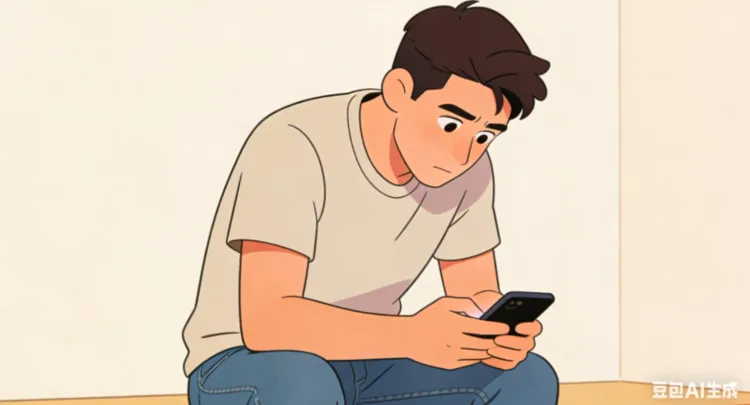
Our cervical spine comprises seven vertebrae, six intervertebral discs, and numerous muscles and ligaments. This sophisticated structure supports a head weighing between 4.5 to 5.4 kilograms. However, when we tilt our heads downwards by 60 degrees to look at our phones, the load can increase to over 27 kilograms. Prolonged excessive pressure can eventually lead to various cervical spine problems.
Fortunately, most cases of cervical spondylosis are at a stage where surgery is not necessary. Dr. Tang Qingping, a chief physician in the Rehabilitation Medicine Department at Hunan Second People's Hospital (Provincial Brain Hospital), explained that systematic rehabilitation treatment and scientific care can effectively alleviate and improve the issues caused by cervical spine problems. The following care guidelines will teach you how to better understand your cervical spine and manage its health throughout your life.
(▲AI Image)
To achieve scientific rehabilitation, it is crucial to understand the common classifications of cervical spondylosis, as each type has its own focus for rehabilitation. The most common type is the cervical type, which often manifests as muscle strain, stiffness, and discomfort, serving as a warning signal from the body. The radicular type results from disc herniation or bone spurs compressing the nerve roots, leading to radiating pain, numbness, and weakness in the arms. The vertebral artery type arises from cervical degeneration that irritates or compresses the vertebral artery, causing dizziness, headaches, and even fainting. The myelopathic type is the most dangerous; when the spinal cord is compressed, it can lead to a sensation of walking on cotton and a decline in fine motor skills, necessitating prompt medical evaluation and possible surgery.
The primary principle of rehabilitation is to diagnose first and then rehabilitate. It is essential to have a clear diagnosis from an orthopedic or rehabilitation specialist and to rule out any emergency situations before proceeding with subsequent rehabilitation activities. Cervical spine rehabilitation follows a stepwise process, transitioning from passive relief to active reconstruction, with core principles focusing on five major pillars that ensure the progressive protection of cervical spine health.
Posture and habit reshaping are fundamental to rehabilitation, yet they are often overlooked. Follow the line of sight principle: the top of the computer screen should be at eye level or slightly lower. Maintain a 90° angle at the elbows and waist, with proper support for the lower back. Implement the '20-20-20' rule: every 20 minutes of work, look at an object 6 meters away for 20 seconds. Sleep also requires attention to 'cervical spine care'; the pillow should support the natural curve of the neck, with a height of about one fist when lying flat and the same height as the shoulder when sleeping on one's side. Avoid sleeping on the stomach; the preferred positions are on the back or side.
Exercise therapy is at the core of active rehabilitation, as it can rebuild cervical stability and function. Activation training for the deep neck flexors can counteract forward head posture. This can be practiced by sitting against a wall or lying flat, pulling the chin inward to create a 'double chin' posture, holding for 5-10 seconds, and repeating 15 times. The McKenzie Method is suitable for patients suffering from shoulder, back, and radiating arm pain triggered by looking down. While sitting upright, gently retract the chin and slowly tilt the head back to the limit before returning to the starting position. This should be repeated 8-10 times; if pain intensifies during the tilt, it should be stopped immediately. Additionally, shoulder shrugs and resistance training with elastic bands can strengthen the shoulder and neck muscles. Neck movements should be performed within a pain-free range to gradually improve cervical flexibility.
Physical factor therapy is an auxiliary method for scientific pain relief and relaxation. For chronic fatigue and muscle spasms, using a hot towel for 15-20 minutes can promote circulation. In cases of acute sprains or severe inflammatory pain, applying an ice pack wrapped in a towel for 10-15 minutes can help reduce inflammation. Transcutaneous electrical nerve stimulation (TENS) can alleviate chronic pain. Manual therapy should be performed by a qualified physician, employing joint mobilization techniques to improve stiffness in the cervical spine's small joints and soft tissue release to relax tense muscles and fascia. It is essential to avoid rough massages in non-professional settings. Additionally, traditional medical practices like acupuncture, cupping, and gua sha can serve as complementary therapies when combined with modern rehabilitation methods.
To facilitate daily execution, you can follow this action list for cervical spine care. Start each morning by doing 15 chin tucks to awaken the cervical spine. After every hour of work, perform 10 chin tucks, turn your head left and right 5 times each, and do 10 shoulder shrugs and releases as a mini workout break. Set an alarm to check your posture, ensuring that your earlobes, shoulder peaks, and hip joints are aligned in a straight vertical line. Commit to 2-3 sessions per week of strength training for the shoulders and back, such as rowing and fly exercises, to strengthen the 'external support' for your cervical spine, and opt for full-body exercises like swimming, brisk walking, or yoga.
During the rehabilitation process, it is important to be alert to these 'red flag' signals: if you experience worsening numbness or weakness in your arms or legs, abnormal bowel or bladder function, severe pain that cannot be alleviated by conventional methods, as well as high fever or unexplained weight loss, you should immediately cease self-rehabilitation and seek medical attention.
Tang Qingping stated that the core concept of cervical spine rehabilitation is to become the lifelong manager of one's own cervical spine. This does not imply pursuing a one-time 'cure', but rather establishing a sustainable pattern of neck usage and management: shifting from passively receiving treatment to actively maintaining it daily, moving from solely focusing on symptoms to optimizing cervical spine function, and integrating correct posture and micro-movements into daily life, making them as habitual as brushing one’s teeth.
The cervical spine bears the strength for us to lift our heads and perceive the world. By first lowering our phones and gently tucking in our chins, we can provide the scientific care it deserves, allowing our neck and shoulders to be free from discomfort.
Hunan Medical Chat Special Contributor: Zhu Tuo, Rehabilitation Medicine Department, Hunan Second People's Hospital (Provincial Brain Hospital)
Follow @HunanMedicalChat to get more health science information!
(Edit YT)
#exercise
#physical health



© 2025 Health Tribe.