
WHO Welcomes IOM to Global Digital Health Network
Mar 26, 2026
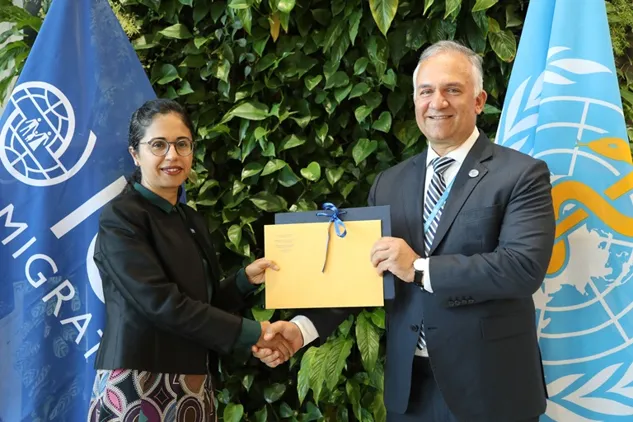
Credit: WHO / Natschja Nash-Mendez
The World Health Organization (WHO) today welcomed the International Organization for Migration (IOM) as the first international organization to join WHO’s Global Digital Health Certification Network (GDHCN), marking an important step toward strengthening secure, interoperable digital health systems that support continuity of care across borders.
By integrating the International Organization for Migration (IOM) into the network, individuals on the move, who frequently encounter fragmented access to healthcare services, will be better positioned to take advantage of reliable digital tools that allow for secure verification of health information and enhanced access to their own medical records. This collaboration also aims to ensure that digital public health resources are created in ways that effectively address the needs of populations in humanitarian situations, crisis environments, and areas with limited connectivity.
“This partnership demonstrates how the WHO can unite countries and international partners to develop trusted digital public goods that safeguard individuals and enhance global health security,” said Dr. Alain Labrique, Director of the Data, Digital Health, Analytics and AI (DDA) Department. “By promoting secure, interoperable standards that protect privacy and dignity, the GDHCN ensures that digital health systems are effective for all, including the most vulnerable populations.”
With IOM on board, the GDHCN is expanding beyond its initial use in travel-related health certification during the COVID-19 pandemic to encompass broader humanitarian applications. This partnership illustrates how shared digital infrastructure can assist in maintaining health continuity in situations of displacement and on the frontlines, while enhancing preparedness and coordination across nations and sectors.
As a leading provider of health services for migrants worldwide, IOM highlighted the practical significance of secure and portable health documentation for displaced and mobile populations.
"Joining the Global Digital Health Certification Network will improve our ability to support migrants by providing them with more reliable and secure access to their health information across borders, thanks to the generous support of our donors and the cooperation of Member States and partners," said Dr. Poonam Dhavan, Director of the Migration Health Division at IOM. "This collaboration reflects our shared commitment to strengthening continuity of care, safeguarding personal data, and developing digital solutions that address real needs in humanitarian and mobility contexts."
The collaboration also emphasizes the role of the WHO as the global authority for health standards and interoperable systems. By offering neutral, privacy-preserving technical standards adopted by Member States and partners, the WHO helps ensure that cross-border health verification systems remain trustworthy, rights-based, and accessible globally.
Today's announcement complements the WHO's broader efforts to enhance the health of refugees and migrants, as highlighted in the Organization's World Report on Promoting the Health of Refugees and Migrants: Monitoring Progress on the WHO Global Action Plan. This report indicates that more countries are increasingly incorporating refugees and migrants into their national health policies and systems. Together, these initiatives illustrate how policy inclusion and reliable digital infrastructure can collectively foster more resilient and equitable health systems for those on the move.
#digital health
#humanitarian policy



© 2025 Health Tribe.