
Elderly Alert: How to Recognize Sudden Cardiac Arrest Risks
Apr 04, 2026
Author: Xiong Zheye, Reviewer: Yuan Chunyun, Curator: Hunan Province Integrated Traditional Chinese and Western Medicine Hospital (Affiliated Hospital of Hunan Academy of Traditional Chinese Medicine), Production/Organizational Information: Department of Geriatrics, Hunan Province Hospital.
Elderly Alert: How to Recognize Sudden Cardiac Arrest Risks
Cardiac sudden death, common in the elderly, often results from heart issues. Key prevention is daily health management and routines.
Recently, the news of a well-known education blogger's sudden death has garnered attention and brought feelings of sorrow. Yuan Chunyu, the head of the Geriatrics Department at the Hunan Province Hospital of Integrated Traditional Chinese and Western Medicine (affiliated with the Hunan Academy of Traditional Chinese Medicine), stated that in the elderly population, cardiogenic sudden death is often not an isolated event but rather a concentrated outbreak resulting from the accumulation of long-term health issues.
What is cardiac arrest?
Cardiac sudden death refers to death that occurs rapidly due to heart-related causes, often within a short timeframe. Common underlying factors include coronary heart disease, malignant arrhythmias, and heart failure. For the elderly, the presence of atherosclerosis is widespread, and the blood supply to the myocardium is often in a state of critical balance. Once this balance is disrupted by factors such as emotional fluctuations, infections, physical exhaustion, or climate changes, it can lead to serious arrhythmias or even cardiac arrest.
From the perspective of Traditional Chinese Medicine, although there is no exact corresponding disease name for this type of illness, it can be categorized under "chest obstruction," "palpitations," and "syndrome of collapse," among others. The core pathological mechanism lies in the concept of "deficiency of the root and excess of the superficial."
The term "fundamental deficiency" refers to the gradual decline of vital energy and blood in elderly individuals, characterized by insufficient heart energy and blood deficiency, leading to inadequate nourishment of the heart. On the other hand, "secondary excess" often manifests as phlegm turbidity and blood stasis obstructing the heart vessels, resulting in impaired circulation of Qi and blood. The interaction between these two conditions is akin to a narrow road that becomes further clogged, potentially leading to "blockage of heart vessels," which may result in sudden changes.
What are the signs before sudden death?
Many people mistakenly believe that sudden cardiac death occurs without warning; however, in clinical practice, most patients exhibit varying degrees of discomfort before the onset of the condition. These signals are often overlooked or misinterpreted as "normal signs of aging." Common warning signs include:
Repeated episodes of chest tightness and pain, especially worsening after physical activity or emotional upheaval.
Palpitations, irregular heartbeat, and even brief dizziness or fainting.
Atypical symptoms, such as significant fatigue, cold sweats, decreased appetite, discomfort in the upper abdomen, or waking up at night due to shortness of breath.
From the perspective of Traditional Chinese medicine, these symptoms are often associated with "poor circulation in the heart meridian," which reflects an obstruction in the flow of Qi and blood, as well as a lack of nourishment for the mind. If these issues can be identified and addressed in a timely manner during this stage, it is often possible to prevent further deterioration of the condition. Therefore, for the elderly, any recurrent or progressively worsening discomfort should be treated with caution, rather than simply attributing it to "waiting it out."
What are the common causes that can lead to sudden death?
Traditional Chinese medicine posits that the fundamental cause of illness in the elderly lies in the gradual decline of vital energy. As people age, there is a deficiency of heart energy and insufficient impetus, resulting in a deficiency of heart blood and the failure to nourish bodily functions, which leads to a gradual weakening of heart function; this reflects the concept of "deficiency of the root." On this basis, if one's diet leans towards rich and sweet foods, it can easily result in phlegm and turbidity. Additionally, prolonged illness or a sedentary lifestyle causes a slow circulation of Qi and blood, which can easily lead to the stagnation of blood within the body.
Phlegm and blood stasis are intermingled like sediment accumulating in a pipeline, which can eventually lead to a complete blockage of blood flow at some point, creating a critical state known as "obstruction of the heart channels." Furthermore, extreme fluctuations in emotions, excessive fatigue, and cold stimuli can all serve as triggering factors, causing an instant imbalance in what was previously a tolerable state, potentially leading to sudden death.
This also reflects the dynamic process of Traditional Chinese Medicine's principle of "causing reality from deficiency and exacerbating deficiency from reality." In prevention and treatment, we need not only to "unblock" but also to "reinforce."
Prevention is better than rescue.
When facing sudden cardiac death, the truly effective measures do not lie in post-event rescue, but rather in daily management.
Western medicine emphasizes the control of risk factors, which is the most fundamental and crucial part. This includes the standardized management of hypertension, diabetes, and dyslipidemia, adhering to medical advice for long-term use of relevant medications, and regularly undergoing examinations such as electrocardiograms and cardiac ultrasounds to detect potential issues early.
Traditional Chinese medicine places greater emphasis on the concept of “preventive treatment,” aiming to improve the body's condition through holistic nurturing. For example, it is important to tonify Qi and nourish the heart for elderly individuals who exhibit significant Qi deficiency; for those with a constitution prone to blood stasis, the focus should be on promoting blood circulation and unblocking meridians; and for individuals with an excess of phlegm and dampness, the approach should involve strengthening the spleen, resolving phlegm, and clearing the channels. By utilizing syndrome differentiation for treatment, it is possible to improve the internal environment to some extent and reduce the occurrence of blockages.
Experts advise
Professor Yuan Chunyun, the director of the Geriatrics Department, reminds us that every unexpected event is often not a coincidence, but rather a result of long-term imbalances in the body. What may seem like simple daily habits in everyday life are, in fact, crucial foundations for maintaining stable heart function.
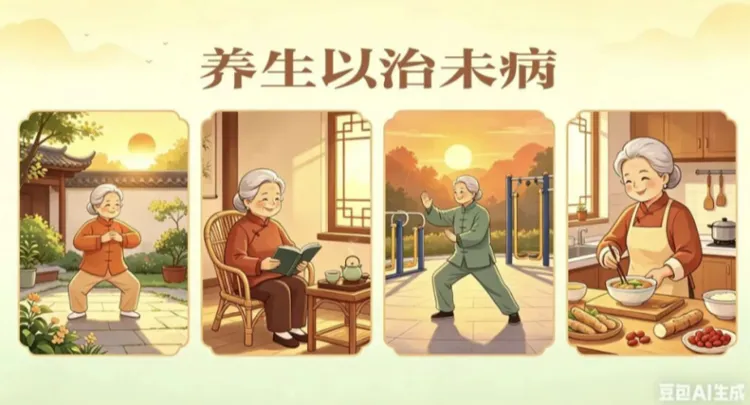
1. Maintaining a calm demeanor and avoiding extreme emotions such as great joy and anger are important principles for nurturing the heart.
Establishing a regular routine and ensuring adequate sleep can help stabilize the mind and spirit. A light diet, low in oil and salt, is advisable to prevent the accumulation of phlegm.
Moderate exercise such as Tai Chi, Baduanjin (Eight Pieces of Brocade), or walking can promote the circulation of Qi and blood without depleting Qi or harming the yin.
Hunan Medical Chat Special Contributor: Hunan Province Integrated Traditional Chinese and Western Medicine Hospital (Affiliated Hospital of Hunan Academy of Traditional Chinese Medicine) Department of Geriatrics, Xiong Zheye.
Follow @HunanMedicalTalk to get more health science information!
Editing: 92
#health
#prevention
© 2025 Health Tribe.