
How can patients with blood disorders celebrate Qingming safely?
Apr 05, 2026
How can patients with blood disorders celebrate Qingming safely?
Original production by the Chongqing Science Popularization Research Association and the Chongqing Yongchuan District Red Cross Care for Life Health Popular Science Volunteer Service Team.
Author: Huang Xingqin, Associate Chief Technician of the Hematology Department, The First Affiliated Hospital of Army Medical University; Zou Jingbo, Chief Technician of the "Teacher Zou's Popular Science Garden" Expert Studio at the Chongqing Yongchuan District Disease Prevention and Control Center (Volunteer Service Team for Health Promotion by the Chongqing Yongchuan District Red Cross, Expert of Popular Science China).
During the Qingming Festival, patients with blood disorders must take precautions against infections, avoid crowds, and uphold good hygiene and a balanced diet. Qingming is a traditional festival to honor and remember our ancestors while appreciating the beauty of spring. This time of year is characterized by fluctuations in temperature, increased pathogen activity, and higher levels of pollen and insects. As patients with blood disorders generally have compromised immune systems and lower platelet counts, they face a heightened risk of infections and bleeding. Participating in activities such as tomb sweeping and outings may seem harmless to healthy individuals, yet these activities present numerous risks for patients with blood conditions. Factors like damp spring rains, crowded environments, and stress associated with mourning can disrupt their condition, making advance precautions particularly essential.
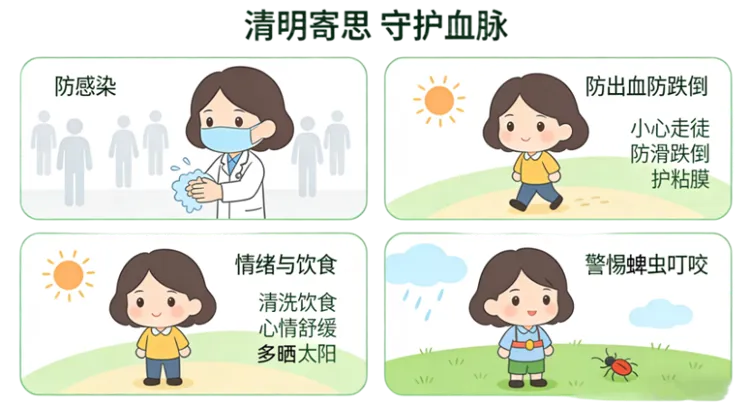
1. Strictly prevent infections: Safeguard the first line of defense.
Patients who have undergone chemotherapy, transplantation, or are experiencing bone marrow suppression have severely weakened immune systems; even minor colds can result in severe infections. It is advisable for these patients to avoid crowded, enclosed, or damp memorial sites. Family members should perform rites on their behalf if the patients are unable to attend. If going outside is necessary, masks should be worn properly, and patients should steer clear of pollen, willow fluff, and grass. Upon returning home, immediate handwashing, changing of clothes, and cleaning of the mouth and nose are important to minimize cross-infection risks.
2. Strictly prevent bleeding and falls.
Patients with low platelet counts may bruise easily from minor bumps, experience gum bleeding, or even suffer from severe internal bleeding. To mitigate risks during Qingming, it is advisable to avoid climbing to heights, engaging in intense bending or strenuous activities, and to wear non-slip shoes. Daily habits should also be adjusted: avoid forceful coughing, refrain from toothpicking, and use a soft-bristled toothbrush. If unexplained large bruises or persistent nosebleeds, dark stools, headaches, or vomiting occur, seek medical assistance immediately.
3. Pay attention to emotions and diet: the most easily overlooked details.
Excessive grief, anxiety, and insomnia can directly impact the immune system. Family members should provide support and companionship, while patients may benefit from moderate walks and sunlight exposure to improve their mood. Dietary choices should focus on warm, light, clean, and easily digestible foods while avoiding raw and cold vegetables, cold dishes, and leftovers. It is also critical to consult a doctor before taking health supplements or remedies that could overly tax the liver and kidneys.
4. Be cautious of tick bites: a hidden deadly threat.
Ticks are particularly active during the Qingming Festival and can transmit "fever with thrombocytopenia syndrome," mimicking severe blood disorders and posing a deadly threat to patients. To minimize exposure, wear long sleeves and trousers with tightly secured cuffs while in wooded or grassy areas. Avoid sitting or lying in the grass, and carefully inspect your skin upon returning home. If a tick is found, do not remove it forcefully; instead, moisten the area with alcohol before gently extracting the tick completely, and seek medical attention promptly.
The essence of Qingming lies not only in remembrance but also in honoring and appreciating life. With years of experience in hematology, I believe firmly that standardized treatment, scientific preventive measures, and perseverance are the best guardians of life. While we remember the past, we must also cherish the present; caring for our health is essential for wellbeing. I wish every patient with a blood disorder stable health, and may every family experience less worry and more peace of mind.
#health
#festival


© 2025 Health Tribe.