
What to know about minor surgery risks and recovery steps
Apr 08, 2026
Author: Zhang Dan, Head Nurse of the Department of Thoracic Surgery, University Town Hospital Affiliated to Chongqing Medical University; Zou Jingbo, Chief Technician (Expert from Science Popularization China) of the "Zou's Science Popularization Garden" Expert Workshop at the Yongchuan District Center for Disease Control and Prevention in Chongqing. Reviewer: Zhang Hong and Luo Yang from the Chongqing Association for Science Popularization (Experts of Science Popularization China). Submitting Unit: Chongqing Association for Science Popularization. Statement: Except for original content and special notes, some images are sourced from the internet, intended for non-commercial use only, serving as educational dissemination material. Copyright belongs to the original authors, and if there is any infringement, please contact us for removal.
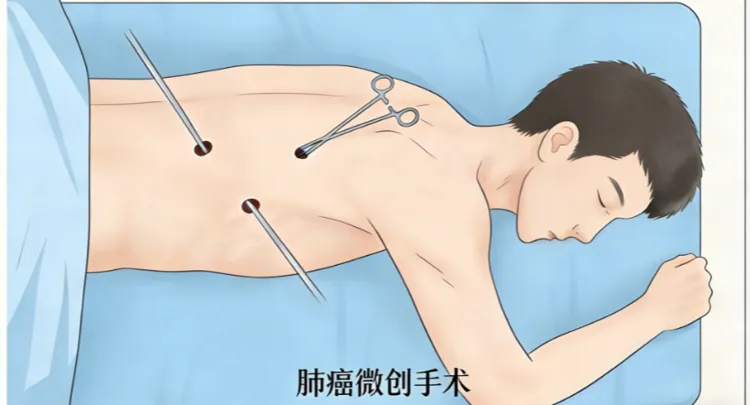
Title: What to know about minor surgery risks and recovery steps Introduction: Minimally invasive surgery offers quick recovery but requires skilled surgeons and careful preparation to ensure safety and effectiveness. Many people mistakenly believe that minimally invasive surgery is just a "minor surgery," with simple procedures and low risks. In reality, with the widespread application of minimally invasive techniques in fields such as thoracic surgery, it does indeed reduce trauma and accelerate recovery. However, minimally invasive surgery demands a high level of technical skill, specialized equipment, and clinical experience. Its complexity and challenges should not be underestimated; it is certainly not something that can be done carelessly. Every minimally invasive surgery requires all participating doctors to balance precision and safety in meticulous operations, meaning it is far from simple! What is minimally invasive surgery? 1. Definition and Characteristics of Minimally Invasive Surgery Minimally invasive surgery, as the name implies, involves entering the body through small incisions and is performed using advanced technology and equipment. Its most notable feature is "minimally invasive" — with small incisions, less trauma, and quicker recovery. Traditional surgeries often require large incisions, whereas minimally invasive surgery employs high-tech tools such as endoscopes, lasers, and robots, allowing procedures to be completed with incisions the size of a small hole or needle prick. This approach not only reduces the risks of bleeding and infection but also enables patients to recover faster and spend less time in the hospital. In short, minimally invasive surgery makes treatment more precise and comfortable. The differences between minimally invasive surgery and traditional surgery. Traditional surgery typically requires a larger incision to allow doctors to directly observe and manipulate the affected area. While this approach is straightforward, it often results in greater trauma, longer recovery times, and a higher risk of complications. In contrast, minimally invasive surgery utilizes advanced imaging equipment (such as thoracoscopes and laparoscopes) to treat significant issues through small openings. Guided by high-definition images, surgeons can perform precise operations without extensive incisions. Patients experience less postoperative pain, lower infection risks, and a smoother recovery process. As a result, minimally invasive surgery has gradually become the preferred technique in various fields, including thoracic and oncological surgery. Application of Minimally Invasive Surgery in Thoracic Surgery Thoracic surgery often involves important organs such as the heart, lungs, and pleura. Traditional surgical methods can be quite invasive, placing a heavy burden on patients. Minimally invasive surgery perfectly addresses this shortcoming. Whether it is for lung cancer resection, lung mass biopsy, or cardiac surgery, minimally invasive techniques provide more precise and gentler treatments. For instance, in video-assisted thoracoscopic surgery (VATS) for lung procedures, doctors can safely remove diseased tissue through small incisions and high-precision imaging, effectively reducing patient suffering and shortening recovery time. The Complexity of Minimally Invasive Surgery in Thoracic Surgery Minimally invasive surgery is not a simple procedure. Although minimally invasive surgery sounds less traumatic, it is by no means a simple procedure that can be done casually. The complexity of thoracic surgery demands that minimally invasive operations require a very high level of technical skill and sophisticated equipment support. Surgeons not only need to perform procedures through small incisions but also rely on high-definition imaging systems for precise navigation. Even a slight misstep during the operation can jeopardize patient safety. Therefore, minimally invasive surgery requires surgeons to possess exceptional professional skills and a profound understanding of the complex anatomical structures of the thoracic cavity. Technical Requirements for Minimally Invasive Surgery in Thoracic Surgery Minimally invasive thoracic surgery demands extremely high technical support. During the procedure, doctors utilize equipment such as endoscopes and robotic surgical systems to achieve precise cutting or stitching. These devices require real-time imaging monitoring to ensure smooth operation within confined spaces. For instance, in robotic surgery, doctors control robotic arms from a console, enabling millimeter-level precision and greatly reducing damage to surrounding healthy tissues. For surgeons, it is essential not only to be proficient in operating these high-tech devices but also to possess rich clinical experience to handle various unexpected situations that may arise during the surgery. The Challenges of Complex Medical Conditions for Minimally Invasive Surgery Minimally invasive surgery can reduce trauma; however, it still faces significant challenges when dealing with complex medical conditions. For instance, in lung cancer patients, the unique location of the tumor or the complexity of the disease requires exceptionally high precision during surgery to ensure complete removal. The operational space in the thoracic cavity is very limited when addressing diseases within it. Therefore, surgeons must possess a high level of accuracy to avoid damaging crucial blood vessels, nerves, and the trachea. It is clear that although minimally invasive surgery involves less trauma, its difficulty in complex cases is extremely high and not as simple as "just a quick procedure." The Safety and Risks of Minimally Invasive Thoracic Surgery 1. Security Assurance: Balancing Technology and Experience Minimally invasive thoracic surgery is widely recognized, closely linked to its high safety profile. This type of surgery primarily relies on advanced high-tech equipment to achieve real-time precise monitoring during the procedure, ensuring that every step is kept within a controllable range. The experience of the surgeon is also a crucial guarantee of safety. Skilled surgeons not only can accurately assess the nature of the lesions but also operate flexibly within limited spaces, avoiding secondary harm to the patient. Therefore, the close integration of technology and experience is key to the safe conduct of minimally invasive thoracic surgery. Common Risks and Complications of Minimally Invasive Surgery Although minimally invasive surgery is generally considered safe, there are inherent risks associated with any surgical procedure. Common risks include bleeding, infection, and damage to instruments during the operation. Due to the limited space for operation, it is challenging for surgeons to visually observe the affected area as they would in traditional surgery, necessitating reliance on imaging equipment for guidance. Improper techniques may result in instruments contacting or injuring surrounding tissues. Furthermore, individual patient differences—such as allergic tendencies or chronic medical histories—can also increase the likelihood of complications. While the overall risk is low, it remains important for both medical professionals and patients to pay careful attention to these factors. (3) How to Reduce Risks and Ensure Optimal Results To ensure the safety and effectiveness of minimally invasive surgery, thorough preoperative examinations and assessments are crucial. Through comprehensive evaluations, doctors can accurately understand the patient's physical condition and the characteristics of their illness, determining whether they are suitable candidates for minimally invasive surgery. This helps clarify the indications for surgery and avoid unnecessary risks. Choosing an experienced and skilled thoracic surgeon is key to reducing surgical risks. Experienced surgeons can not only accurately assess the indications for surgery but also flexibly select the most appropriate surgical method based on the specific conditions of the patient, scientifically planning the surgical process. Postoperative monitoring and care are equally important, as they help in the early detection and management of potential complications, promoting patient recovery. Only through close coordination of thorough preoperative preparation, precise intraoperative procedures, and meticulous postoperative care can the effectiveness of minimally invasive surgery be maximized, ensuring patient safety and accelerating the recovery process. Four, Summary The rise of minimally invasive surgery has brought patients a more precise and comfortable treatment experience. However, we must recognize that this is not a "simple" procedure; it is an advanced medical technology that requires a deep integration of high technology, extensive experience, and exceptional wisdom. Especially in the field of thoracic surgery, minimally invasive surgery is far more than just "small incisions." Every technical requirement and each operational decision behind it is filled with challenges. In the future, as technology advances and the skills of doctors continue to improve, minimally invasive surgery in thoracic surgery will become more mature and safer, providing high-quality medical services for more patients. References Yang Na, Kuang Ruixin, Peng Lihua. Risk factors for pain sensitization and chronicity after thoracoscopic minimally invasive surgery and prevention strategies. Chinese Journal of Research Hospitals (Chinese and English), 2026, 13(01): 61-67. Zeng Jian, Yuan Tianzhu, He Bangfu, et al. Clinical study on the treatment of refractory pleural effusion after thoracic surgery using thoracoscopic procedures. Systematic Medicine, 2025, 10(21): 18-22. Pei Shuai, Wang Yongzhi. The Application Effect of Minimally Invasive Small Incision Surgery in the Clinical Treatment of Patients with Thoracic Surgery Diseases. Journal of Metallurgical Industry Medicine of China, 2023, 40(01): 112. Sun Qiang, Zhu Jie, Zhang Boyong. Analysis of the Effectiveness of Minimally Invasive Small Incision Surgery in Treating Thoracic Surgical Diseases. Contemporary Medicine, 2022, 28(03): 179-181.
#medical knowledge
#surgical safety



© 2025 Health Tribe.