
Why People Try to Eliminate the Hardworking Kind Muscle
Apr 12, 2026
Author: Huang Tao, founder of Beijing Baoshi Sports Rehabilitation Clinic and former sports medicine rehabilitation therapist at Beijing Third Hospital.
Review | Ji Gang, Deputy Chief Physician of the Orthopedics Department at the First Hospital of Hebei Medical University, Member of the Regeneration and Rehabilitation Committee of the Chinese Society of Rehabilitation Medicine.
Planning丨Zhenxi
Editor: Zhen Xi
Proofreading | Xu Lai, Zhang Linlin
Source: Popular Science China WeChat Official Account
The cover image and the images within the text are sourced from a licensed stock photo library.
Reposting may lead to copyright disputes.
The trapezius is vital for scapula stabilization and upper limb movement. Learn to exercise it for better neck and shoulder health.
The trapezius is truly a very accommodating muscle; it offers support to anyone who relies on it and can compensate for anything.
When troubles arise in all directions, help will come from unexpected places.
No matter where I train, my trapezius hurts.
Everyone despises it, yet it is the most tenacious and shows the most signs of training!
When you want to give up, please think about how the trapezius muscle is still working hard!
Even if you don't practice, you'll still end up practicing...
Is the trapezius muscle really so eager to help when it comes to muscle training? Why does it get worked even when you don't specifically train it?
The trapezius muscle is actually very important.
The trapezius is a muscle that many people are familiar with, yet it is often deeply misunderstood. It is located in the neck and upper back, extending from the base of the skull, along the cervical vertebrae, to the thoracic vertebrae, and then spreading out to the clavicle and scapula. It resembles a large kite, which is why it is called the trapezius.
It is not just a small lump of “unsightly” flesh; rather, it is a significant muscle group that plays a crucial role in function, typically divided into the upper, middle, and lower fibers. The upper fibers are responsible for shrugging the shoulders and assisting in elevating the scapula, the middle fibers are responsible for retracting the scapula, and the lower fibers are responsible for depressing and upwardly rotating the scapula. In simple terms, whether you are raising your arms, pulling something, stabilizing your shoulder blades, or maintaining the position of your head, neck, and upper limbs, it all relies on this muscle group.
In recent years, the aesthetic of square shoulders has become quite popular, leading many people to think that if they notice their trapezius muscles a bit too prominent, they have ruined their shoulders or that their shoulders look unattractive, wondering if their trapezius is too tight. However, the appearance of square shoulders is largely influenced by factors such as the length of the collarbone, the shape of the shoulder peaks, the position of the scapula, body fat distribution, and innate bone structure. It's not simply about eliminating the trapezius muscles to achieve this look. In fact, from a functional perspective, having well-developed trapezius muscles is not necessarily a bad thing.
A powerful, enduring, and stable trapezius often signifies a more supportive shoulder and neck system, better able to withstand the loads of work, training, and daily life. When balancing aesthetics and functionality in the trapezius muscle, priority should be given to function. This is because having comfort in the shoulder and neck, along with well-functioning upper limbs and more stable athletic performance, holds far greater value than merely pursuing a visual appearance of being thin and flat.
The real issue with the trapezius muscles is that they are too tired.
The real issue with the trapezius muscle is not that it is large, but rather that it is chronically overworked when it shouldn't be, exerting erratic force when it should be coordinating its strength.
The reason why the trapezius muscle gets sore so easily is quite simple: modern lifestyles tend to keep it in a state of low quality and high load for prolonged periods, which effectively leads to chronic overwork of the trapezius.
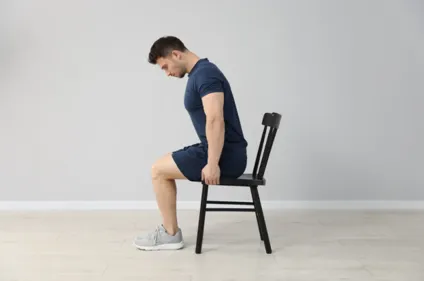
Sitting for extended periods, using a computer for long hours, staring at screens, looking down at your phone, driving, and lacking strength training can all lead to forward head posture, reduced mobility in the thoracic spine, and abnormal positioning of the scapulae. When the head protrudes forward, the trapezius muscles, especially the upper fibers, have to work extra hard, as if someone is constantly pulling on your neck and shoulders.
Moreover, many people rarely train their scapular stability and upper back strength, leading to muscles that lack both strength and endurance, remaining in a chronically tense and shortened state. As a result, they experience sensations of soreness, tightness, stiffness, pain upon pressure, and increased hardness with fatigue. Strictly speaking, it's not that the trapezius is too strong, but rather that the trapezius is too fatigued.
For beginners in fitness, the most common issue during training is the compensation of the trapezius muscles. This occurs because when exercising, the force exerted is chaotic instead of being coordinated.
The main reason for this situation is that beginners often lack the awareness of relaxing their shoulders, combined with weak core muscles and deep stabilizing muscles. When performing exercises such as presses, lateral raises, or even back workouts, the trapezius muscles, which are the easiest to activate, end up taking the lead in completing the movement.
Moreover, many modern people experience an issue where their trapezius muscles are often in a state of tension and shortening. These muscles are more easily activated than others, and as soon as dumbbells are picked up, the trapezius tends to instinctively activate first.
To strengthen the trapezius muscles, you can try the following exercises: 1. Shrugs: Stand with your feet shoulder-width apart, holding dumbbells at your sides. Raise your shoulders as high as you can towards your ears, then lower them back down. 2. Face Pulls: Using a cable machine with a rope attachment set at upper chest height, pull the rope towards your face while keeping your elbows high. This helps engage the upper traps. 3. Barbell or Dumbbell Rows: Bend your body forward slightly with a flat back and pull a barbell or dumbbells towards your waist. This works the middle and lower parts of the trapezius. 4. Deadlifts: This full-body exercise also engages the traps. Ensure to keep proper form to avoid injury. 5. Upright Rows: With a barbell or dumbbells, pull the weights upward along your body towards your chin, keeping your elbows higher than your wrists. Incorporate these exercises into your workout routine and ensure to maintain proper form for optimal results. Always consult with a fitness professional if you're unsure about your technique or if you have any health concerns.
To alleviate discomfort in the trapezius muscle, the first step is not to vigorously massage or pound it, but rather to first reduce its ineffective overtime. For instance, raise your screen slightly, move your keyboard and mouse closer, avoid hunching your shoulders while typing for extended periods, and do not maintain the same posture for one or two consecutive hours. Posture doesn’t always have to be perfect; it’s more important to change it frequently. Every thirty to forty minutes, take a moment to stretch your shoulders, thoracic spine, and neck, as this is more crucial than striving for a single perfect sitting position.
You can perform a stretch for the trapezius muscle, but it should be done gently. The most common method is to sit upright, with one hand gripping the chair for support. Slowly bring the ear of the opposite side down towards the shoulder, allowing the neck to stretch sideways. If you want to target the upper trapezius more, you can slightly lower your head and look towards the pocket on the opposite side. Throughout the process, avoid pulling aggressively and do not believe that the more it hurts, the more effective it is. Maintain the stretch for about twenty to thirty seconds and do two to four sets. Many people tend to shrug their shoulders while stretching, which actually increases tension; so the focus should be on relaxing the shoulders down and breathing deeply.
But simply pulling without training usually does not solve the fundamental problem. What the trapezius muscle truly needs is to restore its normal function.
The upper back can still be trained; exercises like shoulder shrugs and farmer's walks can target it.
The middle and lower traps deserve more attention from most people. This includes exercises such as rowing, bent-over Y/T/W raises, emphasizing scapula control during pull-downs, wall slides, and low-position trapezius activation training, among others.
The purpose of this training is not just to build muscle but to teach the scapula to stabilize, retract, upwardly rotate, and depress, thereby reducing shoulder and neck compensation. Many people with shoulder and neck discomfort are not lacking in relaxation, but rather in stability.
So, concerning the trapezius muscle, the most important concept to acknowledge is: it is not the enemy. There is nothing wrong with having well-developed trapezius muscles; what is problematic is long-term imbalance, compensation, neglect, and enduring tension.
Instead of solely pursuing an appearance without trapezius muscles, it's better to aim for a trapezius that is strong, functional, and not overworked. While aesthetically pleasing shoulder and neck lines may be influenced by trends, a comfortable, stable, and functional shoulder and neck system is what truly lasts.
#sports rehabilitation
#muscle health


© 2025 Health Tribe.