
New UN-Water GLAAS Report Calls for Stronger WASH Systems
Jan 26, 2026
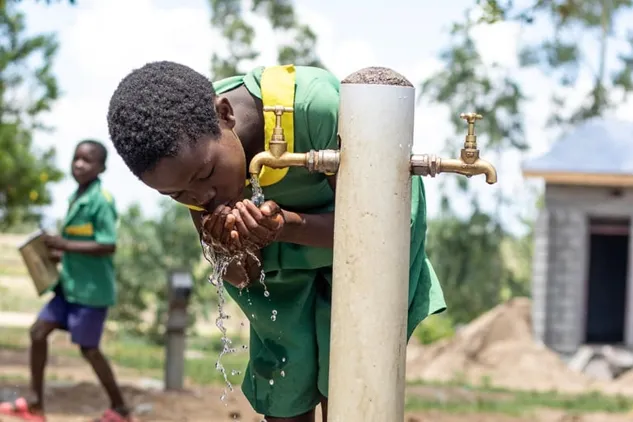
Urgent action is needed to strengthen national water, sanitation, and hygiene (WASH) systems so that countries can accelerate progress towards Sustainable Development Goal (SDG) 6 and protect health, particularly in the face of increasing climate-related risks and recurring disease outbreaks. New findings from the "State of systems for drinking-water, sanitation, and hygiene: Global Update 2025," the UN-Water Global Analysis and Assessment of Sanitation and Drinking-Water (GLAAS) report developed jointly by WHO and UNICEF, provide a comprehensive picture of the barriers hindering WASH services. The analysis draws on data from 105 countries and territories (covering 62% of the global population) and 21 development partners, including UN agencies, multilateral financing institutions, and international nongovernmental organizations. “With less than five years until 2030, we are at a critical moment to review SDG 6 and take decisive action to accelerate implementation,” said Dr. Alvaro Lario, Chair of UN-Water and President of the International Fund for Agricultural Development (IFAD). “The choices we make now will determine whether we achieve our common goals and ensure that WASH acts as a catalyst for improved public health and its transformational benefits, particularly for vulnerable populations.
Delivery capacity holds progress back.
Across countries, the pattern is clear: plans exist, but delivery capacity is thin. Many countries have policies and targets in place, but implementation is constrained by fragmentation, workforce gaps, and financing that does not reliably translate into results. For example:
Despite steady global progress, unmet needs remain vast. Estimates from the WHO/UNICEF Joint Monitoring Programme (JMP) indicate that 2.1 billion people still lack safely managed drinking water, 3.4 billion lack safely managed sanitation, and 1.7 billion lack basic hygiene services.
“Millions of lives continue to be lost each year due to inadequate access to safe drinking water, sanitation, and hygiene,” said Dr. Ruediger Krech, Acting Director of the Department of Environment, Climate Change, One Health & Migration at the World Health Organization. “This calls for stronger WASH systems—how water and sanitation services are planned, resourced, and operated—and greater investment from governments and partners to provide safely managed services for everyone.”
The report identifies major opportunities to expedite progress by enhancing the planning, execution, and regulation of WASH resources. Data from 20 participating countries reveal a funding gap of 46% between the identified needs and the available funding necessary to achieve national targets. Additionally, efficiency losses further weaken services, with non-revenue water averaging 39% among the countries that reported.
Less than half of the countries reported that regulatory authorities publish publicly accessible reports on drinking-water quality, and only about one fifth reported that drinking-water surveillance occurs at nearly all of the required frequency. While most countries include water safety planning in their policies and regulations, large-scale implementation remains limited.
Encouragingly, many countries are integrating climate considerations into WASH systems: 80% address climate risks in WASH policies and plans. However, targeted measures for populations disproportionately affected by climate change are much weaker—only 20% of countries reported having measures to finance actions that support these populations, and just 42% reported measures to monitor progress in this area.
The new GLAAS findings emphasize that progress on SDG 6 relies on strengthening WASH systems and sectors—encompassing financing, policy, governance, capacity, and data—which will foster sustainability and build upon existing successes, said Cecilia Scharp, Director of the Global Water, Sanitation and Hygiene Practice at UNICEF. As countries prepare for the 2026 UN Water Conference later this year, this report provides timely evidence to guide transitions toward more resilient systems that guarantee services reach the most vulnerable children.
These gaps have severe health consequences: at least 1.4 million people died in 2019 from preventable causes linked to unsafe water and poor sanitation, and in 2024 there were over 560,000 cholera cases and 6,000 reported deaths across 60 countries.
The report was released at the beginning of the High-Level Preparatory Meeting for the 2026 UN Water Conference, which will take place on January 26 and 27, 2026, in Dakar, Senegal. This meeting is co-hosted by Senegal and the United Arab Emirates, serving as a precursor to the main conference scheduled for December 2026.
The complete GLAAS 2024/2025 dataset is available on the GLAAS data portal.
#public health
#international cooperation


© 2025 Health Tribe.