
Nipah Virus Explained: Risks and WHO Concerns Uncovered
Feb 01, 2026
Author: [Author Name] Reviewer: [Reviewer Name] Curator: [Curator Name] Production/Organization: [Organization Name] Title: Nipah Virus Explained: Risks and WHO Concerns Uncovered Introduction: Nipah virus is highly dangerous, with a high mortality rate. Awareness and prevention are crucial for those in endemic areas. Keywords: ['Infectious disease', 'Public Health'] Main text: Recently, India reported to the World Health Organization two laboratory-confirmed cases of Nipah virus infection. Due to its high mortality rate, potential for cross-species transmission, and the lack of effective treatments, the Nipah virus is classified by the World Health Organization as one of the most dangerous pathogens in the world.
According to the requirements of the Centers for Disease Control and Prevention, relevant departments in our hospital have reminded all medical staff to further increase their vigilance regarding Nipah virus infections. Especially when treating patients from epidemic areas such as India, or those exhibiting symptoms like fever, it is important to conduct thorough inquiries and record their recent travel history. This will help in timely identifying potential risks and implementing appropriate preventive measures.
1. What is the origin of the Nipah virus?
The Nipah virus was first discovered in 1998 in a village in Malaysia called 'Kampung Sungai Nipah.' Initially, there were severe respiratory symptoms observed in the local pigs, followed by outbreaks among farmers who had close contact with the pigs, showing symptoms such as high fever, confusion, disorientation, and even death. Eventually, scientists isolated a completely new virus from the patients and named it the Nipah virus after the location of its discovery.
Who is the mastermind behind the 'King of Poison'?
Nipah virus is a typical zoonotic virus that can be transmitted between animals and humans.
Natural host: fruit bats of the family Pteropodidae, which carry the virus without showing symptoms, serving as a long-term reservoir for the virus.
Intermediate hosts: The most common is pigs, but horses, sheep, cats, and dogs can also become infected.
Three Ways Nipah Virus is Transmitted to Humans: A Clear Explanation of the Transmission Chain 1. Direct Contact with Infected Animals: Humans can contract the Nipah virus through direct contact with infected animals, particularly fruit bats or pig populations that carry the virus. The virus can spread through bodily fluids, such as saliva, urine, or respiratory secretions. 2. Human-to-Human Transmission: The Nipah virus can be transmitted from person to person, especially in healthcare settings. This typically occurs through direct contact with the bodily fluids of an infected individual, such as blood, saliva, or respiratory droplets, making it crucial to implement infection control measures. 3. Consumption of Contaminated Food: Another transmission route is through the consumption of food contaminated with the virus, such as raw date palm sap infected by bats. The virus can survive in this sap, leading to potential human infection when it is consumed. Understanding these transmission pathways is essential for preventing and controlling outbreaks of the Nipah virus.
1. Bat → Pig → Human
Fruit bitten by bats falls into the pig pen → Pigs consume it and become infected → The virus replicates extensively within the pigs → It is transmitted through droplets to farmers and slaughterhouse workers.
Bat → Food → Human
In Bangladesh and India, many cases are related to fresh date palm juice. Fruit bats lick the juice from collection containers, and humans can become infected if they drink the contaminated raw juice directly.
3. Person → Person
Although it is not as easily spread as the COVID-19 virus, Nipah virus can be transmitted between people through close contact.
What happens when infected with the Nipah virus?
Incubation period: usually 4 to 14 days, but it can be as long as 45 days.
Initial symptoms: Fever similar to that of the flu, headache, muscle pain, vomiting, sore throat.
Severe stage: The virus may rapidly lead to encephalitis. Patients may experience dizziness, drowsiness, and even coma, along with serious complications such as respiratory failure.
Mortality rate: The reported mortality rate is between 40% and 75%.
Terrifying sequelae: About 20% of recovered patients will still have long-term neurological sequelae, such as epilepsy or personality changes.
Do we have the antidote?
Currently, there are no vaccines or specific medications available. Treatment mainly relies on supportive care to maintain respiratory and circulatory functions. Therefore, prevention is much more important than treatment.
Six, how to prevent Nipah virus?
For the general public, preventive measures include:
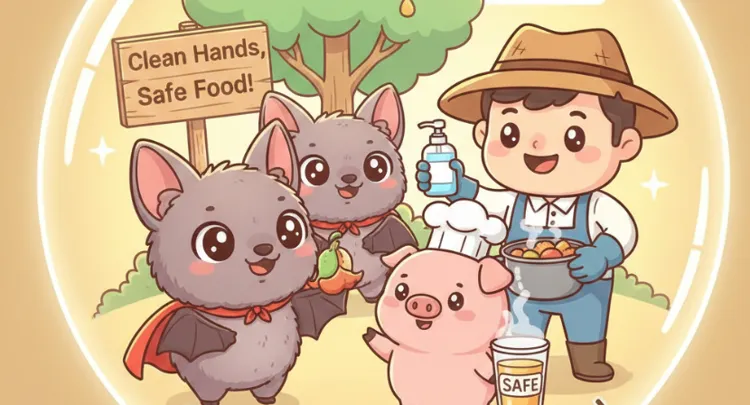
Avoid wild game: steer clear of bats or their droppings.
Food Hygiene: When traveling in regions such as Southeast Asia and South Asia, avoid consuming raw coconut juice and unwashed fruits, and ensure that pork and other meats are thoroughly cooked.
Personal Protection: Maintain good personal hygiene, wash your hands frequently, and wear masks, face shields, and gloves when living in epidemic areas.
From an epidemiological perspective, the basic reproduction number (R₀) of the Nipah virus is relatively low, and its ability to sustain transmission in the population is weak, which results in a lower risk of widespread outbreaks; epidemics are usually localized. Currently, there have been no reported cases of infection in our country, but we must remain vigilant against the risk of introduction!
Conclusion: The Nipah virus is a warning from nature.
Every time an outbreak of zoonotic viruses occurs, it serves as a reminder that when humans encroach upon wildlife habitats and disrupt ecological balance, viruses that have long been dormant in the depths of nature may cross species barriers and enter human society. Maintaining a sense of reverence for nature and practicing good hygiene are our most effective weapons against these invisible killers.
#public health
#infectious disease


© 2025 Health Tribe.