
WHO seeks 2026 funding to aid millions in health crises
Feb 03, 2026
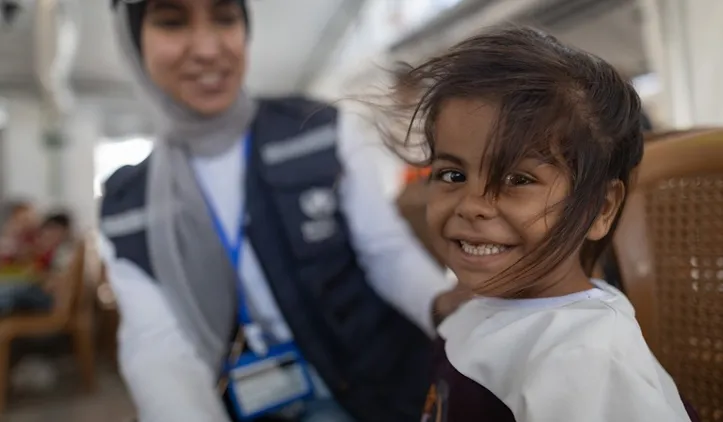
The World Health Organization (WHO) today launched its 2026 global appeal to ensure that millions of people living in humanitarian crises and conflicts can access health care.
In 2025, the WHO and its partners provided support to 30 million people through its annual emergency appeal. These resources facilitated life-saving vaccinations for 5.3 million children, enabled 53 million health consultations, supported over 8,000 health facilities, and aided the deployment of 1,370 mobile clinics.
The 2026 appeal aims to raise nearly US$ 1 billion to address 36 emergencies around the globe, including 14 Grade 3 emergencies that demand the highest level of organizational response. These situations encompass both sudden-onset and prolonged humanitarian crises where health needs are particularly urgent.
"This appeal is a call to stand with people living through conflict, displacement, and disaster – to give them not just services, but the confidence that the world has not turned its back on them," said Dr. Tedros Adhanom Ghebreyesus, WHO Director-General. "It is not charity. It is a strategic investment in health and security. In fact, access to health care restores dignity, stabilizes communities, and offers a pathway toward recovery."
The 2026 appeal arises during a period of converging global pressures. Ongoing conflicts, the worsening effects of climate change, and frequent outbreaks of infectious diseases are leading to a rising demand for health emergency support, all while global humanitarian funding is still decreasing.
In 2025, humanitarian funding decreased to levels not seen since 2016, resulting in the WHO and its partners being able to assist only one-third of the 81 million people initially intended to receive humanitarian health aid.
Renewed commitments and solidarity are urgently needed to protect and support the people living in the most fragile and vulnerable settings.
WHO’s priority emergency response areas in 2026 will include Afghanistan, the Democratic Republic of the Congo, Haiti, Myanmar, the occupied Palestinian territory, Somalia, South Sudan, Sudan, the Syrian Arab Republic, Ukraine, and Yemen, as well as ongoing outbreaks of cholera and mpox.
As the lead agency for health response in humanitarian settings, WHO coordinates more than 1,500 partners across 24 crisis situations worldwide, ensuring that national authorities and local partners are at the heart of the emergency response.
Speaking as co-chair at the launch event, Ambassador Noel White, Permanent Representative of Ireland to the United Nations Office in Geneva, said, “Every humanitarian crisis is a health crisis. That is why Ireland is proud to support the WHO emergency response through unearmarked, flexible, and predictable funding of the Contingency Fund for Emergencies.”
Also speaking as co-chair at the event, Ms. Marita Sørheim-Rensvik, Deputy Permanent Representative of Norway to the United Nations Office at Geneva, stated: “In today’s most complex emergencies, WHO remains indispensable – protecting health, upholding international humanitarian law, and ensuring life-saving care reaches people in places where few others can operate. From safeguarding access to sexual and reproductive health and rights to supporting frontline health workers under immense strain, WHO’s role is vital. Norway calls on all Member States to strengthen support for WHO so it can continue delivering for those who need it most.”
WHO and partners' emergency response actions include
Early, predictable investment allows the WHO and its partners to react promptly when crises occur, thereby lowering mortality and morbidity, containing disease outbreaks, and preventing health risks from developing into larger humanitarian and health security crises that could lead to significantly higher human and financial costs.
#humanitarian crisis
#global health



© 2025 Health Tribe.