
Over Four Million Girls at Risk of FGM Urged by UN Leaders
Feb 05, 2026
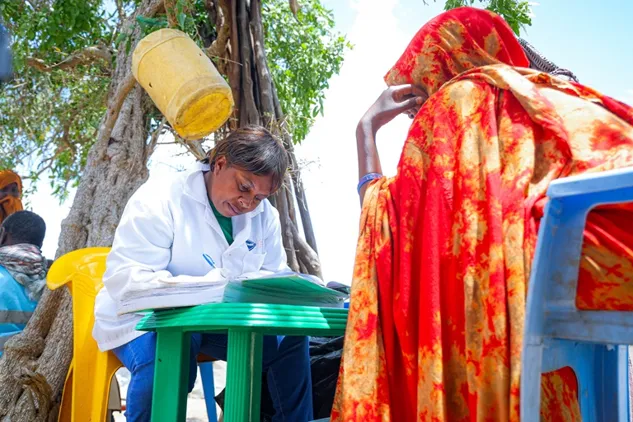
In 2026 alone, an estimated 4.5 million girls – many under the age of five – are at risk of undergoing female genital mutilation (FGM). Currently, more than 230 million girls and women are living with its lifelong consequences.
Today, on the International Day of Zero Tolerance for Female Genital Mutilation, we reaffirm our commitment to end female genital mutilation for every girl and every woman at risk, and to continue working to ensure that those subjected to this harmful practice have access to quality and appropriate services.
Female genital mutilation is a violation of human rights and cannot be justified on any grounds. It compromises the physical and mental health of girls and women, leading to serious, lifelong complications, with treatment costs estimated at around US$ 1.4 billion each year.
Interventions aimed at ending female genital mutilation over the last three decades are having an impact, with nearly two-thirds of the population in countries where it is prevalent expressing support for its elimination. After decades of slow change, progress against female genital mutilation is accelerating: half of all gains since 1990 were achieved in the past decade, reducing the number of girls subjected to FGM from one in two to one in three. We need to build on this momentum and speed up progress to meet the Sustainable Development Goal target of ending female genital mutilation by 2030.
We know what works. Health education, engaging religious and community leaders, parents, and health workers, along with the use of traditional and social media, are effective strategies to eliminate the practice. We must invest in community-led movements—encompassing grassroots and youth networks—and strengthen education through both formal and community-based methods. It is essential to amplify prevention messages by involving trusted opinion leaders, including health workers. Furthermore, we must support survivors by ensuring they have access to comprehensive, context-specific healthcare, psychosocial support, and legal assistance.
Every dollar invested in ending female genital mutilation yields a tenfold return. An investment of US$ 2.8 billion can prevent 20 million cases and generate US$ 28 billion in investment returns.
As we approach 2030, the gains made over the decades are at risk due to a decline in global investment and support. Funding cuts and decreasing international investment in health, education, and child protection programs are already limiting efforts to prevent female genital mutilation and support survivors. Additionally, the increasing systematic pushback against initiatives to eradicate female genital mutilation, further complicated by harmful arguments suggesting it is acceptable when performed by doctors or health workers, creates additional obstacles for elimination efforts. Without sufficient and reliable funding, community outreach programs may face reductions, frontline services may be weakened, and progress may be undone—placing millions more girls in jeopardy at a crucial time in the fight to achieve the 2030 target.
Today we reaffirm our commitment and efforts with local and global public and private partners, including survivors, to end female genital mutilation once and for all.
#public health policy
#international health

© 2025 Health Tribe.