
Guidelines for Pillow Selection for Cervical Spondylosis Care
Feb 05, 2026
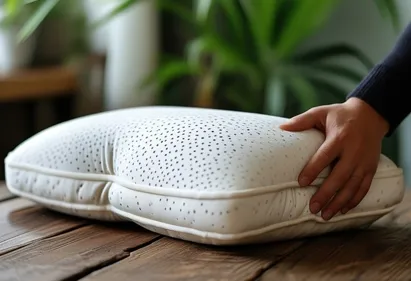
Title: Guidelines for Pillow Selection for Cervical Spondylosis Care Author: Zhen Ying, Deputy Chief Nurse of the Department of Integrative Orthopedics at the Air Force Specialty Medical Center. Reviewer: Guo Wei, Deputy Chief Physician, Department of Integrated Traditional Chinese and Western Medicine Orthopedics, Air Force Specialty Medical Center. Curator: Ou Xinyue, Nurse, Air Force Specialty Medical Center Integrated Traditional Chinese and Western Medicine Orthopedics. Production Organization: Orthopedic Department of Integrated Traditional Chinese and Western Medicine, Air Force Specialty Medical Center.
Cervical spondylosis management is often ignored; selecting the right pillow is vital for symptom relief and recovery. Sleep occupies one-third of our lives, yet it is often the most overlooked golden repair period in the management of cervical spondylosis. Clinical data shows that 61% of patients with cervical spondylosis have issues with improper pillow height. Moreover, those who use pillows that are too high or too firm have a disc degeneration rate of up to 78% in the C5-C6 segment. Even more concerning is that an improper pillow not only fails to alleviate symptoms but also continuously disrupts the biomechanical balance of the cervical spine during the 7-8 hours of nightly static load, becoming an invisible accelerator of degenerative changes. This guide will develop a comprehensive pillow management strategy for you, from the acute phase to the recovery phase, based on the underlying logic of biomechanics. Why is the pillow a double-edged sword for cervical spondylosis? The biomechanics of the cervical spine serves as the core mechanism of pillow function. The vulnerability of the cervical spine balance system relies on the coordination of two major systems for stability. Static balance is composed of vertebrae, intervertebral discs, and ligaments, which maintain the normal lordotic curvature of the cervical spine (20-40°). Dynamic balance is achieved by the coordinated contraction of 24 muscle groups around the neck, providing dynamic stability. When the height of a pillow deviates by as little as 2 centimeters, it can cause the neck to shift from its physiological neutral position, leading to abnormal stress on the intervertebral discs, significantly increasing anterior pressure during flexion and raising the risk of tearing the posterior fibrous ring during extension. The load on the zygapophyseal joints becomes uneven, with contact forces in the small joints increasing by 45-60% under abnormal postures. Continuous muscle activity occurs, with the trapezius, levator scapulae, and cervical erector spinae muscles intensifying their activity by 23-45%, resulting in an inability to relax even during sleep. "Precision Window" Effect of Pillow Height indicates that when the height of the pillow increases from 11 cm to 17 cm, the angle of the cervical spine increases by 66.4%, significantly altering its physiological curvature. Within a narrow optimal range, the pressure distribution on the intervertebral discs is uniform, and the resting electrical potential of the muscles is at its lowest. Once deviated from this range, compensatory mechanisms in the system activate, leading to inevitable wear and tear. A comprehensive cycle management framework implements precise strategies based on classification and stages. During the acute phase, the primary goal is to relieve nerve compression and eliminate inflammation, reducing the pillow height by 2-3 cm and choosing a medium-firm pillow to limit abnormal movements for 2-4 weeks. In the relief phase, the focus shifts to restoring physiological curvature and achieving mechanical balance by maintaining a forward curvature of 20-35° with a medium-firm pillow for 3 to 6 months. The rehabilitation period aims to strengthen muscle function and prevent relapse by dynamically adjusting the pillow height to 8-10 cm for the supine position and 10-14 cm for the lateral position using moderately soft pillows. Cervical spondylosis with nerve root type should have a pillow height of 12-15 cm when side lying to open the intervertebral foramen and reduce pressure. For cervical spondylopathy with myelopathy, a moderately supportive pillow with a slight backward tilt (height of 5-7 cm) is recommended. The cervical spondylosis of the vertebral artery type requires strict maintenance of the cervical spine in a neutral position with a supine height of 8-10 cm. The Five Golden Rules transition from theory to practice: pillows must be differentially treated according to type. Validation method involves symptom improvement within 30 minutes after using the pillow. Additionally, the Dynamic Height Adjustment "Two-Finger Test Method" includes checking height in various positions. Material mechanics matching ensures proper support performance, with preferred materials outlined, including natural latex, high-density memory foam, adjustable food-grade PE tubes, and buckwheat husks. The coordinated management of sleeping posture emphasizes the Gold Sleeping Posture Rule. The last criteria focus on effect feedback and iteration through a daily sleep log consisting of morning symptom assessment and sleep quality evaluation. During postoperative recovery, following doctor's advice is crucial. For complex cases, 3D printed pillows are tailored using CT/MRI data. Common misconceptions are highlighted, warning against high pillows, overly soft pillows, and long-term pillow use without replacement. Immediate medical attention is advised for worsening pain or signs of severe conditions. Practical decision-making tools like self-test apps and pressure distribution mats are recommended to help users find their appropriate pillow. Proper pillow management is critical to transforming sleep into a golden treatment period for cervical spondylosis rehabilitation.
#healthcare
#physiotherapy



© 2025 Health Tribe.