
WHO Launches Global School on Refugee and Migrant Health Leadership
Feb 05, 2026
With over 1 billion people migrating worldwide, including 117 million who have been forcibly displaced, migration is significantly transforming health systems and increasing the demand for inclusive and resilient responses. Despite global initiatives, refugees and migrants continue to encounter health risks and systemic barriers, such as legal, linguistic, financial, and social obstacles. Fragmented services, workforce shortages, and governance gaps further impede the continuity of care. Tackling these challenges necessitates bold leadership and coordinated efforts to improve health for everyone.
From December 9 to 11, 2025, the WHO held the sixth edition of its flagship Global School on Refugee and Migrant Health in Geneva, focusing on the theme "Leadership in health and migration: Policies and actions across countries." This event for knowledge-sharing and capacity-building attracted 1,200 participants from 143 countries, including representatives from governments, international organizations, academia, and civil society. Through high-level keynote speeches, country case studies, and live panel discussions, the School provided a unique platform for collaborative solutions and evidence-based strategies aimed at integrating refugee and migrant health into universal health coverage (UHC), enhancing primary health care (PHC), and promoting mental health and psychosocial support (MHPSS).
“The health challenges faced by refugees and migrants cannot be addressed through humanitarian action alone,” said Dr. Tedros Adhanom Ghebreyesus, WHO Director-General, in a video message. “Around the world, WHO is supporting countries to build the evidence, capacity, and tools to develop sustainable, equitable services for migrants and refugees.”
Across the three days, leadership emerged not as an abstract concept but as governance in action. Country examples demonstrated how policy principles can be translated into life-saving systems, ensuring continuity of care even in resource-constrained settings. Colombia scaled Territorial Health Committees to coordinate multi-hazard responses and cross-border health services. Kenya and Somalia implemented transit-point vaccination and zero-dose child tracking along an 800-kilometre porous border. Viet Nam established an inter-ministerial Migrant Health Working Group to embed migrant health into national policy frameworks.
“Leadership is what transforms evidence into action and ensures that health systems become inclusive, resilient, and fair. It means implementation, accountability, and above all, the courage to innovate, collaborate, and listen to the voices of refugees and migrants themselves,” said Dr. Santino Severoni, Head of the WHO Special Initiative on Health and Migration.
Echoing this message, Professor Paul Spiegel of Johns Hopkins University noted: “In settings where refugees and migrants live within fragile health systems, leadership is not an abstract concept. It is the difference between a coherent, humane response and chaos.”
Primary health care (PHC) is the cornerstone of inclusive, people-centered health systems. Thailand has established a health center within a migrant community, co-led by volunteers, which has increased immunization coverage. Jordan has expanded its Healthy Community Clinics under the Ministry of Health, combining service delivery with evidence-based practices and capacity-building. In Italy, Brescia’s clinic has addressed a significant gap in primary care for undocumented migrants by offering free consultations and ensuring continuity of care for chronic conditions. Collectively, these models demonstrate how PHC enacts equity, making healthcare accessible, culturally appropriate, and resilient for everyone.
In his keynote address, Dr. Shams Syed, Head of WHO’s Service Delivery and Primary Health Care Unit, emphasized that “Primary health care is the backbone of migrant-inclusive systems. When knowledge meets purpose, and leadership is shaped by empathy and courage, systems become stronger for all.”
This message was reinforced by Dr. Ahmed Zouiten, WHO Representative in Libya and Tunisia, who noted: “When we build migrant-sensitive health systems, we build systems that are stronger for everyone. Compassion is power.”
Access to mental health care for refugees and migrants must be recognized as a right, not a privilege. Trust and culturally-adapted care are essential to building resilience. The WHO Health for All Film Festival award-winning Dalal’s Story, along with powerful personal testimonies, highlighted the need to address barriers such as stigma and fear while improving accessibility and affordability of dignified care.
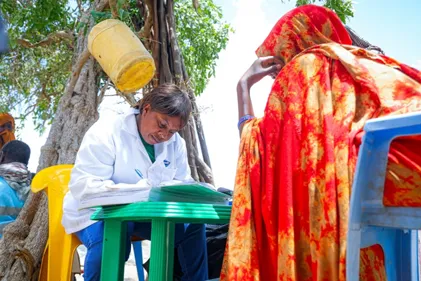
In Gaza, UNRWA enhanced psychosocial support by leveraging community networks during times of conflict and large-scale displacement. In Somalia, mental health services were incorporated into primary healthcare through the sharing of tasks and culturally adapted methods. Speakers highlighted the significance of involving the community and training non-specialist healthcare workers to provide care within primary health care (PHC) and universal health coverage (UHC) frameworks. They also emphasized the necessity of addressing digital health data gaps to ensure visibility and accountability.
“Mental health is essential to UHC; no system is inclusive if mental health is neglected,” said Devora Kestel, Director of the Department of Noncommunicable Diseases and Mental Health (a.i.) at WHO.
Reflecting on his lived experience and innovation, Dr. Waheed Arian, an NHS physician and UN SDG Goalkeeper, emphasized, “Start with trust: reduce fear and stigma through community engagement before clinical care.”
The sixth Global School reaffirmed that leadership, primary health care (PHC), and mental health and psychosocial support (MHPSS) are inseparable pillars of migrant-inclusive health systems. Concrete experiences from various countries illustrate scalable approaches to bridging gaps in access, continuity, and quality of care, thereby strengthening health systems and enhancing health outcomes for refugees, migrants, and host communities alike.
#international health
#health policy


© 2025 Health Tribe.