
Why you should not ignore leg pain in children and back pain in seniors
Feb 09, 2026
Author: Unknown, Reviewer: Unknown, Curator: Unknown, Production/Organizational Information: Unknown
Title: Why you should not ignore leg pain in children and back pain in seniors
Introduction: Body pain in teens and the elderly could signal severe health risks like bone cancer; early detection is crucial for prevention.
Keywords: ['Health', 'Education']
"I've been having back pain lately. Could it be due to sitting for too long?"
"My knee hurts so much that I can't sleep. I should be fine if I put on a plaster, right?"
Do these thoughts sound familiar? The 'blame' for skeletal pain is often shifted to fatigue, arthritis, or simply 'that's just how it is as people age.' Yet, amid these assumptions and oversights, a dangerous disease may be quietly sending its earliest signals—bone cancer.
Bone cancer, although not common, can sometimes be hidden within the 'growing pains' of teenagers, mistaken for the 'old cold legs' of the elderly, or even disguise itself as a simple sprain.
Today, we will unveil its true nature of being 'skilled at disguise!'
Understanding Bone Cancer: The 'Rebellious Cells' Within Bones
We can imagine the bones as the 'load-bearing walls' of this grand structure called the body. Bone cancer, on the other hand, is like a group of 'rebel construction crews' infiltrating those walls.
They do not work according to the blueprints, crazily replicating themselves and causing destruction everywhere, which leads to problems with the 'structural walls.' Therefore, bone cancer is far more than just 'bone pain'; it has a series of signals:
The pain is quite 'strange': it is the most common and earliest signal. Its characteristic is that it hurts more when lying still at night (medically referred to as 'nocturnal rest pain'), which is completely different from ordinary joint strain or growing pains.
Raised 'hard lumps': The painful areas may swell, feeling like hard masses that grow larger over time. The skin may feel warm, and the blood vessels become more pronounced.
Joint 'sticking': Tumors interfere, causing restricted joint movement and muscle atrophy. More dangerously, once the bones are 'eaten away,' a slight fall could result in a fracture, known as a 'pathological fracture.'
Systemic 'alarms': In advanced stages, symptoms such as weight loss, fatigue, and anemia may occur. Its greatest danger lies in its tendency to 'spread' (metastasize), particularly to vital organs like the lungs.
These 'small issues' may be the body sounding the alarm.
Unexplained worsening bone pain at night + continuously growing hard lumps + fractures from a gentle touch. Especially in teenagers, if they consistently complain of pain in a specific area rather than experiencing migratory growing pains, parents should definitely take notice!
The Shuangfeng attacks: Why is there a preference for 'one old and one young'?
There are two peaks in the age of onset for bone cancer, resembling two hills, but the causes are different.
Youth Peak (Ages 10-25): The essence is 'growing too fast.'
Puberty is a 'growth spurt' period when the growth plates (epiphyseal plates) exhibit exceptionally active cell division. During this 'peak construction phase,' cells occasionally make mistakes during replication, akin to 'misinterpreting the blueprints' (genetic mutations). If these mutations go unchecked, they can lead to primary malignant tumors such as osteosarcoma. As a result, these tumors are commonly found in areas that grow the fastest, like the knees and shoulders.
Older adults peak (aged 60 and above): The core themes are primarily 'transference' or 'aging.'
Bone cancer in elderly individuals is often a result of 'migrant' cancer cells—meaning that cancer cells from other parts of the body, such as the lungs, breasts, or prostate, have spread to and settled in the bones. This is referred to as bone metastatic cancer. However, elderly people can also develop primary bone tumors, such as chondrosarcoma, which are associated with long-term accumulated damage and a decline in immune function.
What can we do to prevent problems before they occur?
Although the exact cause is not fully understood, the known risks and preventive measures are quite clear:
High-risk individuals, please pay attention.
Individuals with a family history of bone cancer (such as Li-Fraumeni syndrome), those who have received high doses of radiotherapy, those suffering from certain benign bone diseases (like Paget's disease), or those who have been in prolonged contact with harmful chemicals should exercise extra caution.
A Guide to Armored Bones for Everyone
Be a considerate person: Pay attention to abnormal signals from the body. Don’t dismiss the persistent nighttime pain in teenagers as simply 'growing pains,' and don’t attribute all joint pain in the elderly to 'old cold legs.'
To maintain a healthy lifestyle: have a balanced diet that ensures adequate intake of calcium and vitamin D (through milk and sun exposure); engage in moderate exercise to strengthen bones and boost immunity; and quit smoking while limiting alcohol consumption.
Avoiding risk sources: Try to minimize unnecessary exposure to radiation and harmful chemicals.
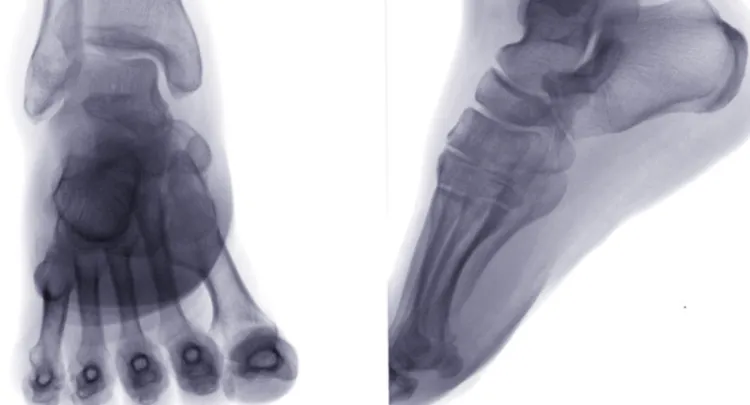
Don't neglect medical check-ups: High-risk groups or older adults should consider including bone X-rays or scans during their check-ups. Those with a history of cancer must have regular follow-ups to monitor for bone metastasis.
If you have concerns about your health, go to a reputable hospital's orthopedic or oncology department in a timely manner. Doctors will use examinations such as X-rays, CT scans, and MRI to make an assessment, ultimately relying on a pathological biopsy for a definitive diagnosis.
Although bone cancer sounds frightening, modern medicine has made significant advancements. With comprehensive treatments (chemotherapy + targeted therapy + limb-salvage surgery, etc.), the cure rate for early-stage osteosarcoma has greatly improved. Even for bone metastases, many patients can maintain a good quality of life for a long time after systemic treatment.
Remember: Scientific awareness is the best armor, and paying attention to body signals is the most immediate alarm. Caring for our bones is like supporting the 'main pillar' of our lives.
#health
#education

© 2025 Health Tribe.