
When is the best day after menstruation to conceive?
Feb 13, 2026
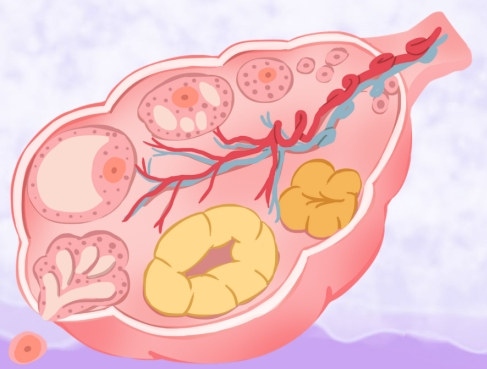
Author: Zhu Qiuping, Deputy Chief Nurse of the Nursing Department at Tibet Fukang Hospital. Review: Wei Jing, Chief Physician of Gynecology at Tibet Fukun Hospital.
"On which day after menstruation is it easiest to get pregnant?" This is a common question among many women trying to conceive or those concerned about contraception. The concepts of "safe period" and "danger period" circulating online can be confusing and may lead to unintended pregnancies or missed opportunities for optimal conception due to misunderstandings. In reality, the key to becoming pregnant lies in accurately determining the ovulation period.
Although assisted reproduction can help with conception, naturally becoming pregnant is certainly the best option. In outpatient consultations, we often encounter some young women asking this question. Today, I will explain which days after menstruation are most favorable for pregnancy.
The basic规律 of the menstrual cycle.
The menstrual cycle of women usually lasts between 21 to 35 days (with an average of 28 days) and is divided into four phases:
Menstrual period (days 1-5): The endometrium sheds, accompanied by the discharge of menstrual blood.
Follicular phase (days 6-14): The follicles develop and mature, estrogen levels rise, and the uterine lining thickens.
Ovulation period (around day 14): A mature egg is released from the ovary and survives for 12 to 24 hours.
Luteal phase (days 15-28): The corpus luteum secretes progesterone in preparation for pregnancy; if pregnancy does not occur, the corpus luteum degrades and the cycle moves to the next phase.
Key point: Ovulation is the core process of conception, but the day of ovulation is not fixed and needs to be assessed in conjunction with individual differences.
Scientific methods for calculating the ovulation period.
Misconceptions about "a few days after menstruation ends"
Many women mistakenly believe that the ovulation period starts counting from the day their menstruation ends, thinking that "7 days after menstruation is the ovulation day." In fact, medically, the first day of menstruation is considered the starting point of the cycle, and ovulation occurs about 14 days before the next period. For example, if menstruation lasts for 5 days and the cycle is 28 days, the ovulation day is usually on the 14th day of the menstrual cycle (around 9 days after menstruation ends). If the cycle is 35 days, ovulation might occur around the 21st day of the menstrual cycle (about 16 days after menstruation ends).
Conclusion:
The ovulation day is related to the total length of the menstrual cycle, rather than being solely dependent on "how many days after menstruation has ended."
The "fertile window" during the ovulation period allows sperm to survive in a woman's body for 2-3 days, while an egg survives for about 1 day. Therefore, the fertile period (also known as the "conception window") is from 5 days before ovulation to 1 day after ovulation. For example, if the ovulation day is the 14th day of the menstrual cycle, the fertile period would be from the 9th to the 15th day. At this time, the likelihood of becoming pregnant significantly increases.
How to accurately pinpoint the day of ovulation?
Principle: After ovulation, body temperature rises by 0.3-0.5°C due to the increase in progesterone.
Action: Measure your basal body temperature every morning upon waking and continuously record it for three months to observe the patterns of temperature variation.
Characteristics of the ovulation period: mucus becomes clear and stretchy (similar to egg white), indicating an increase in estrogen levels, approaching ovulation.
Principle: Detect the peak level of luteinizing hormone (LH) in urine; ovulation occurs 24-36 hours after the peak.
Applicable population: Those with regular cycles can achieve an accuracy rate of over 90%.
Direct observation of follicular development through ultrasound allows for accurate determination of ovulation timing and is commonly used in assisted reproduction or for those with irregular cycles.
Common factors that affect ovulation.
Even with regular cycles, the ovulation date may fluctuate due to the following reasons:
Pressure and Emotion: Long-term anxiety may suppress hypothalamic function, leading to delayed ovulation.
Diseases and Medications: Polycystic Ovary Syndrome (PCOS), thyroid diseases, or the use of hormonal medications may interfere with ovulation.
Lifestyle habits: Excessive dieting, intense exercise, or changes in time zones may disrupt the cycle.
Reminder: If your cycle is consistently irregular (such as less than 21 days or more than 35 days), it is recommended to seek medical attention to check for endocrine issues.
Suggestions for Scientific Conception and Contraception
People preparing for pregnancy
During the fertile window, having intercourse every two days can balance sperm quality and increase the chances of conception. It is advisable to supplement with folic acid three months in advance, quit smoking and drinking, and maintain a healthy lifestyle. For those practicing contraception, relying solely on the safe period is not reliable; studies show that the failure rate of this method is relatively high. It is recommended to choose safer methods such as condoms or short-term contraceptive pills.
Breaking Common Misconceptions
Having intercourse right after menstruation won't lead to pregnancy?
If the cycle is short (such as 21 days), ovulation may occur just 3-4 days after the end of menstruation, which still carries a risk of conception.
Is contraception unnecessary during breastfeeding?
Ovulation may be temporarily paused during breastfeeding, but the recovery time varies from person to person and should be approached with caution.
Is it true that you won't get pregnant the first time you have sex?
As long as it is during the ovulation period, whether it is the first time having intercourse or not, pregnancy is possible.
Conclusion:
The answer to "Which day after menstruation is the most likely to conceive?" varies from person to person and should be assessed based on individual cycle length and ovulation monitoring methods. Whether you are trying to conceive or avoid pregnancy, understanding your body's patterns and using scientific methods can yield better results. If you have any questions, it is advisable to consult a professional doctor to create a personalized plan.
#women's health
#reproduction



© 2025 Health Tribe.