
WHO prequalifies new oral polio vaccine to boost outbreak response
Feb 13, 2026
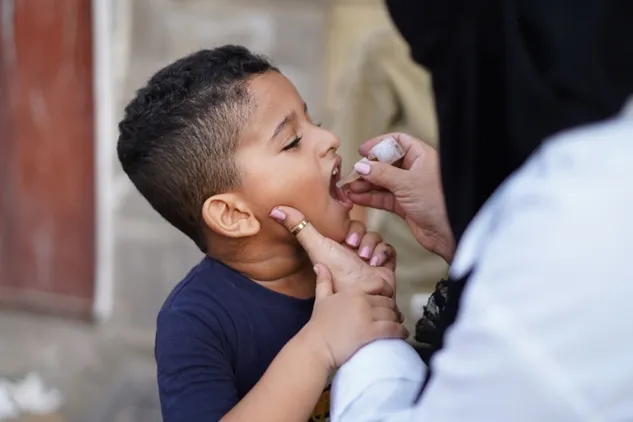
The World Health Organization (WHO) has prequalified an additional novel oral polio vaccine type 2 (nOPV2), further strengthening the global supply of a vaccine that is central to efforts aimed at more sustainably stopping poliovirus type 2 outbreaks and accelerating progress towards polio eradication.
The prequalification designation indicates that the vaccine meets international standards of quality, safety, and efficacy for global immunization programs. It enables the vaccine to be purchased and supplied through United Nations procurement agencies, including UNICEF, supporting its use across various country settings for the prevention and control of poliovirus transmission.
The newly prequalified product is manufactured by Biological E. Limited (BioE) in India, utilizing in-house bulk vaccine following a technology transfer from PT Bio Farma (Persero) in Indonesia. This prequalification builds on earlier WHO listings of nOPV2 produced by PT Bio Farma, as well as the vaccine that has been formulated and filled by BioE using bulk supplied by PT Bio Farma.
With this latest addition, the WHO continues to diversify and strengthen the manufacturing base for quality-assured nOPV2, helping to ensure a more resilient, reliable, and sustainable vaccine supply for countries responding to outbreaks.
The nOPV2 was developed to tackle outbreaks of circulating vaccine-derived poliovirus type 2 (cVDPV2), which can arise in populations with insufficient immunization. In comparison to the traditional monovalent oral polio vaccine type 2, nOPV2 is engineered for greater genetic stability, thereby minimizing the risk of initiating new outbreaks while maintaining its efficacy in swiftly halting virus transmission.
Progress in vaccine development and timely availability continues to translate into gains on the ground. In his opening remarks at the 158th session of the WHO Executive Board, WHO Director-General Dr. Tedros Adhanom Ghebreyesus highlighted the impact of vaccination efforts on global polio eradication. "Vaccines are also bringing us closer to the eradication of polio, with 41 cases of wild polio reported last year from just 24 districts in Pakistan and Afghanistan, down from 99 cases in 49 districts in 2024," he said.
nOPV2 is indicated for active immunization in all age groups and is authorized for emergency use in response to outbreaks caused by poliovirus type 2, as required by the Global Polio Eradication Initiative (GPEI) or WHO. Since its initial deployment, the vaccine has been utilized in numerous outbreak responses, reaching hundreds of millions of children and helping to reduce cVDPV2 transmission in several affected countries.
Expanding the pool of prequalified nOPV2 is crucial for enabling countries to respond swiftly and effectively to outbreaks, safeguard communities, and advance towards a polio-free world.
Notes to editors:
About Biological E. Limited nOPV2: The oral vaccine is available in vial presentations of 20 doses and 50 doses. It has a shelf life of 24 months when stored at temperatures not exceeding -20 °C and can also be stored for up to six months at +2 °C to +8 °C, offering significant flexibility for immunization programs in various operational settings. In accordance with the WHO Multi-dose Vial Policy (MDVP), opened vials can be retained and used for up to 28 days, facilitating the efficient use of vaccine supplies during outbreak response campaigns.
Discussions on poliomyelitis at the 158th session of the Executive Board, held from February 2 to 7, 2026, highlighted the importance of maintaining high-quality surveillance, vaccination, and outbreak responses in the last endemic areas while also addressing outbreaks of circulating variant polioviruses in other regions. The discussions emphasized that sustaining political commitment, ensuring access, and providing predictable financing, along with effective cross-border coordination, will be crucial for transforming recent progress into a permanent eradication of poliomyelitis and protecting a polio-free world.
#public health
#international cooperation

© 2025 Health Tribe.