
Is your miracle ointment creating superbugs at home?
Feb 16, 2026
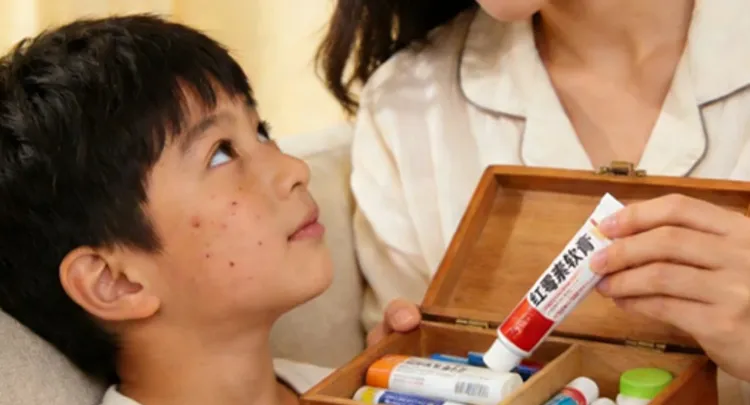
Authors: Wang Zhonghai, Class 2, Pharmacy, 2023, College of Pharmacy, Chongqing University of Arts and Sciences; Yang Xueying, Class 2, Pharmacy, 2024, College of Pharmacy, Chongqing University of Arts and Sciences. Supervising teacher: Dr. Jie Luo, Associate Professor at the School of Pharmacy, Chongqing University of Arts and Sciences, and Head Technician Jingbo Zou at the Disease Prevention and Control Center of Yongchuan District, Chongqing. Project Support: Chongqing Science Popularization Research Association Project (Key Project) 2024CQKPB008. Recommended Unit: Chongqing Yongchuan District Red Cross Caring for Life Health Science Popularization Volunteer Service Team (Teacher Zou's Science Garden). Title: Is your miracle ointment creating superbugs at home? Introduction: Erythromycin ointment is widely used but often misapplied. Correct identification of skin issues can prevent unnecessary antibiotic use. Keywords: ['Medication Safety', 'Antibiotics'] Main text: In every household's medicine cabinet, there is an antibiotic ointment, often erythromycin, that almost everyone keeps on hand. When a child develops a few red spots on their face, gets a cut on their hand, or suffers from a mosquito bite, many people's first reaction is, 'It needs some anti-inflammatory treatment,' and applying erythromycin becomes the default choice. It is inexpensive, easily accessible, and convenient to apply, so over time, it has come to be regarded as a 'miraculous ointment' for minor skin issues.
However, this small tube of erythromycin ointment cannot address every issue. That casual application you made might have been in the wrong place and could silently lay the groundwork for future health problems. First, clarify: what exactly is this problem? Erythromycin is a type of macrolide antibiotic that works by inhibiting bacterial protein synthesis. It is effective against bacteria such as Staphylococcus and Streptococcus, making it suitable for treating bacterial skin infections like impetigo or as an adjunct treatment for small area burns. However, many skin issues are not actually caused by bacteria; applying erythromycin in such cases may not only be ineffective but could also potentially exacerbate the problem. Acne is often mistaken for 'inflammation,' but its main causes are clogged pores and excessive sebum production, which are not significantly related to bacteria. Applying antibiotics daily is akin to watering a plant with strong fertilizer—it disrupts the microbial balance, and by the time the skin is actually infected with bacteria, the medication will have already lost its effectiveness. Athlete's foot and tinea corporis are fungal infections. Erythromycin is not effective against fungi; applying it is useless and can also kill beneficial bacteria on the skin. Without natural enemies, the fungi will only thrive more vigorously. Mosquito bites can cause allergic reactions, resulting in redness, swelling, and itching, which are inflammatory responses unrelated to bacteria. It is appropriate to use antihistamines for itching and allergies; relying on antibiotics is completely inappropriate in this context. For small abrasions and blisters, the correct approach is to clean the wound and keep it dry, and it will heal on its own. Applying a layer of ointment immediately can actually trap moisture in the wound, slowing down recovery. If the injury is serious, it is essential to seek medical attention promptly. The problem of drug resistance is directly linked to every casual use.
Although bacteria are tiny, they can survive, spread, and mutate. Every time antibiotics are used, there is fear that the vulnerable bacteria are killed off, while the naturally resilient ones survive and continue to reproduce, passing on their traits through generations. This leads to the emergence of 'superbugs' that are resistant to any medication. By applying erythromycin today, you are effectively helping resistant bacteria eliminate a batch of competitors; when you apply it again tomorrow, they grow even stronger. You may think you are preventing or treating minor illnesses, but in reality, you are training the bacteria. Many families now keep erythromycin ointment on hand year-round. They apply it to cuts on their hands, blisters on their feet, and dry patches on their faces, as if this ointment could cure all ailments. However, when faced with a serious infection and desperate for antibiotics, you might find yourself wondering: why isn’t the medication working? This is not a scare tactic. The misuse of antibiotics has become one of the most challenging public health issues globally. That unremarkable little ointment in your hands is actually tied to your future health by a single thread. So how should erythromycin be used? It should be used according to the symptoms. Medicine can save lives, but it can also cause trouble; it all depends on whether it is used correctly.
First, identify who the enemy is. When your skin has issues, the first step is not to look for medication, but to find out the cause—bacteria? Fungi? Allergies? If you're unsure, ask a doctor or a pharmacist; don't rely on wild guesses. Don’t confuse 'anti-inflammatory' with 'antibacterial.' Most of the redness, swelling, heat, and pain in the skin are not caused by bacteria at all; what’s the point of killing bacteria? You might be just wasting your effort or even making things worse. Every type of medicine has its own territory. Erythromycin targets only specific bacteria, so don't expect it to treat athlete's foot, allergies, or burns. Policy is not meant to add frustration; it's designed to help you safeguard your resources. Nowadays, the strict regulation of antibiotics is not intended to create trouble, but rather to prevent you from depleting all the available medications.
In the medicine cabinet lies the heartfelt wish for your well-being. Using erythromycin ointment as an all-purpose ointment is simply due to its low cost, convenience, and the reliable feeling it provides when applied. However, this sense of reliability must be based on a clear understanding of its proper use and limitations. You need to know when it should be used and, more importantly, when it should rest in the medicine cabinet. The bottles and jars in the medicine cabinet contain not just medicine, but also the thought of wanting to take good care of oneself and one's family. This thought is not built on stockpiling medicine; rather, it is accumulated bit by bit through understanding medicine, understanding illnesses, and knowing the right balance. Next time you open the medicine cabinet and your fingers touch that tube of erythromycin ointment, ask yourself one more question: Should I bring it out this time? This question takes just a few seconds to answer, yet it could be the most practical 'medication experience' of your life. References: Mao Yu. Research on the Status of Mycoplasma Infection and Its Resistance to Macrolide Antibiotics [D]. Dalian Medical University, 2007. Hu Yan. A Study on the Awareness of Antibiotic Usage among Clinical Physicians in Taiyuan and Its Influencing Factors [D]. Shanxi Medical University, 2014. Shi Zhongsheng. Why Antibiotics Are Ineffective in Treating Pharyngitis. Family Medicine, 2014, (07): 26.
#medication safety
#antibiotics



© 2025 Health Tribe.