
How to safely make cassava syrup at home and avoid poisoning
Feb 16, 2026
Author: Li Jian, Reviewer Expert: Yu Shiliang, Editor: Ye Jiayu, Editors: Chen Xin, Yang Jianhua, Curator: Chongqing Luhai Media Co., Ltd. Computer Newspaper Publishing Branch. Statement: Except for original content and special instructions, the text and images in the submitted articles come from the internet and major mainstream media. Copyright belongs to the original authors. If you believe that the content infringes on your rights, please contact us for deletion.
Title: How to safely make cassava syrup at home and avoid poisoning
Introduction: Learn how to safely prepare cassava syrup by following essential guidelines to enjoy desserts without health risks.
Keywords: ['Health', 'Food safety']
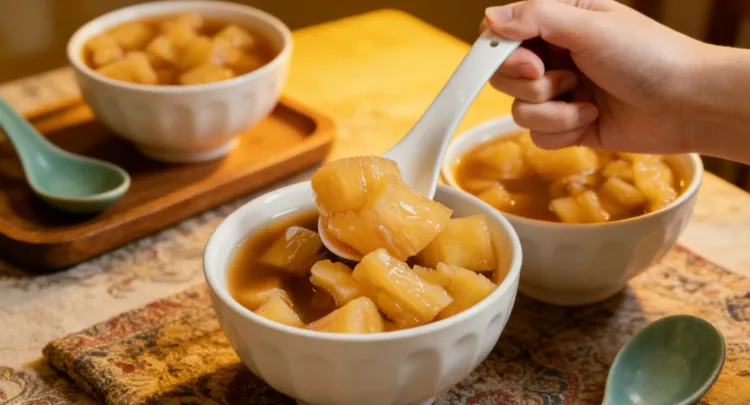
Students, this winter's desserts have truly been all the rage, with one wave after another. We haven't fully grasped the solid mango sago and milk skin yet, and now there's a new rising star—the cassava sweet soup!
The texture of cassava is gritty and chewy, but also somewhat soft and sticky, with a flavor reminiscent of a mix between sweet potato and chestnut. However, recently some individuals have reported feeling drowsy for fourteen hours after eating it... Wait a minute, could this be toxic?!
Vote: Which type of potato do you prefer?
Sweet potatoes: fragrant, sweet, and soft. Who wouldn't pause for a roasted sweet potato in winter?
Purple sweet potato: It has a delicate texture and a unique, fresh aroma.
Tapioca: Soft and chewy, I just love this "gently squishy" texture.
Have you ever eaten cassava?
Source: Guangxi Daily
Cassava is indeed toxic.
Cassava, one of the world's three major tubers, has been called a "subterranean granary" during times of scarcity, helping many survive periods of food shortage.
Friends who have not tried it may find it unfamiliar, but in fact, we often consume it: the pearls in milk tea, taro balls, and the crystal skin of shrimp dumplings are made from tapioca flour to enhance texture.
In the Guangxi Zhuang Autonomous Region, its origin, people have a more straightforward way of consuming it—peeled, cut into pieces, and cooked with sugar until soft and sweet, making it so delightful that one can enjoy two bowls without getting tired of it.
Currently, the cassava available in the market is divided into three categories: edible, feed, and industrial. Among these, only edible cassava is suitable for human consumption. Rest assured, the cassava that is generally available for purchase by the public is typically the edible kind.
Fresh cassava contains natural toxins—cyanogenic compounds (mainly linamarin and lotaustralin). Normally, these remain harmless. However, once cassava is peeled and cut, these substances can be hydrolyzed by linamarase enzymes present in cassava, producing toxic hydrogen cyanide, which can lead to dizziness, nausea, vomiting, and even suffocation due to lack of oxygen.
Symptoms of cyanide poisoning include mild symptoms such as lightheadedness, which many mistakenly believe is a sleep aid. Some individuals may experience nausea, vomiting, diarrhea, gastrointestinal discomfort, palpitations, and shortness of breath.
Severe poisoning can cause serious respiratory difficulties, respiratory failure, coma, loss of consciousness, shock, and even cardiac arrest.
However, it should be noted that the cassava sold on the market today is mostly from low-toxic varieties.
According to the Codex Alimentarius Commission (CAC) standards, cassava that has undergone simple processing methods like peeling and soaking, with a cyanide content of less than 50 mg/kg, is classified as edible cassava. Currently, Chinese agricultural scientists have developed low-toxicity cassava varieties for food use, such as "Hua Nan No. 9," "Hua Nan No. 12," "Gui Re No. 10," "Gui Re No. 11," "Hua Nan 6068," and "Bread Cassava."
Therefore, the dizziness and drowsiness that many internet users are experiencing are more likely due to "carbon dizziness."
Cassava is recognized as the "king of starch," with a starch content as high as 27.8%. Moreover, cassava itself is not very sweet; to make it taste good, a "lethal dose" of sugar needs to be added when boiling it in syrup! The combination of "carbohydrates + sugar" can lead to dramatic fluctuations in blood sugar levels, and individuals with a more sensitive constitution may experience dizziness, fatigue, or even fall asleep if they consume too much at once.
Never eat cassava raw!
Source: CCTV Finance
Homemade cassava syrup, here's how to "detoxify" it.
Cassava is so delicious that food enthusiasts might be eager to try it. But hold on, safety is the top priority! Follow our safety operation manual step by step, and we guarantee you will minimize risks and enjoy the taste worry-free.
The variety must be correct.
Whether you buy online or offline, remember to confirm whether the cassava is edible. You can also directly choose our country's self-bred food varieties, such as "Huanan No. 9," "Huanan No. 12," "Gui Re No. 10," "Gui Re No. 11," "Huanan 6068," and "Bread Cassava." Remember, do not dig up wild cassava for consumption.
Skinning must be ruthless.
Research shows that the toxins in cassava are primarily concentrated in the skin and the red inner layer. Therefore, when processing cassava, it is essential to peel off both the outer skin and the inner layer, leaving only the smooth flesh.
Soaking needs to be long.
The cassava can be cut into several pieces, thoroughly washed, and soaked for at least one night to allow the toxic substances to leach out, changing the water frequently. Research has shown that soaking peeled cassava for 24 hours can reduce cyanide content by about 45%.
Cook it thoroughly.
After boiling cassava, removing toxic components is most effective. Boil for more than 25 minutes and lift the lid to allow hydrogen cyanide to evaporate. This method can eliminate over 80% of hydrogen cyanide.
Use tapioca flour.
Cassava flour purchased through standard channels has generally undergone processing steps such as washing, grinding, sun-drying, and drying to remove toxins, making it simpler and safer to consume.
In fact, cassava has become quite popular in the Guangdong and Guangxi regions for many years. The combination of snail rice noodles and cassava sweet soup is as classic as soybean milk paired with fried dough sticks. So there's no need for everyone to worry too much; as long as you choose the right variety and handle it correctly, you can be a happy foodie enjoying delicious food!
Finally, the editor wants to ask if everyone has their own unique cooking methods or combinations. Feel free to share in the comments!
References:
Li Jian. Cassava Cuisine Becomes Popular, But Consumption Risks Must Be Heeded. China Consumer News, April 3, 2025 (004).
Wei Liping. The Art of Making Homemade Cassava Desserts. Journal of Popular Medicine, 2024(06).
#health
#food safety


© 2025 Health Tribe.