
Reassessing Medication for Elderly Singles after Insulin Errors
Feb 26, 2026
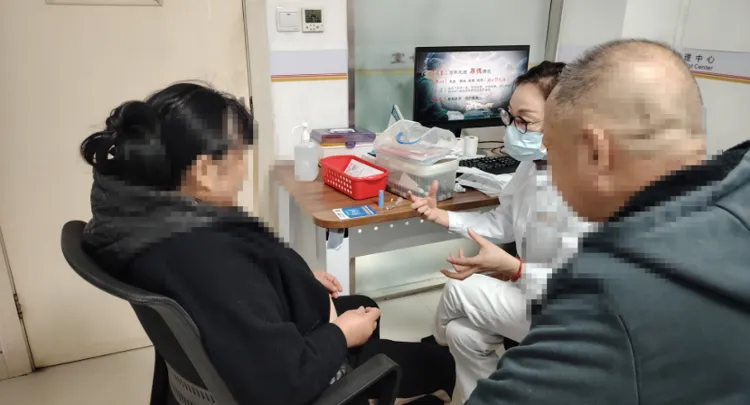
Author: Chief Nurse Yu Xuefei of the Endocrinology Department, Wenzhou Central Hospital. Medication management for the elderly living alone is a concern, addressing health, family care, and support needs.
In the corridor of the chronic disease clinic, sunlight casts long shadows. The daughter leads 80-year-old Mrs. Chen, while the son carries three bulging plastic bags — these contain over a dozen medications that their mother brought home after being discharged, clinking against each other and producing an alarming sound.
Two weeks ago, elderly Chen, who lives alone, injected herself with a long-acting insulin due to blurred vision, resulting in severe hypoglycemia. After stopping her diabetes medication, her blood sugar soared like a runaway horse. Her daughter, who rushed back from out of town, felt an unprecedented sense of helplessness in the face of her mother's intertwined conditions—diabetes, hypertension, coronary heart disease, osteoporosis, and chronic gastritis—along with the numerous medications. "Mom, have you taken your medicine? Before or after meals?" has become a daily topic of conversation.
In the corridor of the chronic disease clinic, I approached Grandma Chen and asked, "Grandma, is there anything uncomfortable?"
Aunt Chen sighed, "Nurse, I can't see clearly, and my mind is all muddled. The kids are busy with work, and I don't want to keep bothering them, but this medicine... I really can't figure it out."
The daughter’s eyes welled with tears. "Nurse, we’re not ungrateful; we just really don’t understand. Every doctor says these medications are important, and there are more than ten of them combined. We’re already confused just looking at them, let alone her."
My son dumped three large bags of medicine on the table and said, "These are from last month, the month before that, and some leftover from before. We spent a long time trying to figure out which ones she should take." The table was covered with medicine boxes of all sizes, some meant to be taken once a day, others three times a day, before meals, after meals, and there are even three types of insulin...
At that moment, I realized that this is not just a matter of blood sugar control; it is also about an elderly person struggling alone in the maze of multiple medications. It reflects a family's sense of helplessness under the immense pressure of caregiving.
The first step is "medication reorganization." I assisted them in recording all medications in a table and communicated with doctors using the list—developing an "ultra-simple" plan for elderly, multi-morbid, and solitary patients like Granny Chen: discontinuing auxiliary traditional Chinese medicine, merging duplicate medications; in light of severe injection errors and vision impairments, suspending insulin and switching to oral hypoglycemic agents; replacing two antihypertensives with a single compound preparation and streamlining the necessary oral medications.
The second step is crucial—how to make her remember? Granny Chen is illiterate and has eyesight problems.
I came up with a method: draw three horizontal lines on the medicine box to represent morning, noon, and evening; use Arabic numerals to indicate the quantity, with red representing before meals and blue representing after meals. For example, if the first horizontal line has the blue number 2 written on it, and the second and third lines have 0, it means to take 2 pills after breakfast. If all three lines have the red number 1 written on them, it means to take 1 pill before each meal.
I used a pillbox and tablets to demonstrate step by step. Granny Chen rubbed her hands together and murmured, "Now it's clear. The red ones are taken before meals, and the blue ones after. How many to take for each meal depends on the horizontal lines... I feel reassured now."
I turned to my children and said, "You should treat the elderly with the same patience and repetition as you would when teaching children." I suggested that they could also purchase a smart pill dispenser, and that my son could help fill it up once a week, applying red and blue stickers to it, placing it in an easily accessible location. My daughter could have a weekly video call to remotely check on the medication situation.
Finally, I told the siblings, "What you brought is not just a few bags of medicine, but your love and concern for Mom. Now, we need to transform this 'concern' into 'peace of mind' that Mom can embrace."
When leaving, Old Woman Chen's three large bags of medicine were condensed into a simplified prescription and easily understandable medicine boxes. Old Woman Chen's eyes seemed to brighten, her son's brow relaxed, and her daughter's steps became lighter.
This story teaches us that managing chronic illnesses is not just about handling test results, but about managing the individual who faces a pile of pill boxes every morning. For Grandma Chen, the hardest part is not forgetting her medication, but facing everything alone.
We use professionalism to simplify, eliminating unnecessary complexities; we use care to add, providing clear guidance, age-friendly tools, and emotional support. In this "subtract and add," we build a bridge that ensures an elderly person is seen, respected, and able to face each day with peace and dignity.
#elderly health
#medication management

© 2025 Health Tribe.