
How Art Therapy Can Benefit Mental Health for Everyone
Feb 28, 2026
Title: How Art Therapy Can Benefit Mental Health for Everyone
Introduction: Art therapy is gaining attention for promoting mental health by using colors to express emotions and relieve stress.
Keywords: ['Mental health', 'Art therapy']
Author: Zhang Xiaoyan, Chief Nurse at the Cancer Hospital of the Chinese Academy of Medical Sciences.
Co-Author: Ban Mengyu, nurse at the Cancer Hospital of the Chinese Academy of Medical Sciences.
Reviewer: Zheng Wei, Deputy Chief Nurse at the Cancer Hospital of the Chinese Academy of Medical Sciences.
Art therapy is a healing approach that does not rely on language but can reach deep into our hearts. In life, there are moments when we feel overwhelmed by work, anxious and unsure of whom to confide in, or when we are afflicted by illness, entrenched in pain and loneliness. During such times, while medication and rational adjustments can alleviate some issues, we also need a softer "prescription for the soul." Whether you are an ordinary person caught in daily pressures or a patient struggling against illness, you can find relief and reconstruction for both body and mind through the strokes, colors, and images created in this form of expression.
Art Therapy: The Healing Power of Art on the Journey of Life
Brush: The "storage box" that carries emotions.
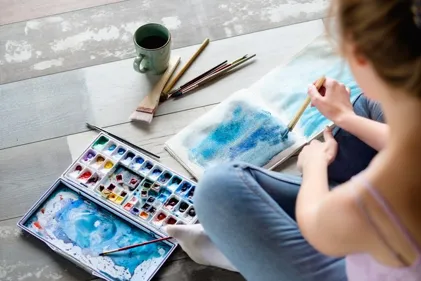
You may have experienced this feeling: your heart feels like it's stuffed with a crumpled ball of paper, chaotic and stifling, and you want to share it with family and friends, but you don't know how to start. In the end, you can only sigh and say, "It's nothing." If these unexpressed emotions stay buried within you, they will only accumulate and weigh you down further. Painting serves as a unique emotional "storage box," allowing you to quietly contain those feelings that are hard to articulate and then release them. You don’t have to worry about what to paint; when you're feeling angry, you can use a thick brush to smear large areas with dark colors, creating crooked lines. When you're sick or uncomfortable, you might draw a few lonely little circles or shade a corner of the paper in gray. When you're afraid, you can depict fear as a small "monster," just like trapping the tormenting emotional beast in a cage on paper. This projection of expression without words enables you to face your fears and find an outlet for your emotions, naturally accepting how you feel in the moment. The psychological burden that once felt heavy can gradually lighten with each brushstroke, allowing you to accept and release your emotions more quickly and alleviate mental pressure.
Color: The "Visual Antidote" for Alleviating Discomfort.
When pain and discomfort knock on your door like an unwelcome guest, and anxiety sounds like a clock that won’t stop ringing, don’t rush to grab a pill. Open the drawer, pick up some colored pens, select a piece of paper, and give yourself a dose of “colorful comfort.” Soft blues and greens, warm oranges and yellows, or even bold reds can visually distract you from the pain, helping to “redistribute the pain by half.” After a few weeks of this practice, you will find that pain is no longer the only leading role in your life; the emotional palette now includes gentle hues of light, and the knots in your heart will quietly untangle.
Creation: The "Regulator" of Physiological Rhythms.
Many people have experienced this: the more you tell yourself "don't hurt," the tenser your body becomes when you're in pain; the more you try to reassure yourself "don't panic," the faster your heart races when you feel anxious. Painting, however, can help us break this cycle of "the more tense, the worse it feels." It acts as a kind of physiological rhythm "regulator," gradually calming the body's agitation with the rhythm of the brush strokes. When you focus on painting, your breathing unconsciously slows down to match the tip of the brush, and your heart rate quietly decreases. Particularly, when you use soft lines to outline shapes and choose warm colors for filling, your body slowly enters a relaxed state similar to meditation. Research has shown that individuals who engage in painting regularly experience significant decreases in blood pressure and cortisol levels (a "stress hormone"). The tension in shoulders that are tight from pain or anxiety, and the stiffness in the lower back, can also gradually ease, leading to profound relaxation of both body and mind, which can indirectly aid in recovery from illness.
Personalized Plan for "Self-Healing" Tailored to You.
When you feel pain or discomfort: You can try free drawing, using soft shades of blue and green, focusing on the flow of your strokes to shift your attention. When anxiety or insomnia strikes: Choose a painting theme, focusing on topics like "tranquility" or "safety," and combine it with deep breathing to help synchronize and slow down your heart rate and breathing. When feeling low or depressed: Consider joining group painting sessions or clubs to share the creative process with others, which can provide social support and emotional resonance.
Art therapy may not directly eliminate life’s pressures or cure diseases, but it can provide a gentle companionship during those difficult days filled with suffering. You don't need expensive art supplies; a colored pencil, a piece of paper, or even the back of a scrap sheet can become your "healing battlefield." During days troubled by pain and surrounded by anxiety, it can help you find an outlet for your emotions and offer solace, allowing both body and mind to find a moment of peace and strength through the interplay of colors and lines. Right now, why not open a drawer, pick up a colored pencil, and without worrying about "what to draw" or "whether it looks good," just let your feelings flow and create your own prescription for the soul!
Note: The cover image is from a copyright stock photo library, and reprinting it may lead to copyright disputes.
#mental health
#art therapy
© 2025 Health Tribe.