
Ukraine Health Care Attacks Surge 20 Percent in 2025
Feb 28, 2026
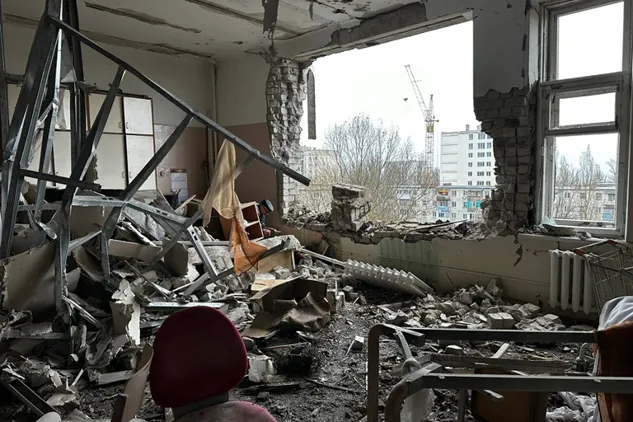
As Ukraine enters the fifth year of full-scale war, its people have endured the highest number of attacks on their healthcare in 2025, with an increase of nearly 20% compared to 2024.
Since the onset of the full-scale war on February 24, 2022, the World Health Organization has recorded at least 2,881 attacks on healthcare in Ukraine, impacting health workers, facilities, ambulances, and medical warehouses.
Health services are under intense pressure on two fronts: direct attacks on healthcare facilities and the cascading effects of strikes on civilian infrastructure, including thermal power plants that support the country's power grid. These issues have created significant shortcomings in people's health. According to a WHO assessment conducted in December 2025, 59% of individuals in frontline areas reported their health as poor or very poor, in contrast to 47% in non-frontline areas.
"After four years of war, health needs are increasing, but many people are unable to get the care they need, in part because hospitals and clinics are routinely attacked," said Dr. Tedros Adhanom Ghebreyesus, WHO Director-General. "WHO is working alongside Ukraine's dedicated health workers to keep hospitals supplied with the means to stay warm and the medicines people rely on most. Ultimately, the best medicine is peace."
In 2025, the support from the WHO reached 1.9 million people throughout Ukraine by providing service delivery, medical supplies, referrals, and capacity-building, with a strong emphasis on frontline areas and hard-to-reach locations.
"Four years of war have created a serious health crisis in Ukraine," said Dr. Hans Henri P. Kluge, WHO Regional Director for Europe. "Mental health needs are staggering: 72% of people surveyed experienced anxiety or depression in the past year, yet only one in five sought help. Cardiovascular disease is surging, with one in four Ukrainians experiencing dangerously high blood pressure. And 8 out of 10 people report they can't access the medicines they need. This is not abstract – it's a heart patient who can't find blood pressure medication, an amputee waiting months for a prosthetic, a teenager too afraid to leave the house. Ukraine's health system needs our sustained support."
In a year characterized by optimism for peace negotiations, the actual situation on the ground revealed a contrasting narrative. Assaults on healthcare escalated, peaking in the third quarter of 2025, when 184 attacks resulted in the deaths of 12 individuals and injuries to 110 healthcare workers and patients.
At the same time, attacks on medical warehouses tripled in 2025 compared to the previous year, disrupting logistics and supply chains that are critical to delivering care throughout the country. Over the past four years, 233 health workers and patients have been killed, and 930 injured in attacks on healthcare. Such attacks represent violations of international humanitarian law.
This winter has been the harshest since the war began, with multiple strikes on energy infrastructure leaving millions without heating, electricity, and water. Many of Ukraine's combined heat and power plants have been damaged or destroyed. In Kyiv alone, a January 2026 attack left nearly 6,000 buildings without heat in subzero conditions, prompting an estimated 600,000 residents to flee the capital.
"What we are witnessing in Ukraine is a devastating cycle. A heating station is struck, and thousands of homes lose heat within hours. At –20°C, water in the pipes freezes, bursts them, floods buildings with ice. Repairs are made, then the next attack starts it all over again. Behind every one of these system breakdowns are families, elderly residents, and healthcare workers who must keep saving lives while their own homes are without heat, water, or electricity. The burnout after four years of war is immense – and the demand for health care has never been higher," said Dr. Jarno Habicht, WHO Representative to Ukraine.
The impact does not end at the hospital door. New mothers discharged after giving birth, patients recovering from injuries or heart attacks, and those awaiting or recovering from critical cancer surgeries return home to apartments without heating, electricity, or running water. Care that begins in a functioning hospital is undermined when patients recover in freezing, dark homes, turning medical progress into a daily struggle for survival.
The rise in war-related trauma injuries has driven a growing demand for surgery, blood products, infection prevention and control, prevention of antimicrobial resistance, mental health services, and rehabilitation.
Access to rehabilitation remains severely limited. Only 4% of hospitals offer inpatient rehabilitation, and just 3% of facilities provide assistive technologies such as prosthetics and corrective devices.
Access to medicines is one of the most enduring obstacles to health in Ukraine, with 4 out of 5 individuals reporting difficulties, mainly due to high prices (71%). In frontline regions, the situation is exacerbated by closed pharmacies, security risks, and financial constraints.
In 2025, the World Health Organization (WHO) focused on connecting with communities through various methods, emphasizing support for the most vulnerable populations in difficult-to-access regions. Their efforts encompassed the entire spectrum of health:
To help maintain essential health services, WHO has provided 284 generators to health facilities across 23 regions in Ukraine. For 2026, WHO is appealing to raise US$ 42 million in funding to sustain its work in Ukraine and to protect access to care for 700,000 people.
#humanitarian crisis
#healthcare access



© 2025 Health Tribe.