
Is Stomach Pain Caused by Gallstones You Should Know?
Mar 09, 2026
Author: Unknown, Reviewer: Unknown, Curator: Unknown, Production/Organizational Information: Unknown
Is Stomach Pain Caused by Gallstones You Should Know? Introduction: Gastric discomfort can be confused with gallstones; patients should seek medical help for upper abdominal pain to ensure proper treatment. Keywords: ['health', 'digestive health']
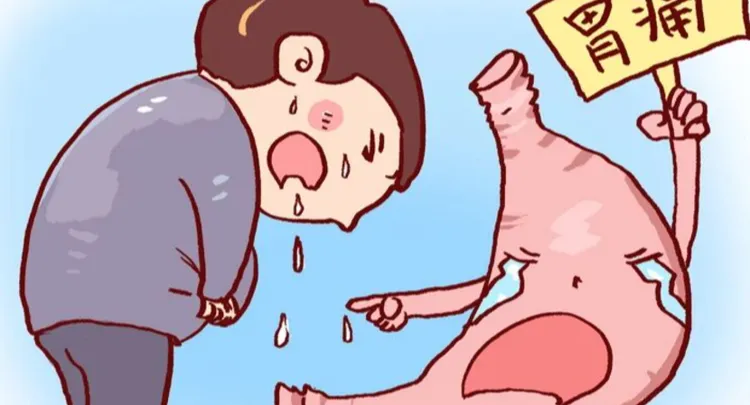
"I haven't been eating anything out of the ordinary lately, so why is my stomach still hurting?" "My stomach feels uncomfortable, I've taken a lot of stomach-protecting medication, but it hasn't worked. When I went to the hospital for a check-up, I didn't expect that it was caused by gallstones." Many patients with gallstones have had similar experiences. What are the differences between "stomach pain" and "gallbladder pain"?
Why is "gallbladder pain" often mistaken for "stomach pain"?
"Biliary pain" is often mistaken for "stomach pain" for the following reasons.
The physiological position has "overlap."
The stomach is located in the upper left abdomen and the central upper abdomen, while the gallbladder is situated in the upper right abdomen, beneath the liver. Although one is positioned in the upper left and the other in the upper right, there is considerable overlap in the upper abdominal area. When the gallbladder becomes inflamed, enlarged, or spasms, the resulting pain signals can radiate throughout the upper abdomen, making it easy to mistake this discomfort for gastric issues. To illustrate: it's like two bedrooms in a house that share a wall; when someone bangs on the wall in one bedroom, it is difficult to determine exactly which side the sound is coming from.
Unable to precisely locate the source of pain.
In medicine, the visceral sensory nerves of the stomach and upper abdominal organs such as the gallbladder, liver, and pancreas converge in the same segment of the spinal nerve ganglia when transmitting pain signals. When the brain receives signals from this segment of the spinal cord, it is unable to precisely locate where the pain is originating from.
The symptoms are very similar.
Moreover, the symptoms of stomach pain and gallbladder pain are very similar, both potentially presenting as pain, dull ache, or cramping in the upper abdomen. They may also be accompanied by gastrointestinal symptoms such as nausea, vomiting, abdominal bloating, and belching. Additionally, both conditions can be triggered or worsened after a meal, especially after consuming greasy foods.
Five differences between "gallbladder pain" and "stomach pain."
Although it can be confusing, as long as you pay close attention, there are distinctions between the two. So, how can we differentiate between "stomach pain" and "gallbladder pain"?
There are differences in the levels of pain.
Pain in the gallbladder is often characterized by persistent cramping or distension pain, which can become intermittent and intensify, causing discomfort and restlessness. In contrast, stomach pain typically presents as a dull ache, burning sensation, or hunger-like pain, generally of a milder intensity.
The location of the pain varies.
First, there is a distinction in the location of the pain. Pain associated with gallstones typically begins in the upper right abdomen and may radiate to the right shoulder and back. Pressing on the upper right abdomen (the gallbladder point) often reveals significant tenderness. In contrast, stomach pain is usually located in the mid-upper abdomen or slightly to the left and generally does not radiate to the shoulder or back.
There is a difference related to eating.
Gallbladder pain typically occurs half an hour to several hours after consuming fatty foods (such as fried eggs or braised pork). In contrast, stomach ulcers usually cause pain when the stomach is empty, which is relieved after eating. Duodenal ulcers, on the other hand, exhibit the opposite pattern.
There are differences in accompanying symptoms.
Pain caused by gallstones may be accompanied by chills, fever, and yellowing of the skin or whites of the eyes (jaundice). In contrast, pain caused by stomach disorders typically does not come with fever or jaundice, but may present with symptoms such as acid reflux and heartburn.
There is a difference in effects after taking stomach medication.
For gallbladder pain, general stomach medications are not very effective; however, stomach pain often improves with the use of acid-reducing drugs (such as Rabeprazole, Omeprazole, etc.).
If you experience abdominal pain, it is recommended to promptly visit the gastroenterology or hepatobiliary surgery department at a hospital. Identifying the cause of the pain is crucial for accurate treatment. Do not self-medicate with stomach medications for an extended period, as this may mask the condition and delay treatment, potentially leading to more serious complications caused by stones.
#health
#digestive health


© 2025 Health Tribe.