
Are anti-fatigue glasses a smart buy or a clever gimmick?
Mar 31, 2026
Author: Huang Bensong, Optometry Department. Reviewer: Hunan Medical Chat. Curator: Hunan Medical Chat. Production Information: Follow @HunanMedicalChat for more health science information. (Edit YT)
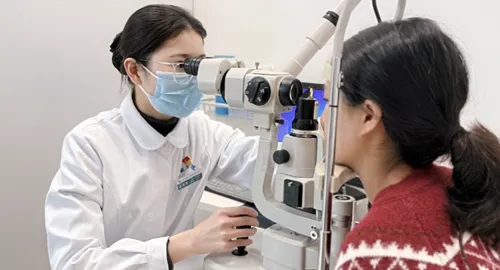
Are anti-fatigue glasses a smart buy or a clever gimmick? Introduction: Anti-fatigue glasses help address eye fatigue in the digital age; this article covers their principles, users, and fitting process. Keywords: ['Anti-fatigue glasses', 'Fitting', 'Eye fatigue', 'Visual function examination'] Main text: In the digital age, working adults spend more than 8 hours a day facing electronic screens, leading to increasingly common symptoms of visual fatigue, such as dry, sore eyes, blurred vision, and even headaches. As a result, anti-fatigue glasses have become a standard accessory for many people to protect their eyes. But is this "rescue device" really suitable for everyone? What are the key points for fitting? Changsha Aier Eye Hospital provides detailed popular science knowledge about the practical use of anti-fatigue glasses for adults. 1. The working principle of anti-fatigue glasses: to "lighten the load" on the eyes. Our eyes achieve focus on near and distant objects through the contraction and relaxation of the ciliary muscles. Prolonged near work can cause these muscles to remain tense, leading to spasms and fatigue, which are the main causes of visual fatigue. Fatigue-relief lenses are a simplified version of progressive multifocal technology and are not designed for a single prescription. The upper part of the lens retains the accurate distance prescription, while the lower section incorporates an additional positive prescription ranging from +0.50D to +1.25D (known as "add power"). In simple terms, when looking at nearby objects, these lenses help share some of the accommodative strain, reducing the burden on the ciliary muscles and restoring the subtle variations in eye accommodation, thereby delaying or alleviating feelings of fatigue. For example, when looking at a book 33 centimeters away, one originally needs to exert about 300 degrees of adjustment effort. However, after wearing anti-fatigue glasses with an added optical strength of +100 degrees, the eyes only need to exert 200 degrees of adjustment effort to see clearly, significantly reducing eye strain. Not Everyone Is Suitable: The "Admission Criteria" for Anti-Fatigue Glasses It is worth noting that anti-fatigue glasses are not a panacea and are certainly not a "one-size-fits-all" solution. Three groups of people should use them with caution or avoid wearing them altogether. Individuals with significant abnormalities in binocular vision functions, such as those with insufficient convergence ability or severe accommodative spasm, may experience disruptions in visual balance if they wear glasses without undergoing a professional vision function examination. Those with a significant refractive discrepancy, specifically a difference of more than 200 degrees between the two eyes, may experience discomfort after wearing corrective lenses due to the excessive differences in images formed by each eye. People with high myopia, high astigmatism, or presbyopia with degrees exceeding +2.50D may find that the additional power of ordinary anti-fatigue lenses does not meet their near vision needs; therefore, they are better suited for specialized progressive multifocal lenses. The key lies in the fitting: it's not just about "buying glasses," but rather a "medical procedure." Choosing the right anti-fatigue glasses involves a professional fitting process that consists of at least three key steps. First, a comprehensive ophthalmic examination is conducted to accurately obtain the refractive power for distance vision and the pupillary distance, which is the basis for fitting glasses. Second, a visual function assessment is performed, evaluating indicators such as accommodative amplitude, sensitivity, and relative accommodation to determine suitability for wearing glasses, as well as to establish appropriate additional power. An excessively high or low prescription may not only fail to alleviate fatigue but could also lead to new discomfort. Finally, situational try-on is conducted, where adjusted lenses are tested in simulated work scenarios such as using a computer or reading, to ensure there is no sensation of distortion or fluctuation and to guarantee comfort during actual use. In addition, the anti-fatigue glasses are designed for mid to short distances, making them suitable for daily activities such as walking and going up and down stairs. However, it is not recommended to use them as primary glasses when driving or during intense physical activities, as the lower auxiliary area of the lenses may create a slight elevation effect on the ground, impacting visual perception. Overall, anti-fatigue glasses are an effective functional tool for relieving visual fatigue in adults, but their effectiveness largely depends on the appropriate user demographics and professional fitting. In the face of eye strain, do not blindly follow trends when getting prescription glasses. First, go to a professional ophthalmology institution for a medical eye examination and visual function assessment. A qualified optometrist can determine whether you need glasses and create a tailored prescription plan to ensure that anti-fatigue glasses effectively serve their purpose of protecting your eyes. Additionally, be aware of the importance of balancing work and rest during daily eye use. Reduce prolonged periods of near work and combine it with scientifically prescribed glasses to better protect your eye health.
#anti-fatigue glasses
#fitting
#eye fatigue
#visual function examination


© 2025 Health Tribe.