
Understanding the Novel Coronavirus: Key Insights on the Pandemic
Mar 31, 2026
Author: Li Zhidong, M.D., is an associate professor and master's supervisor in the Department of Microbiology and Pathogen Biology at the Air Force Medical University (Fourth Military Medical University). He concurrently serves as a council member of the Chinese Society for Microbiology, vice chairman of the Organizational Work Committee, vice president of the Shaanxi Society for Microbiology, an executive member of the Shaanxi Association for the Prevention and Control of AIDS and STDs, a member of the Chinese Society for Microbiology's Public Science and Education Speaking Team, and a public health expert with the Shaanxi Provincial Center for Disease Control and Prevention. \n\nTitle: Understanding the Novel Coronavirus: Key Insights on the Pandemic \nIntroduction: The coronavirus outbreak has changed global healthcare; understanding transmission, testing, and vaccines is critical for public response. \nKeywords: ['Public health', 'Vaccine'] \nMain text: 1. Characteristics and Treatment of the New Coronavirus. In 1931, the avian infectious bronchitis virus was the first coronavirus discovered. Human coronaviruses HCoV-229E and HCoV-OC43 were identified in 1966 and 1967, respectively. Between 2002 and 2003, the Severe Acute Respiratory Syndrome coronavirus (SARS-CoV) emerged, leading to over 8,000 cases with a mortality rate of approximately 10%. Due to the primarily symptomatic human-to-human transmission, strict public health measures—including travel restrictions and patient isolation—successfully contained international spread to limited outbreak areas. Subsequently, HCoV-NL63 and HCoV-HKU1 were identified. HCoV-229E, HCoV-OC43, HCoV-NL63, and HCoV-HKU1 typically circulate annually, causing only mild upper respiratory symptoms. Since 2012, a second highly pathogenic coronavirus, the Middle East Respiratory Syndrome coronavirus (MERS-CoV), emerged, resulting in over 2,500 cases and a mortality rate of around 36%. The natural host of this virus is bats, and it has a reservoir in dromedary camels (the intermediate host). Severe Acute Respiratory Syndrome coronavirus 2 (SARS-CoV-2), which emerged at the end of 2019 (referred to as the novel coronavirus), may have also originated from bats or an unidentified intermediate host, quickly spreading within the population. SARS-CoV-2 targets both upper and lower respiratory tract tissues, with effective human-to-human transmission occurring even before symptom onset. Clinical manifestations vary widely, from asymptomatic and mild infections to acute pneumonia. The COVID-19 pandemic (Coronavirus Disease 2019, referred to as COVID-19), caused by SARS-CoV-2, was declared a "pandemic" by the World Health Organization in March 2020. On May 5, 2023, the World Health Organization announced that the COVID-19 pandemic no longer constitutes a "Public Health Emergency of International Concern" (PHEIC). As of December 2023, the COVID-19 pandemic has led to over 770 million infections worldwide, with more than 7 million deaths.
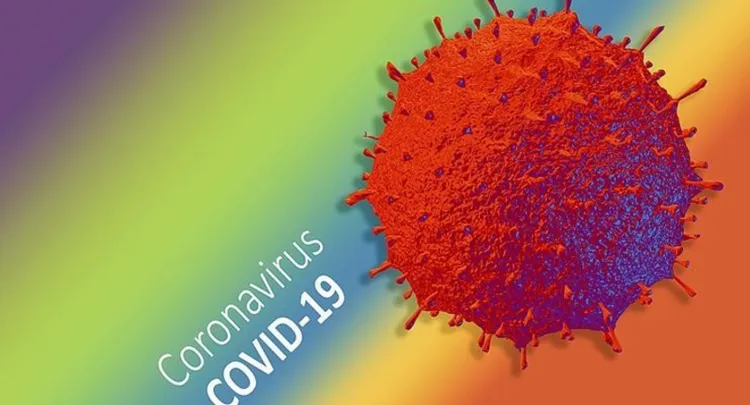
The novel coronavirus is enveloped, spherical or elliptical in shape, with a diameter of 60–140 nm. It has a single positive-sense RNA strand containing five essential genes that code for four structural proteins: nucleoprotein (N), envelope protein (E), matrix protein (M), and spike protein (S), as well as an RNA-dependent RNA polymerase. Variants of the coronavirus include Alpha, Beta, Gamma, Delta, and Omicron. After entering the respiratory tract, the virus infects the lower lobes of the lungs, targeting alveolar epithelial cells, endothelial cells, and alveolar macrophages. The incubation period following infection ranges from 1 to 14 days, most commonly between 3 to 7 days. Symptoms include fever, dry cough, and fatigue, with some patients also experiencing nasal congestion, runny nose, sore throat, loss or reduction of smell and taste, conjunctivitis, myalgia, and diarrhea. Severe cases may develop shortness of breath and/or hypoxemia about a week after symptom onset; in critical cases, progression may occur to acute respiratory distress syndrome, septic shock, difficult-to-correct metabolic acidosis, coagulopathy, and multiple organ failure. Most patients have a good prognosis, while a minority experience severe illness. Antiviral drugs reduce complications and mortality rates significantly. In hosts with normal immune function, the peak of viral replication occurs around symptom onset and lasts for 5 to 7 days, representing the “window of opportunity” for administering antiviral medications. Thus, early and rapid diagnosis of infected individuals in outpatient settings and prompt oral medication usage is critical. Antiviral drugs primarily target proteins involved in the viral life cycle or pathogenesis, including: ① RNA-dependent RNA polymerase inhibitors; ② viral protease inhibitors. The main characteristics of several marketed antiviral drugs are detailed in Table 1.
Table 1 Major pharmacological characteristics of drugs targeting proteins involved in the life cycle and/or pathogenesis of the coronavirus. \n2. COVID-19 Testing. Diagnostic methods must be simple, rapid, accurate, efficient, reasonably priced, and user-friendly. Currently, one type of diagnostic method is nucleic acid testing, such as reverse transcription quantitative polymerase chain reaction (RT-qPCR) and reverse transcription loop-mediated isothermal amplification (RT-LAMP), with RT-qPCR considered the gold standard due to its high sensitivity and specificity. Another approach is based on immunology, detecting specific antigens or antibodies in patient specimens, such as enzyme-linked immunosorbent assay (ELISA), lateral flow assay (LFA), chemiluminescent immunoassay (CLIA), and neutralization assays. Additionally, sensor or clustered regularly interspaced short palindromic repeats (CRISPR) based methods are under continuous development.
Table 2: Characteristics and Attributes of COVID-19 Testing Methods. \n3. Data Analysis of Several Vaccines. During the COVID-19 pandemic, several pharmaceutical companies swiftly designed and produced various types of COVID-19 vaccines. Although these vaccines faced some issues regarding effectiveness and side effects, they played a significant positive role during the urgent epidemic prevention and control period. Pfizer and Moderna developed mRNA vaccines encoding the spike protein of SARS-CoV-2, while Johnson & Johnson developed a vaccine based on a viral vector. Since emergency approval of vaccines in the United States, a significant number of clinical trial participants and the general population have shown good safety profiles. Clinical trial results indicate that the Pfizer and Moderna vaccines have effectiveness rates of 95% and 94.1%, respectively, in preventing severe and symptomatic COVID-19 infections, while the Johnson & Johnson vaccine exhibits an effectiveness rate of 85.4%. In our country, numerous COVID-19 vaccines, including inactivated vaccines, adenovirus vector vaccines, and subunit vaccines, have been launched, providing considerable protection. Table 3 compares the clinical trial results and mechanisms of action for several early foreign vaccines.
Table 3 Overview of Major Clinical Trials for COVID-19 Vaccines by Pfizer, Moderna, and Johnson & Johnson. Note: This article is excerpted from "The Invisible Enemy: Exploring the Pathogens of Human Infectious Diseases" (by Li Zhidong, published by Northwest University Press in August 2024) with slight modifications. The book received funding from the Scientific Popularization Special Project of the Xi'an Municipal Science and Technology Bureau (24KPZT0016) and was awarded the Excellence Award for Outstanding Popular Science Works (Books) in Shaanxi Province for 2025 (awarded by the Shaanxi Provincial Department of Science and Technology, the Provincial Department of Education, and the Provincial Association for Science and Technology).
#public health
#vaccine


© 2025 Health Tribe.